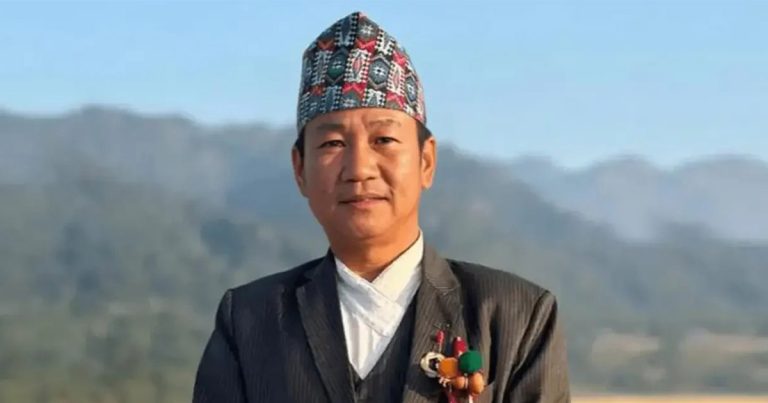
President to Deliver Republic Day Address, Prime Minister Not Speaking
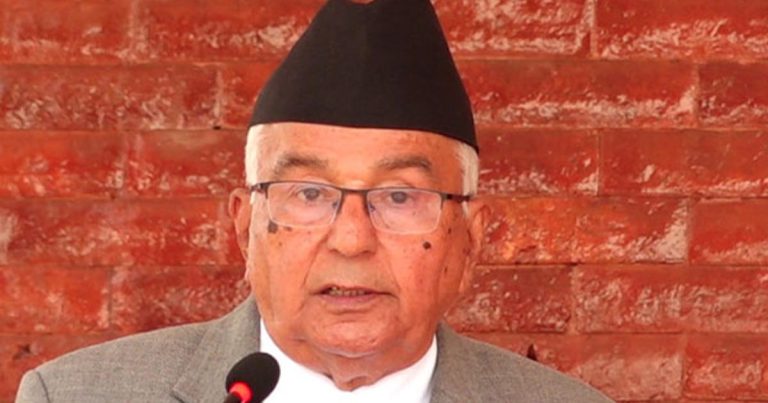
President Ram Chandra Paudel is set to deliver the official Republic Day address as the country marks 19 years since the abolition of the monarchy.


Republic Day is being observed across Nepal today with various programs marking the country’s 19th Republic Day. The day commemorates the historic decision of the first Constituent Assembly on May 28, 2008, which abolished the monarchy and declared Nepal a Federal Democratic Republic.
The government has declared a public holiday for the occasion. Special events are being held in Kathmandu and other parts of the country, while the main state ceremony is taking place at Tundikhel in the capital.
The Nepal Army fired ceremonial gun salutes early in the morning to mark the day. President Ram Chandra Paudel, Prime Minister Balen Shah, cabinet ministers, security chiefs and other distinguished guests are attending the official celebration.
President to Address Ceremony, Prime Minister Will Not Speak
This year, the official address at the Republic Day ceremony will be delivered by the President. Although prime ministers have traditionally addressed the event in previous years, the government has decided that the President will deliver the formal speech this time.
Officials say the arrangement reflects the President’s role as the principal symbol of the republic and the head of state. The Prime Minister is attending the ceremony but is not scheduled to speak.
From Monarchy to Republic
Nepal’s transition to a republic was the result of a long political struggle.
The movement gained momentum after then-King Gyanendra assumed direct rule on February 1, 2005. Political parties and the Maoists later joined hands, leading to a mass people’s movement that forced the restoration of parliament.
The reinstated parliament curtailed the powers of the monarchy and paved the way for Constituent Assembly elections. The election was held on April 10, 2008.
The first meeting of the Constituent Assembly on May 28, 2008 formally ended more than 240 years of monarchy and declared Nepal a Federal Democratic Republic.
From Constitution-Making to the Present
Although the first Constituent Assembly failed to promulgate a constitution, it laid the foundation for federalism, inclusion and state restructuring.
A second Constituent Assembly was later elected and promulgated Nepal’s Constitution on September 20, 2015.
Under the constitution, elections have been held at the federal, provincial and local levels, and all three tiers of government are currently in operation.
Following the establishment of the republic, Dr. Ram Baran Yadav became Nepal’s first President. Bidhya Devi Bhandari later became the country’s second President and the first woman head of state. Ram Chandra Paudel is currently serving as Nepal’s third President.

Written by Pushpa Tamang
Pushpa Tamang is Managing Editor at Khoj Samachar, leading English and Nepali bureaus, newsroom operations, and editorial standards.
Nepal Cabinet Release of All Three Miterbyaj Commission Reports

Suspicious Vehicles at Media Gates Put Nepal’s Democracy on Trial
Khawalung School Video: What Happened Between Teacher and Student?
9 Detained After 453 Nepalis Rescued from India
Republic Day: President, Vice President Call for Stronger Democracy
RSP MP Mingma David Sherpa Returns to Kathmandu After Everest Summit
Mingma David Sherpa Climbs Everest With Parliament Logo