
9 Detained After 453 Nepalis Rescued from India
Police say the investigation has uncovered signs of a cross-border recruitment network that allegedly lured Nepalis to India with promises of jobs and earnings.


Kushinagar rescue operation has begun revealing the scale of a network that allegedly drew hundreds of Nepali youths into a membership-based scheme operating across the Nepal-India border.
Nepal Police say preliminary findings suggest young men and women from different parts of the country were taken to Kushinagar in Uttar Pradesh with promises of attractive employment opportunities. Once there, many were allegedly encouraged to pay membership fees and recruit additional participants.
The rescue, carried out after nearly six months of investigation, was conducted with support from Indian police and the Uttar Pradesh government. A total of 453 Nepali citizens were brought back to Nepal through the Belahiya border crossing in eight buses.
The case has raised fresh concerns about how economic vulnerability and the search for foreign employment continue to expose Nepalis to organized schemes that operate beyond the reach of local communities and families.
Membership Fees and Recruitment Structure Under Investigation
Police investigators say people arriving in Kushinagar were reportedly offered membership in a company operating there.
Initial findings indicate membership fees ranged from INR 7,000 to as much as INR 100,000.
Investigators believe members were then encouraged to bring additional people from Nepal with promises of commissions and higher earnings. The structure appears to have relied on continuously adding new members and collecting membership payments, although police say the exact legal nature of the operation is still being examined.
Lumbini Province Police Office said individuals had been brought from districts across Lumbini, Koshi and Sudurpashchim provinces.
Claims of Pressure and Confinement
Some of those rescued have told investigators they were kept under pressure and instructed to contact family members to arrange money.
Several have also claimed they were forced to stay in overcrowded conditions with large numbers of people in limited spaces.
Police say these accounts are being independently verified as investigators continue collecting evidence connected to the site and the individuals involved.
Nine People Detained
According to Rupandehi Police Chief Superintendent of Police Janak Bahadur Shahi, around 100 of the rescued individuals are women.
Police have detained nine people considered suspicious in connection with the case and have begun formal investigations.
Authorities are separately interviewing those rescued to determine who may have been victims and who may have participated in recruitment, membership expansion or other activities linked to the network.
More Than 1,000 Nepalis May Have Been Reached
Investigators estimate that more than 1,000 Nepalis could have come into contact with the network.
The current focus is on tracing financial transactions, identifying how membership fees were collected, examining recruitment methods and establishing the identities of those who may have operated or managed the system.
Police say statements are still being collected from all rescued individuals. Decisions regarding victim support and legal action against those found responsible will be taken as the investigation progresses.
Nepal Police are examining the case from multiple legal angles, including possible human trafficking, organized fraud and other offences that may have been committed through the cross-border operation.

Written by Roshan Shrestha
Roshan Shrestha is a Nepali investigative journalist and founder of Khoj Samachar, covering corruption, transparency, and public-interest issues.
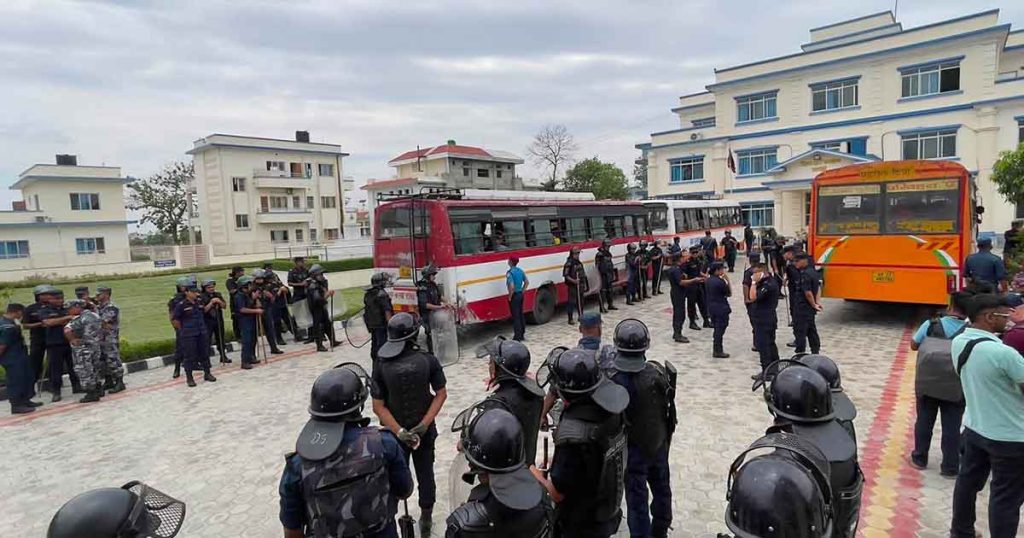
453 Nepalis Rescued from India, Probe Underway
What Is MoFA Mitra App and How to Use It?

Nepal Apologises After False Claim on Amrit Jha’s Release
Labour Ministry Raids Manpower Firm in Lalitpur
Seven Nepalis Rescued from Cambodia Scam Network
Government Begins Action on Foreign Job Fraud After Khoj Samachar Campaign
Nepal Publishes Foreign Employment Fraud List, See Full Names
