Nepal Supreme Court Opens Government Ads to Private Media
The ruling clears the way for public notices and advertisements to return to private newspapers, broadcasters and online outlets.


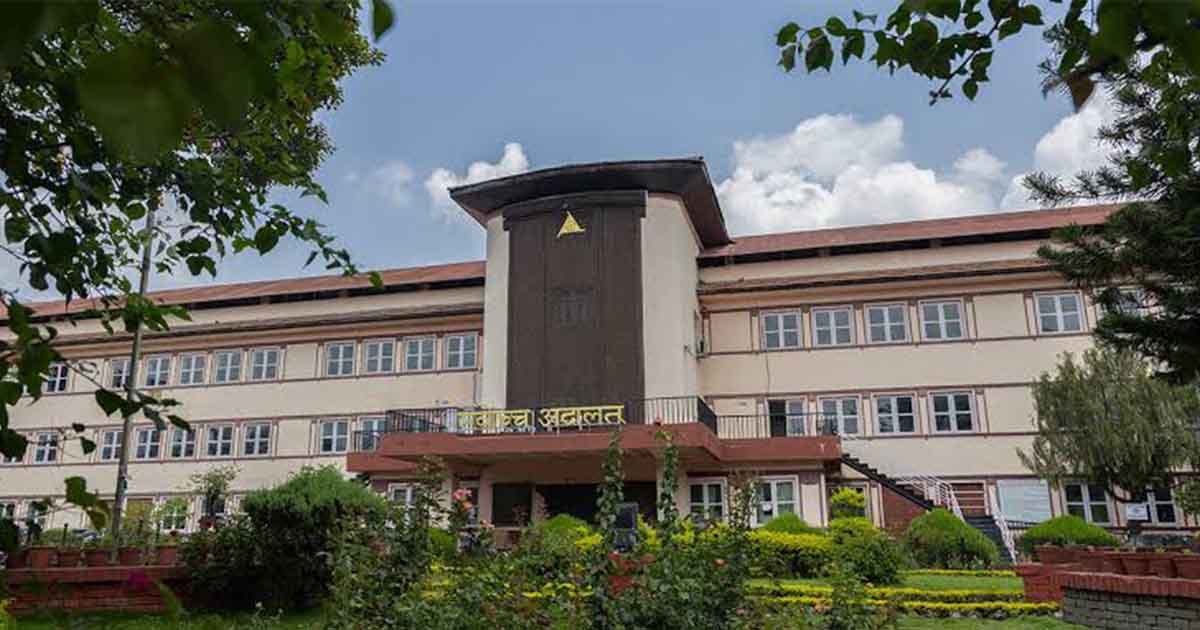
Nepal’s Supreme Court has struck down the government’s decision to reserve public advertisements and official notices for state-owned media, removing a restriction that had shut private newspapers, radio stations, television channels and online outlets out of government advertising.
A division bench of Justices Sharanga Subedi and Nripadhwaj Niraula issued a writ of certiorari on Tuesday, quashing the circular issued by the Office of the Prime Minister and Council of Ministers.
The ruling clears the way for federal, provincial and local governments, along with institutions that spend public funds, to publish and broadcast advertisements through private media organisations.
The full text of the judgment has not yet been released. A detailed order has been prepared and is expected to become public within two days. It will show the constitutional and legal grounds on which the decision was overturned, including what the court has said about press freedom, freedom of expression and any further directions issued to the government.
For private media organisations, the order brings immediate relief. But the case was never only about lost advertising revenue. It raised a larger question over whether the state can use control of public money to favour media institutions it owns while excluding the rest of the country’s press.
A circular that excluded private media
The Prime Minister’s Office made a secretary-level decision on Chait 18, 2082, directing government bodies to publish and broadcast advertisements and public notices only through state-owned media.
The circular applied to the Nepal government, provincial governments, local levels, agencies operating under them and other institutions using public funds.
Under the decision, advertisements and notices were to be placed with Gorkhapatra Corporation, Radio Nepal, Nepal Television and other government-controlled media outlets.
Private newspapers, radio stations, television channels and online news organisations that had long carried government advertisements were excluded in a single move.
The financial impact was expected to fall most heavily on small and medium-sized media organisations, many of which rely on public notices and government advertisements as a regular source of income. Media groups viewed the circular not simply as an administrative change but as direct pressure on the economic survival of independent outlets.
The policy also placed the government in two roles at once: as the authority controlling public advertising expenditure and as the owner of the media institutions that would receive that spending.
Nepal Media Society took the dispute to court
Five days after the circular was issued, advocate Ananta Raj Luitel filed a writ petition at the Supreme Court on Chait 23 on behalf of Nepal Media Society.
The petition argued that cutting private media off from an important source of revenue would weaken those institutions and, in the longer term, restrict the freedom of expression and press freedom guaranteed by the Constitution.
It asked the court to annul both the government decision and the circular through certiorari. The petitioners also sought orders of prohibition and mandamus directing the government not to take measures that weaken freedom of expression.
Final hearings were held on Ashar 22 and 23. The court delivered its ruling roughly a week after the hearing concluded.
Senior advocates Satish Krishna Kharel, Ramesh Badal, Lalit Bahadur Basnet and Dinesh Tripathi argued on behalf of Nepal Media Society.
Advocates Ananta Raj Luitel, Bikash Bhattarai, Kirtinath Sharma Paudel, Bishal Thapa, Durbasha Luitel and Ram Prasad Pudasaini also took part in the arguments, along with Dr Bal Krishna Chapagain and Dr Prem Raj Silwal.
Attorney General Narayan Datta Kandel and Deputy Attorney General Uddhav Prasad Pudasaini defended the government’s decision.
Public advertising cannot become a state monopoly
Lawyers for the petitioners argued that government advertising is not a discretionary benefit that officials can distribute according to institutional preference.
It is public expenditure, they said, and must be handled transparently and distributed in a fair and proportionate manner under the law.
They described the sudden withdrawal of advertisements from private media as a form of economic blockade. The government could not create a policy that channelled public advertisements to a limited group of state-owned outlets while disregarding the principles of proportional distribution contained in the Advertisement Act and its regulations, they argued.
The hearing also examined whether the Prime Minister’s Office had entered the jurisdiction of the Advertisement Board by issuing the circular.
Another question concerned federal authority. The circular did not deal only with federal offices. It attempted to direct provincial governments, local levels and other institutions in their spending decisions, raising the issue of whether a federal office could impose such restrictions across different levels of government.
The government defended the policy as an attempt to control financial leakage, opaque transactions and corruption in the distribution of advertisements.
Government lawyers also told the court that preparations were under way for a new policy that would regulate private media and strengthen their rights.
The court’s decision indicates that concerns over corruption or irregular spending cannot, by themselves, justify excluding an entire section of the media market. The state may regulate how public advertising money is spent, but the method it chooses must remain within constitutional limits.
“Justice, even if delayed”
Luitel said the ruling had ended the discrimination imposed on private media.
He described the court’s correction of the government’s unconstitutional decision as an important achievement for the wider media sector.
The judgment, he said, would also compel state institutions to take constitutional limits more seriously before adopting future decisions that could affect press freedom and freedom of expression.
It remains unclear what the court has said about the other demands in the petition, including the requests for mandamus and prohibition. Those details will be known only after the full judgment is released.
Protests preceded the court battle
Journalists and media organisations had opposed the single-window advertising policy from the time it was announced.
The Federation of Nepali Journalists described the decision as an attack on press freedom and on the financial foundation of private media. It organised nationwide protests, including sit-ins and the submission of memoranda at district administration offices in all 77 districts.
News organisations also protested through editorials, front-page material and social media campaigns.
Media Alliance Nepal, Nepal Media Society and the Advertising Association of Nepal warned that granting state-owned media a monopoly over government advertisements would damage commercial competition, independent journalism and the public’s access to information.
The Federation and other media organisations have welcomed the Supreme Court’s order.
The movement against the circular had linked two concerns that are often treated separately: the economic survival of media institutions and their ability to work independently. When the government controls a major source of advertising and directs it only towards its own outlets, the financial decision also carries consequences for editorial freedom.
Relief is immediate, but the distribution system remains unsettled
With the Chait 18 decision annulled, the barrier preventing government bodies from placing advertisements in private media has been removed.
The ruling does not automatically settle how advertisements should now be distributed. The process, criteria and proportion will depend on existing laws and regulations, as well as any instructions contained in the Supreme Court’s full judgment.
The government has also issued the National Advertising Policy, 2083, with the stated aim of controlling opaque transactions, hidden commissions and financial misconduct in the advertising market.
The policy proposes disclosure of financial transactions, the establishment of a National Advertising Information Bank and regulation of digital advertising and sponsored content.
The government now faces the task of pursuing transparency in public spending without creating unequal treatment among media organisations.
The Supreme Court’s order has drawn that boundary clearly. Measures adopted in the name of reform cannot come at the cost of constitutionally protected press freedom and freedom of expression.

Written by Roshan Shrestha
Roshan Shrestha is a Nepali investigative journalist and founder of Khoj Samachar, covering corruption, transparency, and public-interest issues.

Full LPG Cylinders to Be Sold After Minister Yadav’s Order

Khawalung School Video: What Happened Between Teacher and Student?
Nepal to Fine Fuel Pumps Up to NPR 1 Million for Shutting Down
Why Susta Residents Have Come to Kathmandu?
Nepal Government to Print National ID Cards Itself
Everything You Need to Know About the 2026/27 National Budget
Supreme Court Orders Time Limit on Durga Prasai Detention