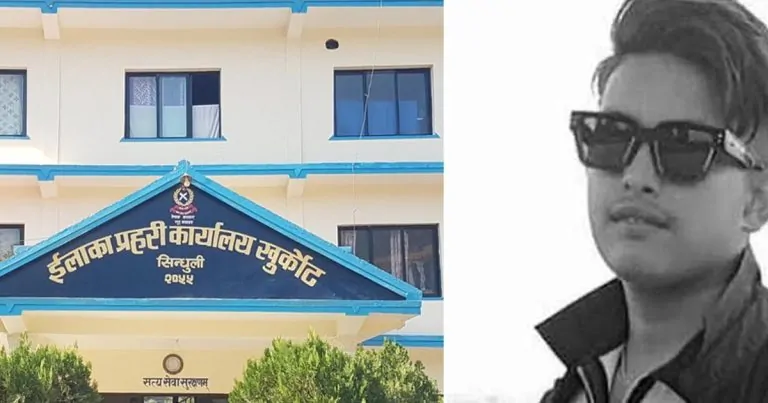
Supreme Court Orders Time Limit on Durga Prasai Detention
Nepal’s top court upheld Durga Prasai’s arrest but warned police against extending detention indefinitely during investigation


Nepal’s Supreme Court on Friday delivered a closely watched order in the detention case involving controversial medical entrepreneur and political campaigner Durga Prasai, drawing a firm line between lawful investigation and indefinite custodial pressure.
While the court refused to invalidate his arrest, it simultaneously warned investigators against stretching detention beyond legal limits under the pretext of an ongoing probe. The order has now placed pressure on police authorities to either formally prosecute Prasai within the existing remand period or release him through procedures outlined by law.
The joint bench of Justices Binod Sharma and Nityananda Pandey dismissed the habeas corpus petition filed on Prasai’s behalf, effectively recognizing the legality of his arrest and the remand approvals granted by lower courts. But the language of the order carried another message as well: investigative custody cannot become an open-ended mechanism.
The Supreme Court directed authorities to complete the investigation and decide whether charges will be filed within the four-day extension granted earlier by the Parsa District Court. If investigators fail to complete the process within that timeframe, the court said they must proceed under Section 15 of Nepal’s National Criminal Procedure Code and release him from detention.
The ruling arrives at a politically sensitive moment, as debate intensifies over the state’s use of cybercrime and national security provisions against outspoken public figures.
Court Raises Concern Over Health and Grounds for Continued Detention
In its order, the Supreme Court also gave unusual emphasis to Prasai’s medical condition. The bench noted that he is undergoing treatment for throat cancer and requires regular medical monitoring and consultation. The order further stated that investigators had not presented convincing grounds showing that Prasai posed a flight risk or was likely to destroy evidence if released.
That observation appears central to the court’s reluctance to endorse prolonged detention.
Although the judiciary stopped short of ordering immediate release, the reasoning suggests discomfort with keeping an accused person in custody without demonstrable investigative necessity — particularly in cases where health concerns are already documented before the court.
Legal observers see the order as an attempt to balance two competing concerns: allowing the state to pursue investigation powers while also preventing unnecessary deprivation of liberty.
Arrest Triggered by Allegations Under Cyber and State Offense Laws
Prasai was arrested on Jestha 4 from Diyalo Hotel in Birgunj by the District Police Office, Parsa.
Police are investigating him under Nepal’s Electronic Transactions Act as well as laws related to offenses against the state. Authorities have accused him of using public speeches and digital platforms to spread hostility, hatred, and social intolerance.
The arrest quickly escalated into a wider public and political debate, not only because of Prasai’s confrontational political image but also because of growing criticism over how broadly state agencies are interpreting cyber and public order laws.
Advocate Ashish Luintel later filed a habeas corpus petition at the Supreme Court seeking Prasai’s release. Following the petition, the court had earlier instructed security agencies to submit written responses within 24 hours.
Friday’s final order ultimately rejected the petition but imposed a clear procedural boundary on investigators.
A Dual Message From the Supreme Court
The decision is now being interpreted on two separate legal and political levels.
First, the court has effectively endorsed the legality of the arrest and remand process carried out so far. That gives investigators temporary judicial backing to continue their case.
At the same time, however, the Supreme Court has also signaled that detention cannot be prolonged merely because an investigation remains incomplete. By explicitly invoking legal limits and referencing Prasai’s medical condition, the bench appears to have drawn attention to constitutional protections surrounding personal liberty and proportionality.
That dual message may shape how future politically sensitive investigations are handled — especially cases involving speech, online expression, and allegations tied to public unrest.
For now, the next few days are likely to become decisive in determining whether the state proceeds with formal prosecution against Prasai or is compelled to release him pending further legal action.

Written by Roshani Shrestha Pathak
Roshani Shrestha Pathak is the English Bureau Chief at Khoj Samachar, overseeing English-language editorial operations and newsroom coordination.
Balen Government at 100 Days: How Many of Its Promises Were Delivered?
Who Is Khem Bhandari and Why Was He Arrested in the Nirmala Pant Case?
Kirtipur Holding Centre Resident Arrested After Video Post
Nepal Celebrates Asar 15 with Dahi Chiura and Paddy Day
Nepal New Traffic Bill Proposes Fines of Rs 500 to Rs 1 Lakh
Why Is Nepal Emptying Holding Centres in Five Days?
Kathmandu Traffic Fines Top Rs 2.3 Million in a Day