Why Susta Residents Have Come to Kathmandu?
Susta residents have reached Kathmandu urging the government to address long-standing border issues, protect their rights and take meaningful action.


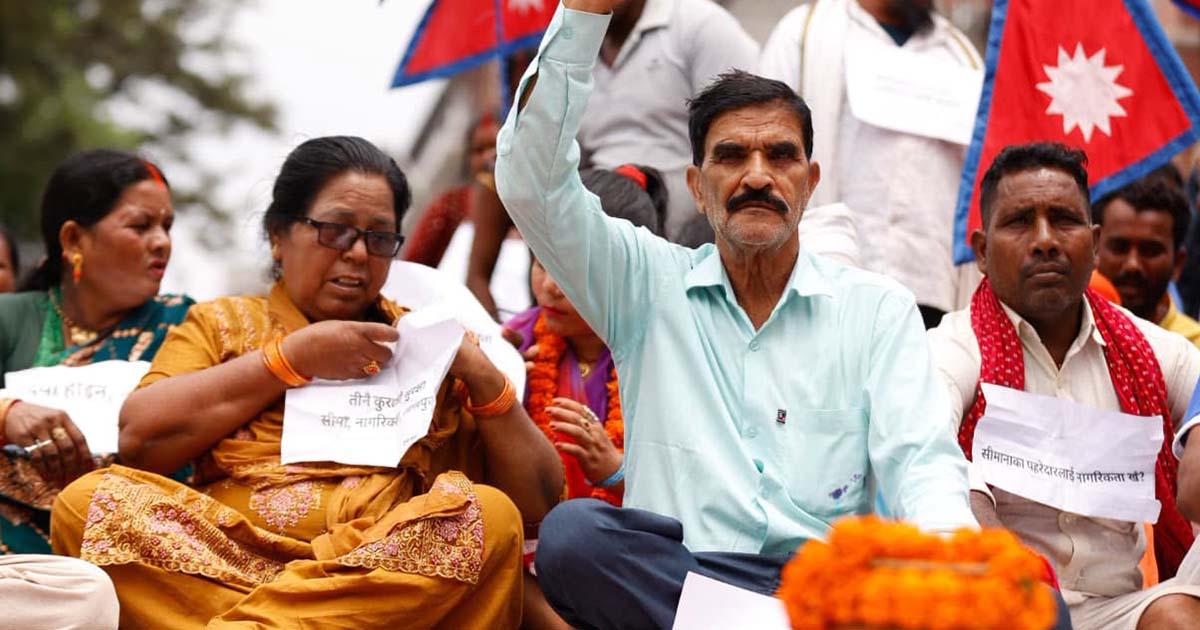
For people living in Nepal’s Susta border region, the struggle over land and identity is not a new political issue. It has shaped everyday life for decades. Their latest visit to Kathmandu is another attempt to remind the state that unresolved border disputes are not abstract diplomatic matters but lived realities affecting Nepali citizens who continue to seek recognition, security and equal protection.
The demands raised by Susta residents are neither sudden nor extraordinary. They are asking the government to fully acknowledge them as Nepali citizens, guarantee their right to live safely on their own land, and address long-standing administrative and border-related problems that have remained unresolved for years.
The discussion surrounding their protest, however, has shifted in a different direction.
Instead of focusing on the issues raised by border communities, public debate on social media has increasingly revolved around questions such as why previous governments failed to resolve the problem, why the movement has intensified now, and which political party is behind it.
Such arguments risk diverting attention from the central issue. Every elected government inherits unresolved national responsibilities, and citizens are equally justified in expecting the present administration to address problems left behind by its predecessors.
Beyond Party Politics
Border disputes are not simply matters of political competition. They concern Nepal’s sovereignty, the rights of its citizens and the state’s constitutional responsibility.
Nationalism cannot be measured only through patriotic slogans, social media posts or symbolic displays of pride. It is equally reflected in whether the country stands with citizens who continue to face hardship because they live in disputed border areas.
Residents of Susta have spent years trying to protect their homes, their land and their identity under difficult circumstances. Their expectation of security, citizenship services, land ownership documents and access to basic state institutions is part of their constitutional rights.
Treating these concerns as partisan talking points weakens public attention on an issue that demands a national response.
Most of the Border Is Settled, but Key Disputes Remain
Discussions on Nepal-India border issues often overlook an important fact. Both countries have, on different occasions, acknowledged that roughly 97 percent of the bilateral boundary has already been demarcated.
The remaining major disputed areas include:
- Susta
- Kalapani
These disputes are not products of recent politics. They have persisted in different forms for generations and trace their roots back nearly two centuries.
Any durable resolution requires sustained diplomatic engagement backed by historical records, official maps, documented evidence and broad national consensus rather than short-term political narratives.
That is why expectations that the current government should actively pursue progress on these outstanding issues are neither unusual nor unreasonable.
Border Communities Should Not Be Reduced to Political Labels
For many years, people living in Susta have remained on the front line of Nepal’s border challenges while attempting to preserve their communities and identity.
When they travel to the capital seeking state intervention, dismissing them as supporters of one political party or another overlooks the substance of their grievances.
Border residents represent the country’s first human presence along its frontier. Their security and well-being are matters of national concern, not merely local administrative issues.
That is also why their appeal carries significance beyond the immediate dispute. The condition of border communities often reflects how effectively the state protects both its territory and its citizens.
The Responsibility Lies With the State
Regardless of which political party leads the government, resolving border disputes remains a responsibility of the state itself.
Citizens also have a role in encouraging peaceful, constructive and nationally focused efforts that push governments to fulfil those obligations.
Approaching Susta through the lens of national interest rather than partisan division offers a stronger foundation for long-term solutions. Ensuring the rights, dignity and security of citizens living along Nepal’s borders is not the agenda of any single party. It is a shared national responsibility.

Written by Roshan Shrestha
Roshan Shrestha is a Nepali investigative journalist and founder of Khoj Samachar, covering corruption, transparency, and public-interest issues.
Nepal Government to Print National ID Cards Itself
Everything You Need to Know About the 2026/27 National Budget
Singha Durbar Toilets Remain in Poor Condition
Manoj Kumar Sharma Set to Become Nepal’s Chief Justice

Koshi Police Honors Inspector Sagar Sah for Innovative Policing

Asim Shah Reacts to Possible Gen Z Boycott of Talks
Lumbini Province Plans to Reduce Ministries to Eight