
Sonam Wangchuk Update: Forced to Hospital, Says Abhijeet Dipke
CJP alleges police force at Jantar Mantar as Abhijeet Dipke begins a new hunger strike and the Parliament march remains on schedule.


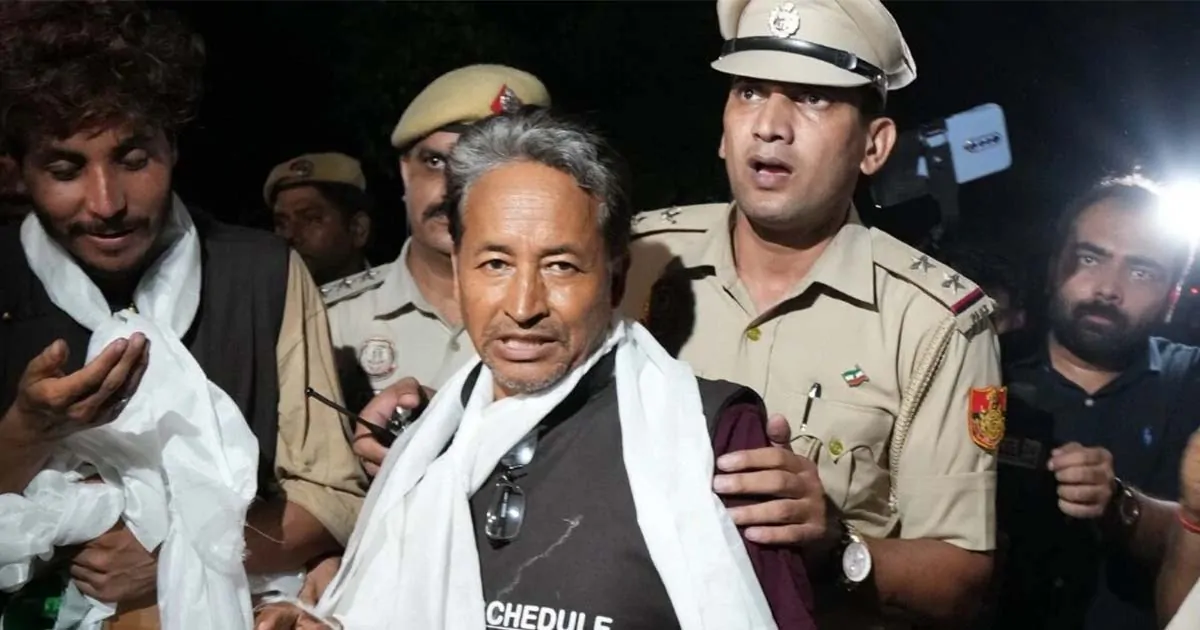
The protest at Delhi’s Jantar Mantar demanding accountability from the central government over the alleged NEET question paper leak turned more tense on Saturday after social activist Sonam Wangchuk, who had been on hunger strike for 20 days, was taken to hospital.
Wangchuk was admitted to Safdarjung Hospital after his health deteriorated. The hospital administration confirmed his admission, while Delhi Police said he was shifted to the government hospital on the basis of medical advice, his physical condition and a High Court order.
But the Cockroach Janata Party, which is leading the agitation, has accused police of forcibly removing him from the protest site.
The hospital transfer has now pushed the movement into another confrontation. What began as a protest over examination integrity and political accountability is also becoming a dispute over police conduct, the right to continue a hunger strike and control of the protest space in the national capital.
CJP alleges force, police deny lathi-charge
CJP founder Abhijeet Dipke said police took Wangchuk away against his will. He alleged that force was used against people present at Jantar Mantar and claimed that he was beaten and detained.
Delhi Police rejected the allegation that a lathi-charge had taken place.
Police maintained that Wangchuk was not removed to suppress the agitation. His condition required immediate medical supervision, they said, and shifting him to hospital had become necessary.
The two accounts remain sharply opposed.
The police have presented the action as a health intervention carried out under legal and medical advice. The protest organisers see it as an attempt to weaken a demonstration that has continued for nearly three weeks.
Dipke begins hunger strike as supporters are asked to stay overnight
Soon after Wangchuk was hospitalised, Dipke announced that he would begin an indefinite hunger strike.
He also claimed that Delhi Police was preparing to clear the protest site late at night or in the early hours of the morning. Calling on supporters to remain at Jantar Mantar through the night, he said the agitation would not be allowed to end with Wangchuk’s removal.
There has been no indication from the organisers that the protest will be suspended because of Wangchuk’s health condition.
His hospitalisation has instead changed the face of the hunger strike, with Dipke stepping forward to continue it.
The political demand also remains unchanged: the protesters want the central government held accountable over the alleged NEET paper leak and are seeking the resignation of Union Education Minister Dharmendra Pradhan.
‘Chalo Parliament’ march to go ahead
The CJP said its “Chalo Parliament” march scheduled for Monday, July 20, would proceed as planned.
The party has described the march as a peaceful effort to carry the voice of young people to Parliament. With Wangchuk in hospital, Dipke beginning a fresh hunger strike and relations between organisers and police worsening, the march is now likely to draw greater political attention and tighter security arrangements.
For the organisers, continuing the march is important to show that the agitation is not dependent on the physical presence of one individual.
For the authorities, Monday could become a test of whether the protest remains contained at Jantar Mantar or moves into a wider confrontation over access, movement and security around Parliament.
Tension had begun building on Friday night
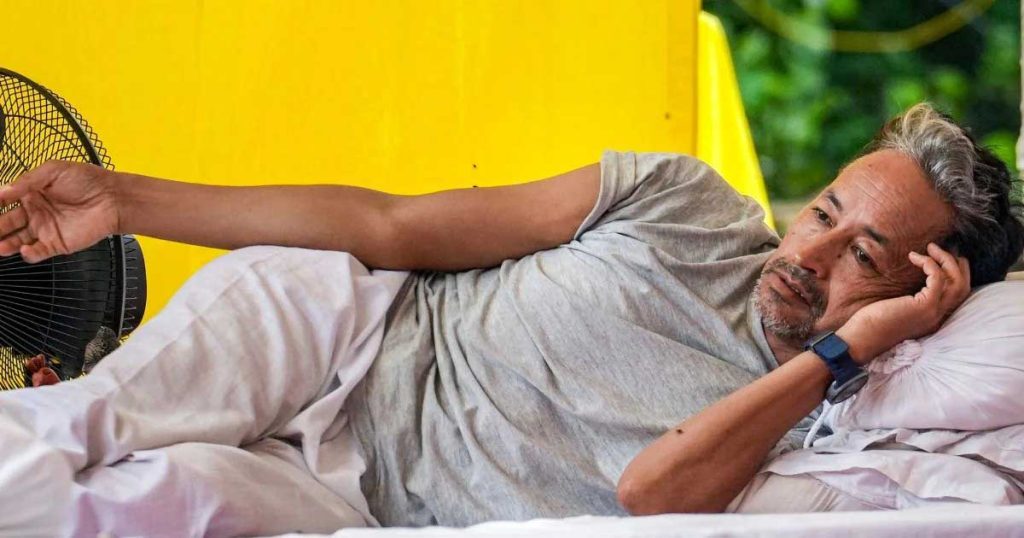
Dipke said an attempt was made to attack Wangchuk at Jantar Mantar on Friday night. He claimed that an object was thrown towards the activist, although Wangchuk was not injured.
He accused unidentified people of repeatedly trying to disrupt the agitation and alleged that police did not respond in time.
Delhi Police has not issued a separate detailed public response to those allegations.
The Friday night incident, followed by Wangchuk’s removal from the site on Saturday morning, deepened suspicion among protesters who already believed the demonstration was facing pressure.
There is also growing concern inside the movement that any effort to empty the site could be presented as a routine security action while being understood by supporters as political suppression.
Accountability demand remains at the centre
Wangchuk and the CJP began the agitation seeking central government accountability in the alleged NEET question paper leak case.
Their principal political demand has been the resignation of Dharmendra Pradhan.
As the hunger strike continued, opposition groups also began extending support to Wangchuk. That support has helped move the protest beyond a single organisation’s programme and into the wider political argument over examination credibility, youth frustration and responsibility at the highest level of the education administration.
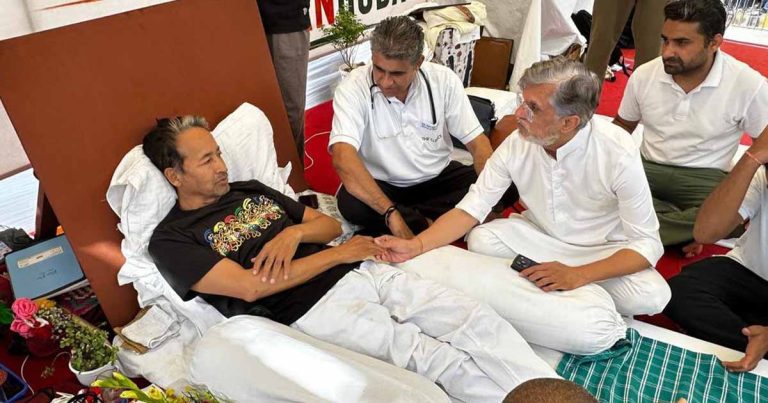
The health risk to Wangchuk had become increasingly serious after 20 days without food. His admission to hospital may have reduced the immediate medical danger at the protest site, but it has not resolved the political conflict.
Jantar Mantar remains active. Dipke’s decision to begin another indefinite hunger strike and the CJP’s refusal to withdraw the Parliament march suggest that the agitation is entering a harder stage rather than winding down.
By Monday, the focus will not be only on the NEET leak allegations and the demand for the education minister’s resignation. It will also be on how Delhi Police handles a movement that now sees Wangchuk’s hospitalisation as part of the struggle itself.

Written by Pushpa Tamang
Pushpa Tamang is Managing Editor at Khoj Samachar, leading English and Nepali bureaus, newsroom operations, and editorial standards.
Attack Was Attempted on Sonam Wangchuk, Says Abhijeet Dipke
Sonam Wangchuk Vows to Survive Hunger Strike Until July 20

US Attacks Iran Again as Fighting Enters Sixth Night

Jordan Shoots Down Eight Iranian Missiles

US House Passes Permanent Daylight Saving Time Bill
Indian Crew Member Killed in Hormuz Tanker Attack

South Korean Sailor Found Dead Near Northern Sea Border