South Korean Sailor Found Dead Near Northern Sea Border
The sailor disappeared during patrol duty near the Northern Limit Line, prompting a joint search and an unanswered request to North Korea.


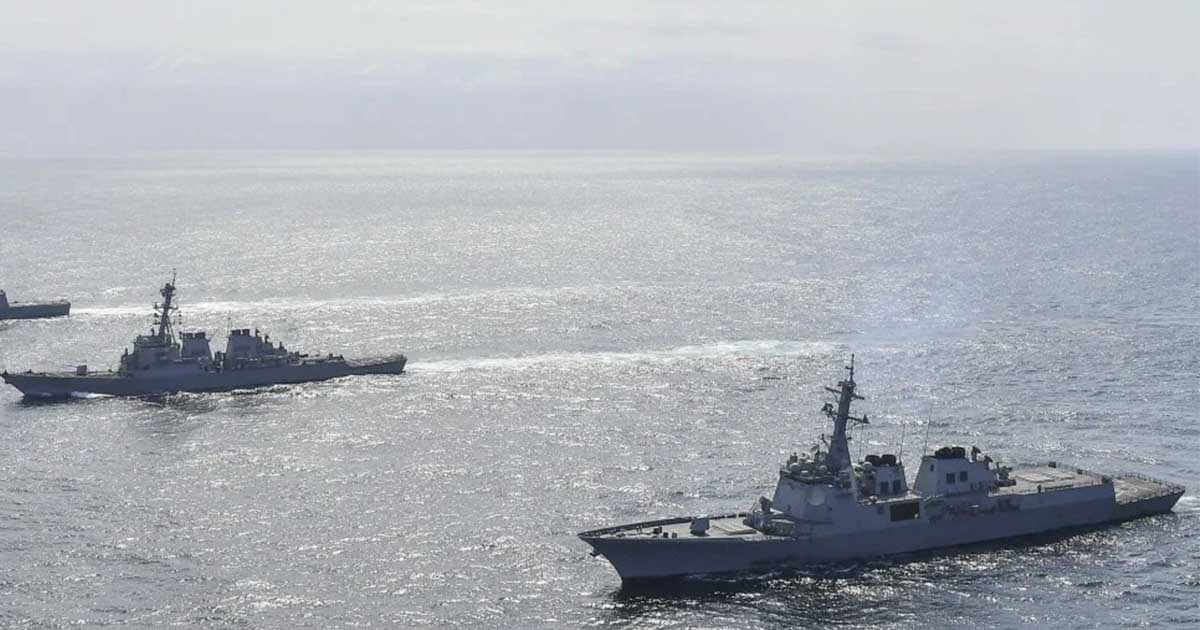
The body of a South Korean sailor who went missing while his vessel was patrolling near the sensitive maritime boundary with North Korea was recovered early Monday, ending a search that had carried the added fear that he might have drifted into North Korean waters.
A patrol boat spotted the sailor’s body at 5:58 am in waters about 52 kilometres east of Gojin in Gangwon Province, the South Korean Navy said. A rubber rescue boat was deployed, and the body was recovered at 6:43 am.
The sailor’s identity has not been made public. He held the rank of seaman apprentice.
His absence was discovered after he failed to report for a surveillance duty shift on Sunday morning. At the time, the naval vessel was operating roughly 50 kilometres from Gojin, close to the Northern Limit Line, or NLL.
The NLL functions as the de facto maritime boundary between the two Koreas, although North Korea has long disputed its legitimacy. The area remains heavily watched and politically sensitive, even when an incident initially appears to involve an individual sailor rather than a direct military confrontation.
Search involved ships and aircraft
The South Korean Navy and Coast Guard began a joint search immediately after the sailor was reported missing. Around 10 vessels and aircraft were mobilised.
Officials said the body would be taken aboard a frigate to the Donghae naval base on South Korea’s eastern coast. The vessel on which the sailor had been serving also returned to the base on Monday morning.
Military investigators and civilian police will jointly examine how he disappeared from the ship and the circumstances surrounding his death.
Initial information has not established whether an incident occurred aboard the vessel or whether the sailor fell into the sea.
The recovery ended the immediate concern that he might have crossed into North Korean territory. But the case has also exposed the practical difficulty of handling even a humanitarian emergency along a border where routine communication has largely broken down.
Pyongyang did not respond to request for assistance
Because the sailor disappeared near the border area, South Korea asked North Korea on Sunday to assist with the search.
The message was transmitted through a communication channel used by international commercial vessels. Seoul requested a humanitarian search and asked that the sailor be returned if he had entered North Korean waters.
South Korea’s Unification Ministry said no response had been received from Pyongyang as of Monday.
The silence mattered beyond the immediate search. With communication links between the two Koreas shut down, Seoul had to rely on a maritime channel rather than direct inter-Korean contact for a request involving a missing serviceman.
Memories of the 2020 killing
The incident revived memories of a far more serious case in 2020.
A South Korean fisheries ministry official disappeared from a patrol vessel off the western coast and crossed the maritime boundary into North Korean territory. He was shot and killed by North Korean soldiers.
North Korea later issued an unusually direct apology over the killing.
Relations between the two Koreas have again deteriorated in recent years. Incidents around the maritime boundary are therefore treated not only as security matters but also as tests of whether any basic humanitarian coordination remains possible.
South Korean President Lee Jae Myung, who took office in June 2025, has sought renewed dialogue and confidence-building with North Korea. Pyongyang has so far shown no positive response to Seoul’s proposals.

Written by Pushpa Tamang
Pushpa Tamang is Managing Editor at Khoj Samachar, leading English and Nepali bureaus, newsroom operations, and editorial standards.
US-Iran Clash Raises Gulf Alarm After Drone Attacks
Iran-America War Update: Hormuz Strait Closed

Heavy Rain Triggers Landslides in Uttarakhand
Dalai Lama Birthday Controversy in Nepal: Tibet-China Risk Explained
Oil Prices Rise as US-Iran Tensions Flare
Is It Illegal for Nepalis to Get an Aadhaar or PAN Card in India?

Germany: Six died in Stade Shooting