Tax Upon Tax for Nepal’s Public, Personal Secretaries for Lawmakers
Ride-sharing and electricity taxes take effect as restored personal secretary facilities add a major long-term burden to public spending.


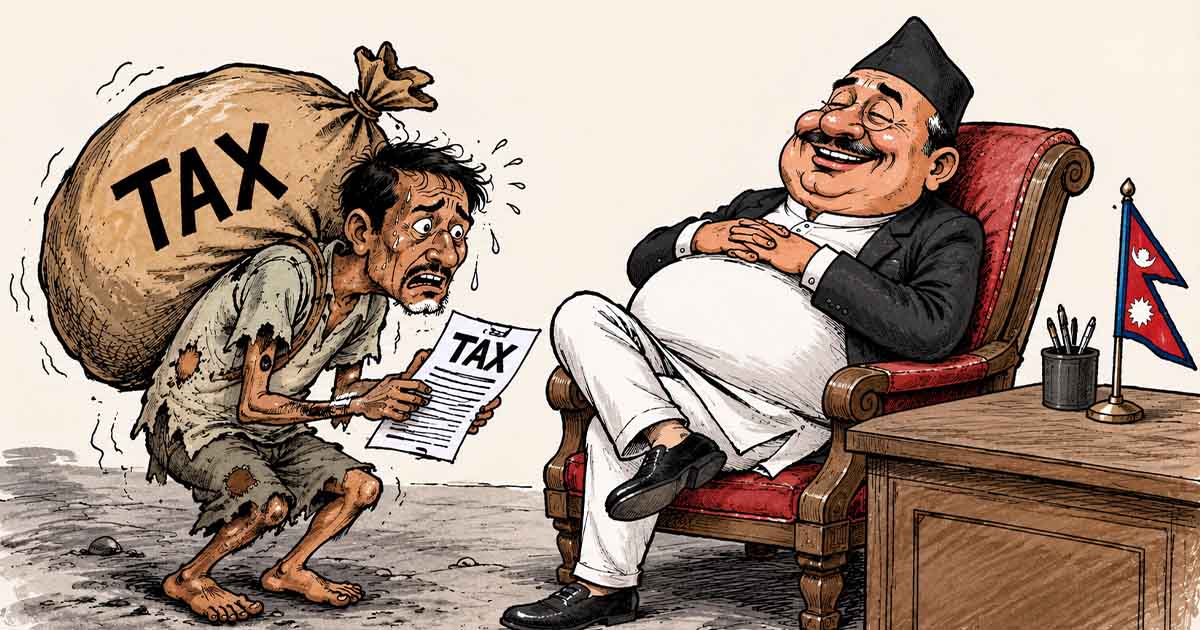
The start of the new fiscal year has brought additional taxes on services used by ordinary citizens, including ride-sharing and electricity. At almost the same time, the government has restored the facility allowing federal lawmakers to appoint personal secretaries at the state’s expense.
The two decisions expose a sharp contrast in government priorities. Citizens are being asked to pay more for daily transport and household electricity, while millions of rupees will again be spent every year on support staff for elected representatives.
The cost may appear manageable when calculated for one lawmaker or one month. Across the federal Parliament, seven provincial assemblies and a full five-year term, however, the figure could rise beyond Rs 3 billion.
Five per cent VAT on ride-sharing and electricity
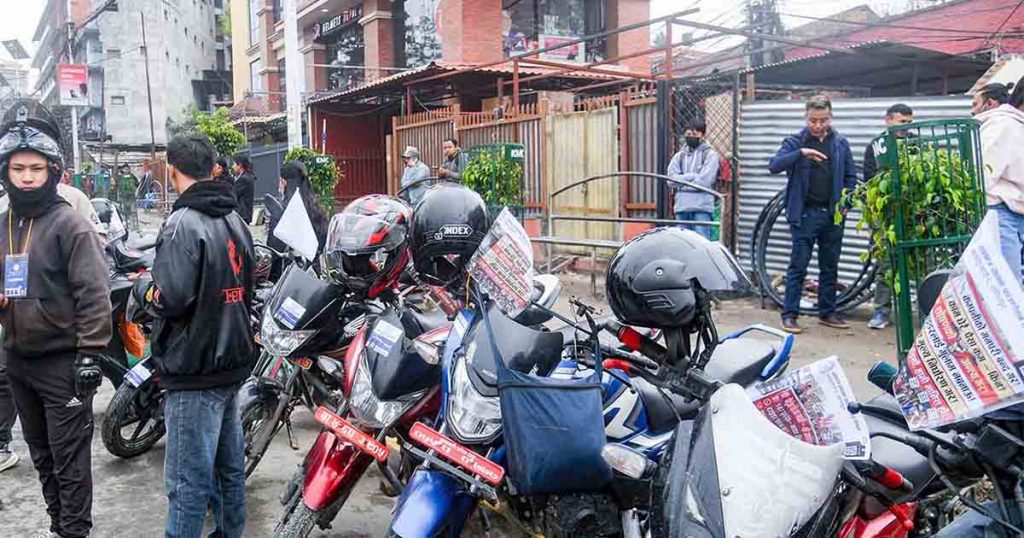
From the first day of the fiscal year, a five per cent value-added tax has been introduced on transactions carried out by riders affiliated with platforms such as Pathao, inDrive and Yango.
Under the new arrangement, ride-sharing companies must collect five per cent VAT from riders operating through their platforms. The 13 per cent VAT already charged on commissions and other service fees collected by the companies will remain in place.
Although the tax is imposed through the platform and rider transaction, the additional cost could eventually be reflected in the fares paid by passengers.
Electricity consumers also face a new tax burden.
Household customers consuming more than 50 units of electricity a month will be required to pay five per cent VAT on consumption above the 50-unit threshold. The first 50 units will remain outside the VAT net.
Around 2.6 million household customers who consume more than 50 units are expected to fall under the new arrangement. Industrial and commercial customers outside the household category face VAT of up to 13 per cent.
For families already struggling with food prices, rent, transport costs and other household expenses, even a small increase in monthly bills matters. The timing has made the restoration of facilities for lawmakers politically difficult to ignore.
Personal secretary facility restored after nine months
The government led by Balendra Shah has restored the provision allowing members of the federal Parliament to appoint personal secretaries.
The facility had been scrapped by the interim government led by Sushila Karki on Asoj 5, 2082. That decision was taken as part of an expenditure-control and austerity drive following the Gen-Z movement.
Nearly nine months later, the Cabinet amended the schedule of the Federal Parliament Officials and Members’ Remuneration and Facilities Act, 2073, bringing the facility back.
The new arrangement allows each of the 275 members of the House of Representatives and 59 members of the National Assembly to appoint one personal secretary with benefits equivalent to those of a section officer.
That covers 334 federal lawmakers.
The decision does not only restore an administrative facility. It reopens a recurring expenditure commitment that will continue every month and increase further when festival allowances and other benefits are included.
Federal lawmakers’ staff could cost Rs 250 million a year
A personal secretary receiving a basic salary, inflation allowance and other benefits is estimated to earn at least Rs 57,662 a month.
For 334 personal secretaries, the monthly salary bill would reach approximately Rs 19.26 million.
Over 12 months, the cost would be about Rs 231.1 million. After including an additional month’s salary as festival allowance, the annual expenditure could rise to around Rs 250.4 million.
Over five years, the federal government could spend between Rs 1.20 billion and Rs 1.25 billion simply to provide one personal secretary to each member of the House of Representatives and National Assembly.
This is only a simplified calculation based on one lawmaker and one personal secretary.
The actual cost may be higher because the 275 members of the House of Representatives include the prime minister, ministers, the speaker, the deputy speaker and other office-holders. Several of these positions are entitled to more than one staff member.
The same applies to the National Assembly, where the chairperson and other officials receive separate secretariat facilities.
Some senior office-holders may have three, ten or even dozens of employees attached to their secretariats, depending on the position and the legal provision governing it.
Provincial appointments could push the annual bill above Rs 650 million
The latest federal decision directly concerns members of the federal Parliament. Provincial assembly members require separate legal and budgetary arrangements from their respective provinces.
But once the facility has been restored at the federal level, pressure is likely to grow across the seven provinces.
There are 550 provincial assembly members in total. If all seven provinces provide one personal secretary to each member with benefits equivalent to those of a non-gazetted first-class employee, the cost would be substantial.
At an estimated monthly salary and allowance package of Rs 56,874 per person, the monthly bill for 550 provincial personal secretaries would reach around Rs 31.28 million.
The 12-month salary cost would be approximately Rs 375.4 million. After adding festival allowance, the annual expenditure could rise to about Rs 406.6 million.
If one personal secretary is provided to each of the 334 federal lawmakers and 550 provincial assembly members, the combined number of appointments would reach 884.
The total annual cost could fall between Rs 606.5 million and Rs 657 million, depending on the salary structure, allowances and provincial arrangements.
Over five years, the combined expenditure could reach between Rs 3.03 billion and Rs 3.28 billion.
These figures are estimates. Each province has its own laws, salary structures and practices. The number of appointments may also vary depending on whether the member holds an additional position.
There are seven chief ministers, seven provincial speakers, seven deputy speakers and ministers in all seven provinces. They are generally entitled to larger secretariats than ordinary provincial assembly members.
Once the staff attached to the prime minister, federal ministers, parliamentary office-holders, chief ministers and provincial ministers are added, the broader financial burden could rise well beyond the estimate based on one secretary per lawmaker.
A question of priorities
The need for secretarial support for the prime minister, ministers, speakers, chief ministers and other officials with executive responsibilities is understandable. They handle administrative work that requires organised offices and professional staff.
The harder question is whether every lawmaker should receive a state-funded personal secretary at a time when the government is increasing taxes on basic services and struggling to control recurrent expenditure.
Had the facility remained suspended, billions of rupees could have been saved over the coming five years. That money could have gone towards roads, schools, hospitals, employment programmes or relief for citizens facing higher transport and electricity costs.
The issue is not confined to the salaries of personal secretaries. Salaries, allowances and facilities for elected representatives are part of a much larger public payroll that also includes civil servants and local government office-holders.
A large share of the national budget is already consumed by salaries, allowances, pensions and other recurrent expenses. This leaves less room for development spending, even when the government presents a budget worth more than Rs 2.1 trillion.
The political message is also difficult for the government.
Leaders who opposed unnecessary state expenditure and privileges while outside power are now being judged by the decisions they make after entering government. Restoring a facility that had been removed in the name of austerity creates an obvious credibility test.
Citizens are being asked to pay additional tax on electricity use and ride-sharing from the beginning of the fiscal year. Lawmakers, on the other hand, are regaining a publicly funded facility.
The question is no longer only whether lawmakers need personal secretaries. It is whether restoring this expenditure was the right decision for a country where the government continues to ask ordinary people to carry a heavier financial burden.

Written by Pushpa Tamang
Pushpa Tamang is Managing Editor at Khoj Samachar, leading English and Nepali bureaus, newsroom operations, and editorial standards.
Pathao, InDrive Riders to Pay 5% VAT on Earnings from Friday
Minister Yadav Presses US to Restore Nepal Trade Preference

Khawalung School Responds to Viral Teacher-Student Video
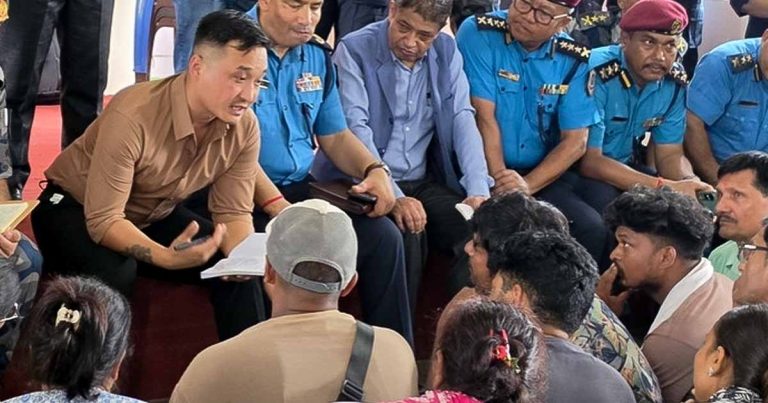
Nepal Cabinet Release of All Three Miterbyaj Commission Reports
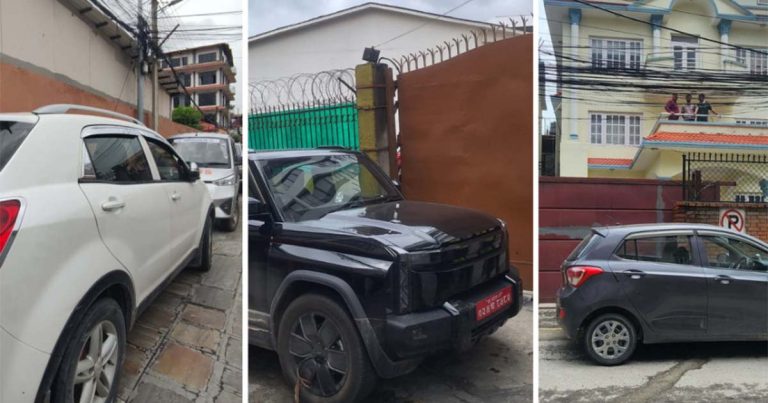
Suspicious Vehicles at Media Gates Put Nepal’s Democracy on Trial

Khawalung School Video: What Happened Between Teacher and Student?
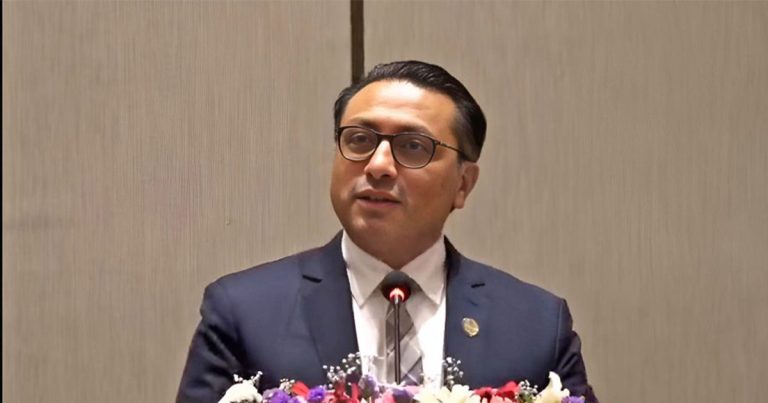
No U-Turn on Electricity VAT, Says Wagle