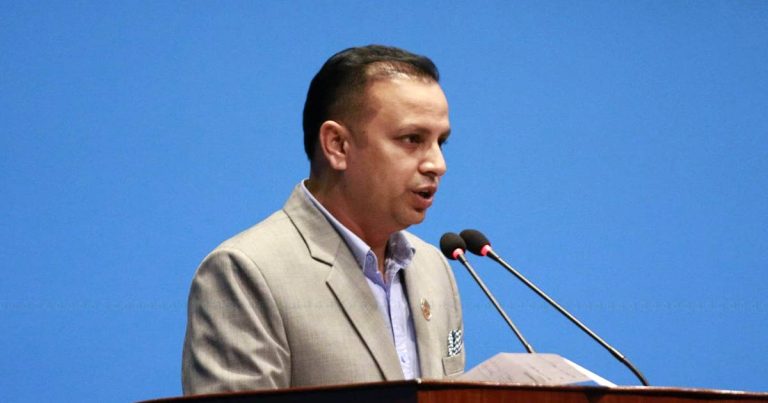
Kulman Reject Balen Justification for Power VAT
The former NEA chief says the new 5 percent VAT undermines efforts to increase domestic electricity consumption and promote clean energy use.


The government’s decision to impose a 5 percent Value Added Tax (VAT) on consumers using more than 50 units of electricity per month in the fiscal year 2083/84 budget has drawn criticism from former Nepal Electricity Authority chief and Ujyalo Nepal Party chair Kulman Ghising.
In a public statement, Ghising argued that taxing electricity consumption at a time when Nepal is trying to increase domestic use of its own energy runs against the country’s long-term energy goals. Nepal has invested heavily in hydropower generation and regularly speaks of energy self-reliance, but the new measure, he said, places an additional burden on consumers instead of encouraging wider adoption of electricity-based technologies.
The debate goes beyond household bills. Policymakers have repeatedly promoted electric cooking, electric vehicles and other forms of electrification as part of Nepal’s economic and environmental transition. Ghising says the new tax sends a conflicting signal to consumers who have already begun shifting away from imported fossil fuels.
Challenge to Infrastructure Argument
Ghising also rejected claims made in defense of the tax that widespread use of induction stoves could overload transformers and substations.
He pointed to the extensive upgrades made to Nepal’s transmission and distribution network since the end of load-shedding. According to him, thousands of MVA-capacity substations and distribution transformers are currently in operation across the country, while 132 kV, 220 kV and 400 kV transmission lines have either been completed or are under expansion.
He said work to modernize and underground Kathmandu Valley’s distribution system is nearing completion, making it difficult to justify the tax by portraying the existing network as incapable of handling future demand.
Electricity Demand Is Already Changing
Household energy use in Nepal has been shifting steadily in recent years. More families are using induction cookers, water heaters, room heaters, electric vehicles and charging stations.
Ghising argued that electricity demand does not arrive at a single point in the system simultaneously, making fears of a nationwide infrastructure failure technically weak. Where local capacity constraints emerge, he said, Nepal already has the technical ability to address them through targeted upgrades.
He added that the purpose of building transmission and distribution infrastructure is to prepare for future growth in electricity demand, not to discourage that growth.
Revenue Will Go to the State, Not the Utility
Another issue raised by Ghising concerns the destination of the revenue collected through the VAT.
He noted that the money generated from the new tax will not be used directly by the Nepal Electricity Authority for service improvements or network expansion. Instead, it will flow into the state treasury.
If the government needs additional resources for investment, he said, it should clearly explain that objective to the public rather than linking the tax to concerns about electricity infrastructure.
According to Ghising, the measure could make electricity more expensive immediately while also reducing the possibility of future tariff reductions that could have benefited consumers.
Call for Review
Ghising described the decision as short-sighted at a time when Nepal is prioritizing energy self-sufficiency, a greener economy and greater use of domestically produced electricity.
He also criticized what he described as unfounded public statements about infrastructure limitations, saying public officials should be encouraging people to adopt electricity rather than creating unnecessary fears about the system’s capacity.
Calling for a review of the policy, Ghising said decisions affecting electricity consumption should be guided by facts, national interest and the broader goal of maximizing the use of Nepal’s own clean energy resources.

Written by Roshan Shrestha
Roshan Shrestha is a Nepali investigative journalist and founder of Khoj Samachar, covering corruption, transparency, and public-interest issues.
Tax Upon Tax for Nepal’s Public, Personal Secretaries for Lawmakers
Supreme Court Orders Immediate Release of Former UML MP Koiri
Government Restores Personal Secretary Facility for Lawmakers
Balen Shah Chairs Cabinet Meeting at Singha Durbar
Sobita Gautam Sends 166-Bill Plan to Nepal Parliament
Four Congress Ministers Resign from Karnali Government
ANNFSU Students Protest at Singha Durbar South Gate