Nepal Student Union History Triggers Education Reform Debate
Decades of student political influence in Nepal now face scrutiny as government plans major reforms in the education sector


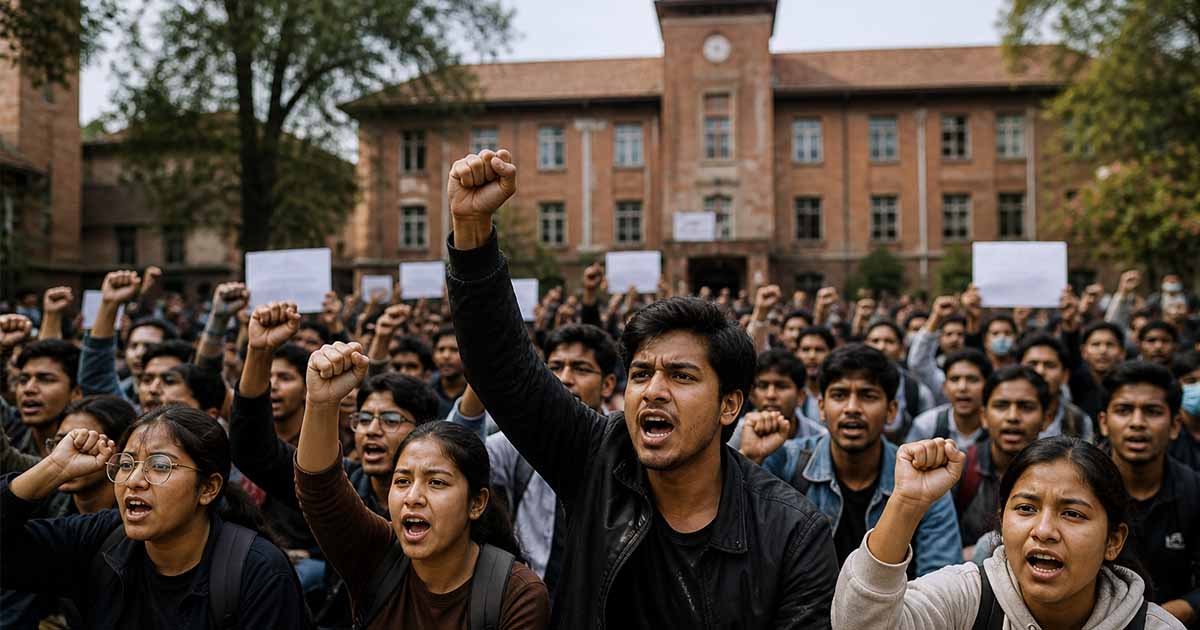
Nepal’s debate over student politics has once again come into focus after Prime Minister Balen Shah’s recent statement questioning the long-standing political influence within student and employee structures. His remarks have sparked renewed discussion across the country, especially around how student organizations have evolved over decades—from instruments of democratic change to entities increasingly tied to party interests.
The issue is not new. For years, citizens, analysts, and public figures have raised concerns that excessive party control has weakened both student bodies and administrative systems. While student political engagement once played a crucial role in shaping Nepal’s democratic journey, many now argue that its current form has drifted away from its original purpose.
Prime Minister’s Statement and Public Reaction
The discussion gained momentum after Prime Minister Balen Shah highlighted a widely shared concern: that party-based influence has negatively impacted both students and the broader administrative system. His statement reflects a sentiment that has been growing among the public for years.
Many people agree that student organizations were not always like this. They were once independent, driven by national interest, and focused on democratic values. However, over time, their increasing alignment with political parties has changed their role significantly.
This has led to a growing belief that reform is necessary, especially within the education sector.
Early Years of Student Politics in Nepal
The roots of student political activity in Nepal go back to the period after the introduction of democracy in 1951. With political openness, students began engaging with different ideologies and movements.
A key development came in 1954 with the establishment of Nepal Student Union. At the time, it was influenced by democratic ideals and aligned with broader national movements, but it was not solely focused on serving a political party.
Student organizations during this period were seen as platforms for advocacy, social change, and democratic participation. Their work contributed significantly to political awareness and national transformation.
Underground Movements During the Panchayat Era
In 1960, King Mahendra dissolved the multi-party system and introduced the Panchayat system, banning political parties and related organizations. This forced student groups to operate underground.
Between 1960 and 1980, student activists continued their efforts quietly, strengthening their networks and preparing for future movements. Despite restrictions, their commitment remained strong.
This period laid the foundation for a major uprising in 1979–1980, when students played a leading role in protests demanding political freedom and systemic reform.
Student Role in Democratic Movements
Student organizations were at the forefront of several key political movements in Nepal’s history.
- 1979–1980: Nationwide protests against the Panchayat system
- 1990: People’s Movement that restored multi-party democracy
- 2006: Mass movement that ended monarchy and established a republic
During these periods, students worked alongside political leaders and citizens, often leading demonstrations and mobilizing public support. Their contributions were widely recognized as essential to achieving political change.
At this stage, student organizations were largely viewed as positive forces working for national interest.
Shift Toward Party-Based Influence
After the restoration of democracy in 1990, student organizations became openly active again. However, this period also marked the beginning of increased political party involvement.
Gradually, major political parties began forming their own student wings. This shift changed the nature of student activism.
Instead of focusing on broader social issues, many organizations started aligning closely with party agendas. Their activities often reflected political strategies rather than independent student concerns.
This transformation became more visible after 2006, when the political landscape shifted significantly following the establishment of a republic.
Impact on Education and Institutions
As party influence grew, its effects began to appear within educational institutions.
Student organizations started engaging in activities such as protests, strikes, and demonstrations based on political directives. In some cases, this led to disruptions in academic environments.
Reports of administrative interference, campus closures, and conflicts within universities became more frequent. These developments raised concerns among students, educators, and parents.
The situation also extended to teachers and staff, with some being associated with political groups, further complicating institutional operations.
Growing Demand for Reform in the Education Sector
Today, there is increasing public support for reducing political influence within education. Many citizens believe that academic institutions should remain independent and focused on learning rather than political competition.
The government has introduced an ordinance aimed at addressing this issue by limiting the presence of such organizations in the education sector.
However, the proposal is expected to face legal challenges. As per Nepal’s legal framework, any party can challenge government ordinances in the Supreme Court. The court has the authority to amend, suspend, or even nullify such measures.
This means the final outcome will depend not only on political decisions but also on judicial review.
Balancing History and Future Direction
Looking at the historical role of student organizations, it is clear that they have contributed significantly to Nepal’s political development. Their involvement in major movements helped shape the country’s democratic structure.
At the same time, their current challenges highlight the need for reform. The issue is not the existence of student organizations themselves, but the extent of political influence within them.
Many experts suggest that restoring independence, promoting accountability, and focusing on student welfare could help rebuild trust in these institutions.
As Nepal continues to navigate this debate, the future of student politics remains a key question—one that will shape not only education but also the broader democratic culture of the country.


Written by Roshan Shrestha
Roshan Shrestha is a Nepali investigative journalist and founder of Khoj Samachar, covering corruption, transparency, and public-interest issues.
Arzu Rana and the Passport Scandal Explained: Inside Nepal’s E-Passport Probe
Janakpur Dham Waste Management Crisis Raises Public Concern
Sudan Gurung Reopens Nepal’s Palace Massacre Debate After 24 Years

What Nepal’s NHRC Gen Z Protest Report Reveals
What Is MoFA Mitra App and How to Use It?
Deuba Couple Case: Supreme Court Cancels Arrest Warrant
Why Kaski Court’s Decision Could Reshape Rabi Lamichhane’s Case
