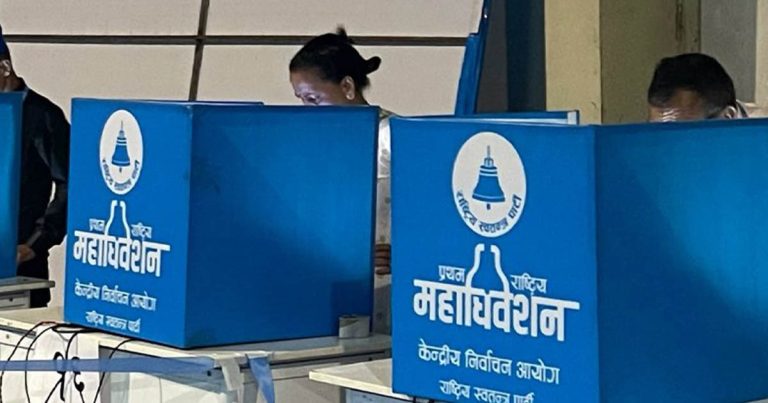
Balen Shah Urges Students to Avoid Party Politics
Prime Minister Balen Shah calls for an end to political influence in education and civil service, stressing merit and professional independence


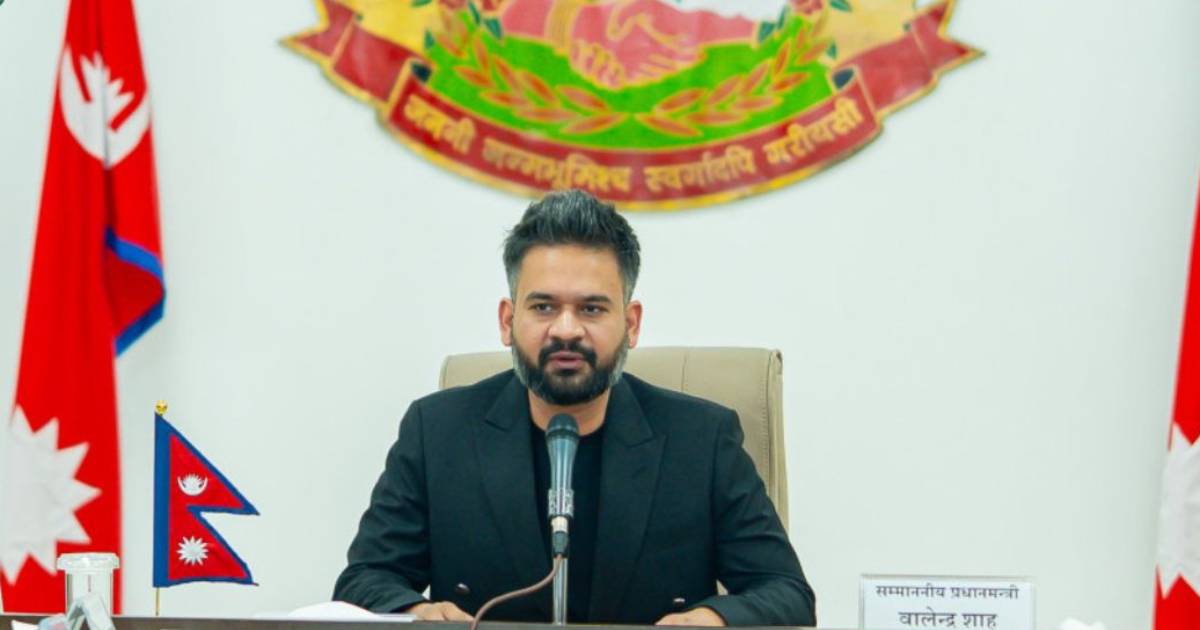
Prime Minister Balen Shah has called for a fundamental shift in how students and civil servants engage with politics, urging them to move away from party influence and focus instead on discipline, values, and professional integrity.
His remarks, shared through a public statement on Tuesday, come amid ongoing efforts by the government to reduce political interference in educational institutions and the bureaucracy.
In his message, the Prime Minister emphasized that students should learn political awareness through guidance and mentorship rather than by following political leaders blindly.
He also stressed that civil servants must prioritize rules and procedures over political connections, presenting the government’s recent policy decisions as part of a broader attempt to reform long-standing systemic issues.
Call for a Cultural Shift in Political Learning
The Prime Minister highlighted the importance of shaping a more responsible and thoughtful political culture among young people. He said students should not be drawn into political activities through mass mobilization led by party leaders, but instead should be guided by educators and principles.
According to him, political learning should promote civility, accountability, and informed thinking rather than loyalty to party figures.
This approach, he argued, would help develop a generation capable of contributing meaningfully to democratic processes without being tied to partisan agendas.
Criticism of Party Influence in Institutions
A key part of the Prime Minister’s statement focused on his criticism of student unions and employee organizations linked to political parties. He described many of these groups as functioning like “sleeper cells,” suggesting they operate quietly in support of party interests rather than serving their stated purpose.
He argued that such organizations have grown under the protection of political parties and continue to act in ways that benefit those parties, often at the expense of institutional integrity. This, he said, has contributed to a decline in trust in public systems.
- Student and employee groups seen as prioritizing party interests
- Political affiliation outweighing merit and competence
- Long-term impact on public trust in institutions
Government’s Decision to Remove Political Structures
The Prime Minister defended the government’s recent decision to remove party-affiliated student and employee organizations from educational institutions and the civil service. He said this move was necessary to address systemic distortions that have persisted for years.
He clarified that the decision was not due to any inability to build such organizations but rather a conscious choice based on past experiences. According to him, simply adding more party-aligned groups would not improve education quality or enhance the dignity of civil servants.
Instead, the government has taken steps to ban political symbols and affiliations within these sectors, aiming to create an environment where professionalism and independence can thrive.
Focus on Merit-Based Governance
Another major theme in the Prime Minister’s remarks was the need to prioritize merit, skills, and efficiency in government operations. He stressed that appointments, transfers, and promotions should be based on capability rather than political proximity.
He argued that the existing system has often rewarded connections over competence, leading to inefficiencies and public dissatisfaction. By removing political influence, the government hopes to establish a more transparent and fair system.
- Appointments based on skills and qualifications
- Reduction of political interference in decision-making
- Strengthening institutional credibility
Not a Fight Against Political Parties
Despite the strong tone of his criticism, the Prime Minister made it clear that the initiative is not directed against any particular political party. Instead, he described it as an effort to protect and strengthen the system itself.
He said the goal is to move the country away from excessive party control and toward a more institutionalized framework where rules and procedures take precedence. This, he noted, is essential for long-term stability and development.
According to him, the reforms are about safeguarding the future rather than targeting specific groups or individuals.
Public Support Seen as Crucial
The Prime Minister concluded his message by appealing for public support and trust. He acknowledged that meaningful change cannot be achieved through speeches alone but requires decisive actions backed by citizens.
He emphasized that the government was elected to respond to public demand and is committed to working in the best interests of the people. He assured that the reforms are designed to benefit the broader population and strengthen the country’s institutions.
- Government seeks trust and cooperation from citizens
- Reforms presented as response to public demand
- Commitment to long-term national interest
Broader Implications for Education and Governance
The Prime Minister’s statement reflects a broader debate about the role of political influence in education and governance. By addressing the issue directly, the government has signaled its intention to reshape how institutions function and how individuals within them operate.
The emphasis on professionalism, independence, and merit suggests a shift toward a more structured and accountable system. Whether these changes will achieve their intended outcomes remains to be seen, but the message marks a clear attempt to redefine the relationship between politics and public institutions.
As the reforms take shape, their impact on students, civil servants, and the wider political environment will likely become a key area of focus in the coming months.


Written by Roshani Shrestha Pathak
Roshani Shrestha Pathak is the English Bureau Chief at Khoj Samachar, overseeing English-language editorial operations and newsroom coordination.
Why Did an RSP MP Recall Kulman Ghising in Parliament?
Prime Minister’s Office Like Hitler’s Gas Chamber: Lawmaker
Speaker Aryal: Learn Parliament, Not Your Phone
Four Former PMs Share Stage at Madan Bhandari Event
Prachanda Urges Left Unity at Bhandari Anniversary

Ramji Yadav Faces Scrutiny After Party Election Loss
RSP Elects Rabi, Swarnim, Sobita and Bipin to Top Posts