K.P. Khanal House Controversy Fuels Land Debate
Demolitions in Kathmandu and a lawmaker’s house raise wider questions about land rights, legality, and treatment of landless families


The issue of landless settlements has once again taken center stage in Nepal, as demolition drives in Kathmandu and a controversial house linked to a sitting lawmaker spark nationwide debate. The situation has exposed deep divisions in public opinion, with social media sharply split between those supporting strict enforcement of land laws and those calling for humane solutions for landless families.
In recent days, the destruction of informal settlements in Kathmandu has expanded beyond temporary shelters to include permanent houses, schools, and religious structures. At the same time, a three-story house associated with Member of Parliament K.P. Khanal has drawn intense attention, raising broader questions about land ownership, legality, and fairness in enforcement. The issue is no longer about a single structure but reflects a much larger national challenge involving millions of people.
Growing Tension Over Demolition of Settlements
The ongoing demolition of settlements in Kathmandu has created widespread concern. Authorities have begun removing structures built on land that reportedly violates river standards, even when those buildings have official documentation such as land ownership papers and approved building designs.
The situation has affected not only informal huts but also permanent houses, public schools, and religious sites, including churches, temples, and monasteries. This has intensified public reaction, as many see the demolitions as abrupt and lacking adequate planning for displaced residents.
At the same time, debates on social media have shifted. Earlier, many dismissed settlement residents as illegal occupants. Now, there is increasing awareness about the difference between informal land and encroached land, leading to more nuanced discussions.
Controversy Surrounding K.P. Khanal’s House
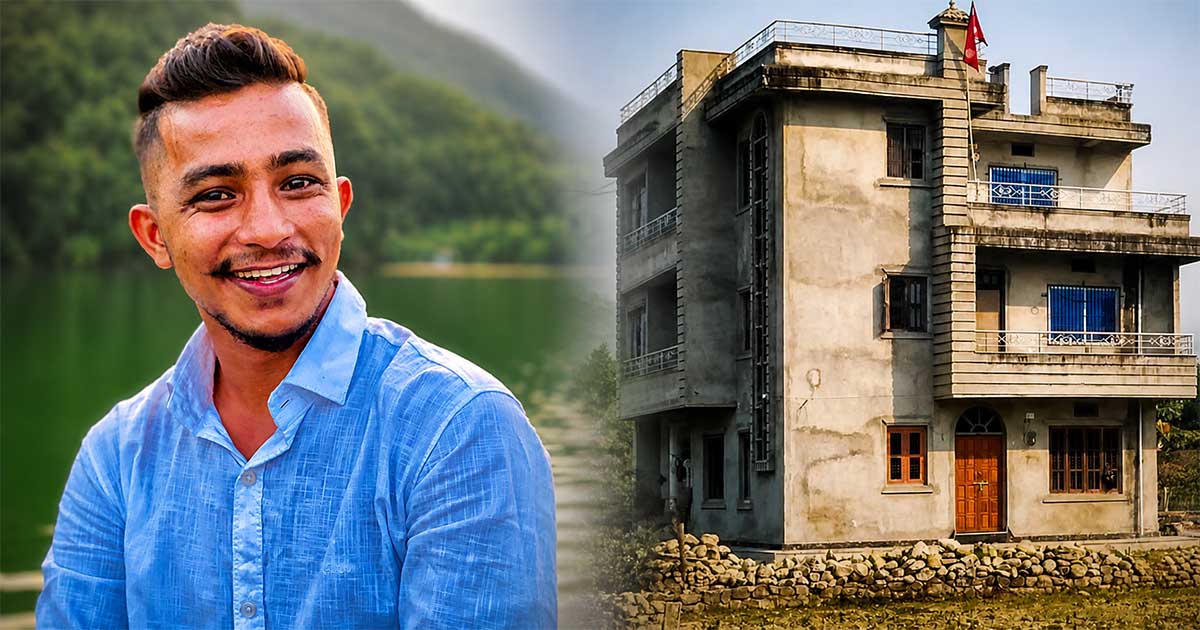
The debate gained further momentum after a photo of a three-story house allegedly belonging to Member of Parliament K.P. Khanal surfaced online. The image was shared by an individual named Dil Nishani Magar, who described it as a “landless settlement house” linked to the lawmaker.
Khanal responded to the post through a comment, strongly criticizing the claims and accusing the individual of spreading misinformation. However, he did not directly confirm or deny whether the house shown in the image belongs to him.
The exchange has fueled speculation and intensified public scrutiny. From mainstream media to online platforms, the issue has become a major talking point, highlighting the intersection of politics, land rights, and public accountability.
Background of the Lawmaker
K.P. Khanal has been a known figure since his student days, particularly for his involvement in cleanliness campaigns. His family background includes parents working as laborers in India, and he later became politically active.
After Balen Shah became mayor of Kathmandu, Khanal reportedly developed closer ties with him and eventually joined the Rastriya Swatantra Party. He was elected as a Member of Parliament from Kailali, campaigning on issues including land rights and the distribution of ownership certificates to landless people.
This background has added another layer to the controversy, as his political stance on land issues is now being examined alongside the current debate.
Understanding Informal Government Land
A key issue at the center of the debate is the concept of informal or unregistered government land, commonly referred to as land without ownership certificates.
Such land is legally owned by the government and is not registered under any individual’s name. Even if people have been living there for years or have constructed houses, they do not legally own the land.
- The land remains under government ownership
- Residents do not have official ownership certificates
- The government can allocate, manage, or clear the land as needed
- Structures built without approval are considered unauthorized
Even on privately owned land, building a house without an approved design is considered illegal. Therefore, constructing permanent houses on government land without proper authorization is clearly against regulations.
Scale of the Landless Population
The issue is far from isolated. According to local authorities in Kailali, there are thousands of unmanaged and landless families in areas like Lamki-Chuha.
- 16,500 unmanaged households in Lamki-Chuha alone
- 1,226 landless Dalit families
- 1,918 landless squatters
- Over 40,000 landless families across the district
Nationwide, the situation is even more significant. More than one million families are estimated to be landless, representing approximately 4 to 5 million individuals.
Khanal himself is said to be among these landless individuals, which has added complexity to the ongoing debate.
Role of the Land Commission
To address the issue, the government had established a National Land Commission tasked with identifying genuine landless families and distributing ownership certificates.
The commission has been working across the country, including in the area where Khanal’s house is located. Reports suggest that the necessary processes for land registration have been completed in that region, but ownership certificates have not yet been issued.
This delay has left many families in a legal gray area, where they have gone through official procedures but still lack formal ownership.
Key Differences in Land Categories
While both Kathmandu settlements and areas like Kailali involve land without ownership certificates, there are important differences.
One major factor is compliance with environmental and infrastructure standards, especially river boundaries. Under Nepal’s legal framework, areas such as riverbanks, roads, national parks, and high-tension line zones have strict regulations.
If structures fall within these restricted zones, authorities have the legal right to remove them, even if the land is privately owned. In such cases, compensation may be provided for private property, but not for government land.
This distinction plays a crucial role in understanding why certain areas are being targeted for demolition more aggressively.
Public Reaction and Broader Implications
Public reaction has been mixed. Some argue that people who can afford expensive items or build large houses should not be considered landless and should have purchased legal land instead.
Others believe that such arguments overlook the complex realities faced by landless families, including systemic issues and delays in government processes.
The controversy surrounding Khanal’s house has also sparked questions about fairness. Critics ask why similar standards are not applied equally, while supporters emphasize the need to address the issue comprehensively rather than focusing on individuals.
Ultimately, the debate has highlighted a critical policy gap. Many believe that the government must first identify genuine landless families, ensure proper management, and provide legal ownership where appropriate before carrying out demolition drives.
The situation underscores a pressing national challenge. With millions affected, the issue of landless settlements is not just about legality but also about social justice, planning, and long-term solutions.


Written by Roshan Shrestha
Roshan Shrestha is a journalist, author, and digital entrepreneur. He is the founder and editor-in-chief of Khoj Samachar and works in investigative and public-interest journalism, focusing on anti-corruption reporting, transparency, and youth-driven civic engagement through fact-based digital media. He was born in Bahrabise, Nepal.

Ramji Yadav Faces Scrutiny After Party Election Loss
RSP Elects Rabi, Swarnim, Sobita and Bipin to Top Posts
RSP Central Committee Elected Members List 2026

Why Was Sudan Gurung Criticized Despite Doing the Right Thing?
Mahesh Basnet Defends Bishnu Paudel After Arrest
Why Was UML Leader Bishnu Paudel Arrested?

Mukul Dhakal: Not Even Invited to RSP Convention