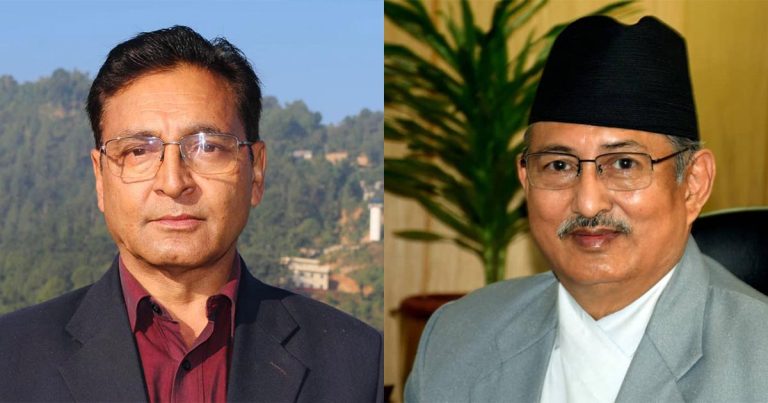
Jhala Nath Khanal Demands Apology Over Shah’s Border Remarks
The senior communist leader called the prime minister’s statement in Parliament anti-national and urged its removal from the official record.


A statement made by Prime Minister Balendra Shah in the House of Representatives has drawn a strong response from senior communist leader Jhala Nath Khanal, who has accused the prime minister of undermining Nepal’s longstanding position on territorial integrity and national sovereignty.
The dispute centers on remarks Shah made during a parliamentary address, where he reportedly said that Nepal, too, had encroached on Indian land. Khanal described the statement as dangerous, factually wrong, and contrary to the national interest.
For decades, questions of territory and border disputes have remained deeply sensitive in Nepal’s political landscape. Any public comment suggesting Nepal itself has occupied foreign land carries political weight far beyond a routine parliamentary exchange.
<h2>Khanal Demands Explanation and Apology</h2>
Writing on Facebook, Khanal said the prime minister had made an “extremely serious, sad, wrong and anti-national” statement while addressing Parliament.
He argued that Nepalis have struggled for generations against foreign encroachment and continue to raise concerns about territorial issues affecting the country. In that context, Khanal said, comments that appear to diminish those concerns or favor foreign interests amount to a betrayal of national sentiment.
Khanal questioned the basis of Shah’s claim and asked what facts, evidence, or official documents supported such a conclusion.
He also maintained that the statement had hurt the patriotic feelings of Nepalis both inside the country and abroad.
<h2>Call for Parliamentary Action</h2>
Khanal went beyond criticism and demanded institutional action.
He said a person making such remarks was unfit to occupy the office of prime minister and urged citizens and political forces who consider themselves patriotic to continue protesting and condemning the statement until Shah issues a public apology.
He also called on Speaker of the House of Representatives to remove the disputed remarks from the official parliamentary record.
<ul>
<li>Khanal demanded that Prime Minister Balendra Shah publicly apologize.</li>
<li>He urged patriotic groups and citizens to continue opposing the statement until an apology is issued.</li>
<li>He requested the Speaker to strike the remarks from Parliament’s official record.</li>
<li>He challenged the prime minister to present documentary evidence supporting the claim.</li>
</ul>
<h2>A Sensitive Political Flashpoint</h2>
The exchange highlights how questions of borders and national sovereignty continue to carry enormous emotional and political significance in Nepal.
While parliamentary debates often involve sharp disagreement, Khanal’s response indicates that Shah’s remarks have been interpreted not simply as a political statement but as a challenge to a deeply held national narrative regarding territorial disputes and foreign encroachment.
The issue is now likely to remain part of the political conversation as pressure mounts on the prime minister to clarify or defend the remarks made in Parliament.

Written by Roshan Shrestha
Roshan Shrestha is a Nepali investigative journalist and founder of Khoj Samachar, covering corruption, transparency, and public-interest issues.
Supreme Court Orders Immediate Release of Former UML MP Koiri
Government Restores Personal Secretary Facility for Lawmakers
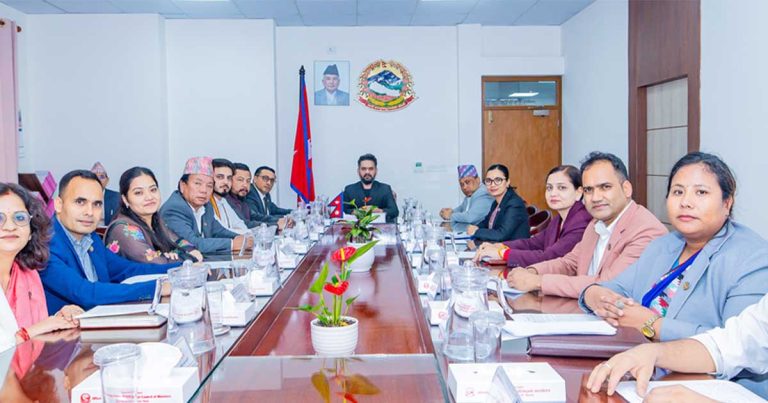
Balen Shah Chairs Cabinet Meeting at Singha Durbar
Sobita Gautam Sends 166-Bill Plan to Nepal Parliament
Four Congress Ministers Resign from Karnali Government
ANNFSU Students Protest at Singha Durbar South Gate
Manish Jha Calls for Investigation Into Media Blockades