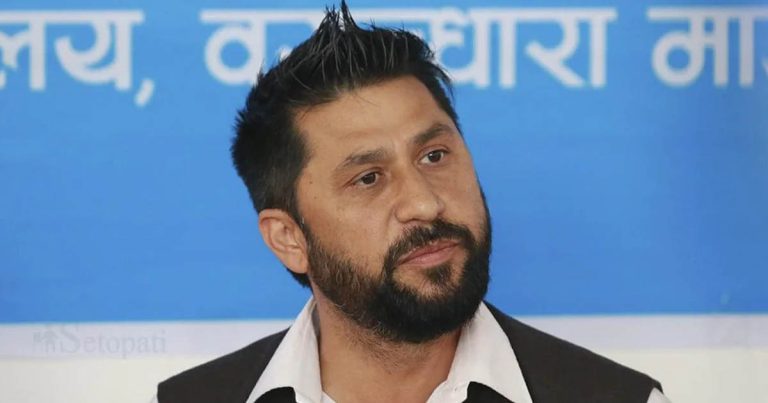
Fake Bhutanese Refugee Scam in Nepal: Full Verdict and Sentences
Kathmandu District Court has sentenced 16 defendants in Nepal’s fake Bhutanese refugee case, detailing individual prison terms, fines, acquittals, age-based relief and the full appeal process.


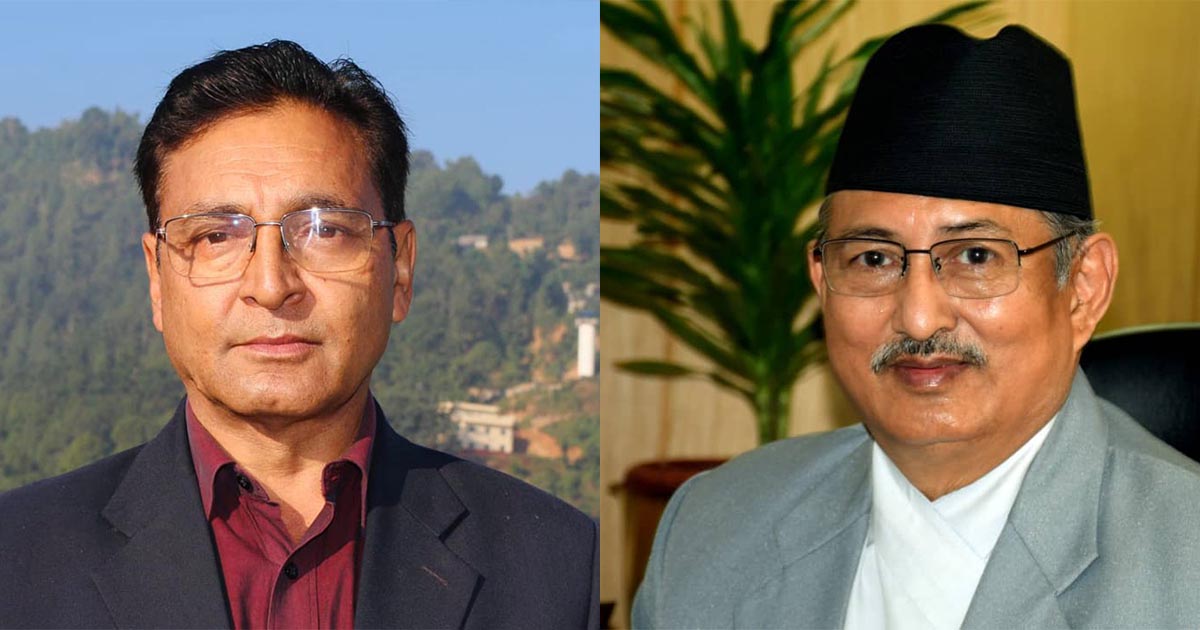
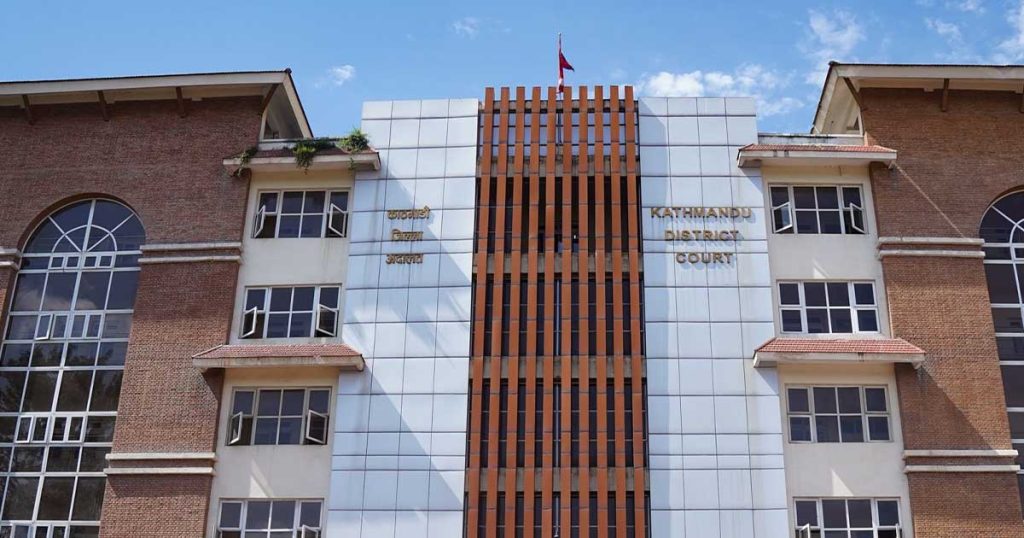
In the fake Bhutanese refugee case, a single bench of Kathmandu District Court Judge Tej Bahadur Khadka determined the sentences on Tuesday for a total of 16 people—15 defendants in the main case and one defendant in a separate supplementary case filed against Bechan Jha.
Those sentenced include Nepali Congress leader and former Home Minister Bal Krishna Khand, CPN-UML leader and former Deputy Prime Minister Top Bahadur Rayamajhi, former Home Secretary Tek Narayan Pandey, and Dr. Indrajit Rai, who served as security adviser to the then Home Minister.
The Kathmandu District Court imposed different sentences on them according to their respective roles and levels of involvement in the offences of fraud, forgery of government documents, organized crime, and crimes against the state.
Now, let us look at the offences for which each of the 16 defendants was convicted, the length of imprisonment imposed, and the amount of fine they were ordered to pay.
1. Tek Nath Rizal
- Forgery of government documents: 1 year in prison and a fine of Rs 10,000
- Fraud: 1 year in prison and a fine of Rs 10,000
- Organized crime: 1 year and 6 months in prison and a fine of Rs 15,000
- Crime against the state under Section 51(4): 6 months in prison and a fine of Rs 5,000
- Section 51(7): No additional punishment
Final total sentence: 2 years in prison and a fine of Rs 20,000
2. Keshav Prasad Dulal
- Forgery of government documents: 2 years in prison and a fine of Rs 20,000
- Fraud: 2 years in prison and a fine of Rs 20,000
- Organized crime: 3 years in prison and a fine of Rs 30,000
- Crime against the state under Section 51(4): 1 year and 6 months in prison and a fine of Rs 15,000
- Section 51(7): No additional punishment
Final total sentence: 4 years in prison and a fine of Rs 40,000
3. Sanu Bhandari
- Forgery of government documents: 2 years in prison and a fine of Rs 20,000
- Fraud: 2 years in prison and a fine of Rs 20,000
- Organized crime: 3 years in prison and a fine of Rs 30,000
- Crime against the state under Section 51(4): 1 year and 6 months in prison and a fine of Rs 15,000
- Section 51(7): No additional punishment
Final total sentence: 4 years in prison and a fine of Rs 40,000
4. Sagar Rai
- Forgery of government documents: Acquitted of this offence
- Fraud: 2 years in prison and a fine of Rs 20,000
- Organized crime: 3 years in prison and a fine of Rs 30,000
- Crime against the state under Section 51(4): 1 year and 6 months in prison and a fine of Rs 15,000
- Section 51(7): No additional punishment
Final total sentence: 4 years in prison and a fine of Rs 40,000
5. Sandesh Sharma
- Forgery of government documents: Acquitted of this offence
- Fraud: 2 years in prison and a fine of Rs 20,000
- Organized crime: 3 years in prison and a fine of Rs 30,000
- Crime against the state under Section 51(4): 1 year and 6 months in prison and a fine of Rs 15,000
- Section 51(7): No additional punishment
Final total sentence: 4 years in prison and a fine of Rs 40,000
6. Dr. Indrajit Rai
- Forgery of government documents: Acquitted of this offence
- Fraud: 2 years in prison and a fine of Rs 20,000
- Organized crime: 3 years in prison and a fine of Rs 30,000
- Crime against the state under Section 51(4): 1 year and 6 months in prison and a fine of Rs 15,000
- Section 51(7): An additional 6 months in prison
Final total sentence: 4 years in prison and a fine of Rs 40,000
However, a special concession has been applied in Dr. Rai’s case because of his age. As he is a senior citizen above the age of 75, he has received a 75 percent reduction in his remaining prison sentence under the legal provisions relating to senior citizens.
According to the court’s sentencing details, he had already served 3 years, 2 months and 10 days in prison while being held in custody during the trial.
Out of the four-year sentence, he had nine months and 20 days remaining. After applying the senior citizen concession to that remaining period, he received a reduction of seven months and seven days.
Therefore, the court’s details state that he must now serve 2 months and 13 days in prison and pay a fine of Rs 40,000.
7. Govinda Kumar Chaudhary, also known as Bikram
- Forgery of government documents: Acquitted of this offence
- Fraud: 2 years in prison and a fine of Rs 20,000
- Organized crime: 3 years in prison and a fine of Rs 30,000
- Crime against the state under Section 51(4): 1 year and 6 months in prison and a fine of Rs 15,000
- Section 51(7): No additional punishment
Final total sentence: 4 years in prison and a fine of Rs 40,000
8. Ang Tawa Sherpa
- Forgery of government documents: Acquitted of this offence
- Fraud: 2 years in prison and a fine of Rs 20,000
- Organized crime: 3 years in prison and a fine of Rs 30,000
- Crime against the state under Section 51(4): 1 year and 6 months in prison and a fine of Rs 15,000
- Section 51(7): An additional 6 months in prison
Final total sentence: 4 years in prison and a fine of Rs 40,000
9. Tek Narayan Pandey
- Forgery of government documents: Acquitted of this offence
- Fraud: 2 years in prison and a fine of Rs 20,000
- Organized crime: 3 years in prison and a fine of Rs 30,000
- Crime against the state under Section 51(4): 1 year and 6 months in prison and a fine of Rs 15,000
- Section 51(7): An additional 6 months in prison
Final total sentence: 4 years in prison and a fine of Rs 40,000
10. Top Bahadur Rayamajhi
- Forgery of government documents: Acquitted of this offence
- Fraud: 2 years in prison and a fine of Rs 20,000
- Organized crime: 3 years in prison and a fine of Rs 30,000
- Crime against the state under Section 51(4): 1 year and 6 months in prison and a fine of Rs 15,000
- Section 51(7): An additional 6 months in prison
Final total sentence: 4 years in prison and a fine of Rs 40,000
11. Bal Krishna Khand
- Forgery of government documents: Acquitted of this offence
- Fraud: 1 year in prison and a fine of Rs 10,000
- Organized crime: 1 year and 6 months in prison and a fine of Rs 15,000
- Crime against the state under Section 51(4): 6 months in prison and a fine of Rs 5,000
- Section 51(7): An additional 3 months in prison
Final total sentence: 2 years in prison and a fine of Rs 20,000
12. Narendra K.C.
- Forgery of government documents: Acquitted of this offence
- Fraud: 6 months in prison and a fine of Rs 5,000
- Organized crime: 9 months in prison and a fine of Rs 7,500
- Crime against the state under Section 51(4): 6 months in prison and a fine of Rs 5,000
- Section 51(7): No additional punishment
Final total sentence: 1 year in prison and a fine of Rs 10,000
13. Shamsher Miya
- Forgery of government documents: Acquitted of this offence
- Fraud: 6 months in prison and a fine of Rs 5,000
- Organized crime: 9 months in prison and a fine of Rs 7,500
- Crime against the state under Section 51(4): 6 months in prison and a fine of Rs 5,000
- Section 51(7): No additional punishment
Final total sentence: 1 year in prison and a fine of Rs 10,000
14. Hari Bhakta Maharjan
- Forgery of government documents: Acquitted of this offence
- Fraud: 6 months in prison and a fine of Rs 5,000
- Organized crime: 9 months in prison and a fine of Rs 7,500
- Crime against the state under Section 51(4): 6 months in prison and a fine of Rs 5,000
- Section 51(7): No additional punishment
Final total sentence: 1 year in prison and a fine of Rs 10,000
15. Niranjan Kumar Kharel
- Forgery of government documents: Acquitted of this offence
- Fraud: 6 months in prison and a fine of Rs 5,000
- Organized crime: 9 months in prison and a fine of Rs 7,500
- Crime against the state under Section 51(4): 6 months in prison and a fine of Rs 5,000
- Section 51(7): No additional punishment
Final total sentence: 1 year in prison and a fine of Rs 10,000
Only Three Defendants Convicted of Forging Government Documents
The court convicted only Tek Nath Rizal, Keshav Prasad Dulal, and Sanu Bhandari of the offence of forging government documents.
Sagar Rai, Sandesh Sharma, Dr. Indrajit Rai, Govinda Kumar Chaudhary, Ang Tawa Sherpa, Tek Narayan Pandey, Top Bahadur Rayamajhi, Bal Krishna Khand, Narendra K.C., Shamsher Miya, Hari Bhakta Maharjan, and Niranjan Kumar Kharel were acquitted of the forgery charge.
16. Bechan Jha—Separate Supplementary Case
The case filed against Bechan Jha was separate from the main case involving the 15 defendants listed above.
- Attempt to commit fraud: 1 year in prison and a fine of Rs 10,000
- Other charges, including forgery, organized crime, and crimes against the state: The prosecution’s claims were not proven
Police arrested Bechan Jha on the night of Friday, Asar 14, 2081 BS, from the Nepal–India border area.
He had not been arrested by the time the investigation into the main case was completed because he had been absconding. After he was later arrested and the investigation against him was completed, a separate charge sheet was filed.
That is why the verdict in his case was also delivered separately from the main case involving the other 15 defendants.
In Brief, Who Received What Final Sentence?
- 4 years in prison and a fine of Rs 40,000: 9 people
- 2 years in prison and a fine of Rs 20,000: 2 people
- 1 year in prison and a fine of Rs 10,000: 4 people in the main case
- 1 year in prison and a fine of Rs 10,000: Bechan Jha in the supplementary case
Why Were the Sentences for the Different Offences Not Added Together?
Now, the most important thing to understand is that the different sentences mentioned above for the separate offences were not simply added together to determine the final prison sentence.
When more than one offence arises from the same incident, the court treats them as an integrated offence while determining the final sentence.
In such a situation, the general practice is to take the full sentence imposed for the most serious offence and then add half of the sentence imposed for the second-most serious offence.
For example, Tek Nath Rizal received separate sentences of 1 year and 6 months, 1 year, 1 year, and 6 months for the different offences.
However, all of those sentences were not added together to make a total of four years.
His longest individual sentence was 1 year and 6 months.
The second-longest sentence was 1 year, so half of that sentence, which is 6 months, was added to the longest sentence.
In this way, his final integrated sentence was fixed at 2 years in prison.
Similarly, Keshav Prasad Dulal, Sanu Bhandari, Sagar Rai, Sandesh Sharma, and several others received separate sentences of up to 3 years, 2 years, 2 years, and 1 year and 6 months for different offences.
In their cases, 1 year, which is half of the second-longest sentence of 2 years, was added to the longest sentence of 3 years.
As a result, their final sentence was fixed at 4 years in prison.
Therefore, it would be incorrect to add all the separate sentences together and conclude that they were sentenced to seven or eight years in prison.
How Much Longer Will They Have to Remain in Prison?
The time already spent in prison while being held in custody during the trial will be counted toward the total prison sentence of the individuals whose sentences were determined today.
Therefore, when a person receives a four-year sentence but has already spent three years in prison, that person will generally have to serve only the remaining one year.
However, not all the defendants were arrested on the same day.
Some have remained in prison from the beginning, while others had been released on bail or on an ordinary court appearance date.
Therefore, the amount of time each person still has to spend in prison will have to be calculated separately according to the dates of arrest, detention, release, and re-detention in each individual case.
In Dr. Indrajit Rai’s case, however, the court itself calculated both the age-based concession and the period he had already served.
The court clearly stated that he now has 2 months and 13 days of imprisonment remaining.
Is the District Court’s Verdict Final?
However, this verdict of the District Court is not necessarily the final verdict.
A defendant or the government side that is dissatisfied with the judgment may file an appeal before the High Court within the time limit and according to the legal procedure provided by law.
After that, depending on the nature of the case and the applicable legal circumstances, the matter may also reach the Supreme Court.
A higher court may uphold, reduce, increase, or overturn the District Court’s judgment and sentence.
Therefore, the sentence determined by the Kathmandu District Court is the current decision, but the final outcome may change after the appeal process.

Written by Roshan Shrestha
Roshan Shrestha is a Nepali investigative journalist and founder of Khoj Samachar, covering corruption, transparency, and public-interest issues.
Bhutanese Refugee Scam: 16 Convicted, 7 Acquitted, 8 Fled
Arzu Rana and the Passport Scandal Explained: Inside Nepal’s E-Passport Probe
Janakpur Dham Waste Management Crisis Raises Public Concern
Sudan Gurung Reopens Nepal’s Palace Massacre Debate After 24 Years

What Nepal’s NHRC Gen Z Protest Report Reveals
What Is MoFA Mitra App and How to Use It?
Deuba Couple Case: Supreme Court Cancels Arrest Warrant