Why the Supreme Court Halted Nepal’s New Property Probe Commission
Explained: The real reason the Supreme Court halted Nepal's new Property Probe Commission and what the constitutional dispute is really about.


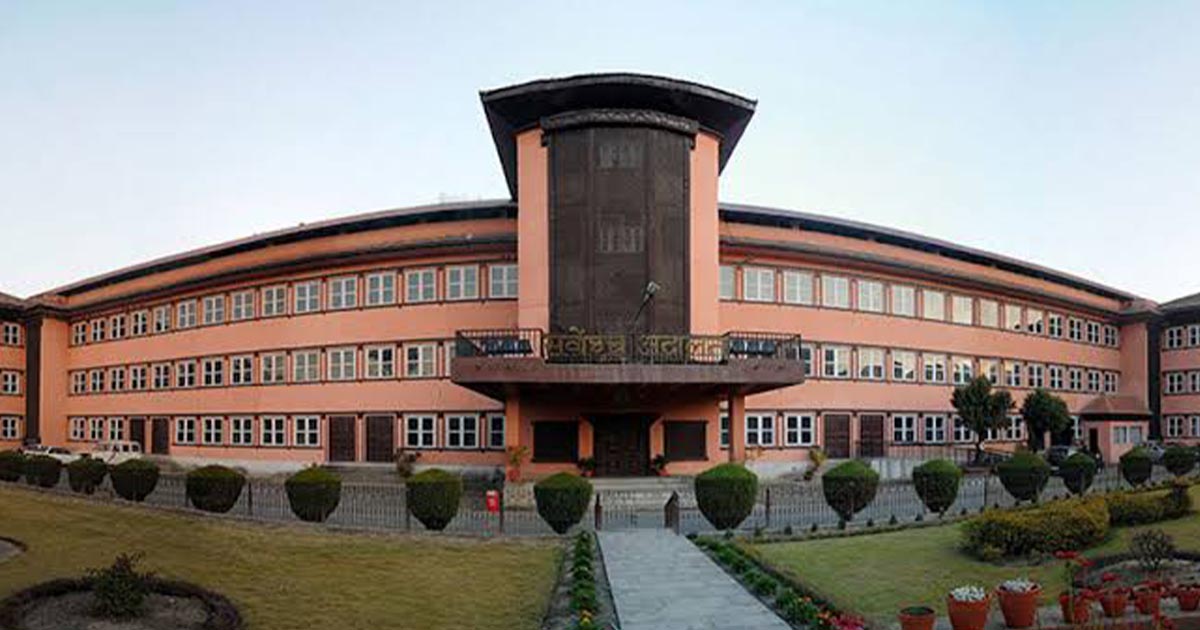
Nepal’s Supreme Court has put a government-formed property investigation commission on hold, and the order has confused a lot of people. The commission was set up to probe the assets of political leaders, bureaucrats, judges and security officials going back to 2005/06, as part of what the government called a drive for good governance. It began functioning. Then, one interim order after another from the Supreme Court told it to stop.
That has left many asking why a court would block a corruption-fighting body a government just built. The answer sits in the Constitution itself.
Separation of powers, not a blank check for good intentions
Nepal’s Constitution splits state power between the legislature, the executive and the judiciary so that no single branch accumulates too much authority. Parliament makes law. The government implements it and runs day-to-day administration. The courts interpret law and check whether Parliament and the government are acting within constitutional limits.
None of this means every decision needs sign-off from all three branches. But when one oversteps, another can intervene. If the government acts unconstitutionally, courts can stop it. If Parliament passes a law that conflicts with the Constitution, courts can strike it down. If judges misbehave, Parliament can remove them through a two-thirds impeachment vote.
Think of it like a football match. Players play, coaches strategize, and the referee checks whether the game is following the rules. A referee cannot pick up the ball and score a goal himself — but if a player uses his hands to score, the referee can call it out. Good intentions from the government do not exempt it from following constitutional procedure. Wanting to fight corruption does not let the executive invent powers the Constitution never gave it.
Where the commission ran into trouble
Article 239 of the Constitution assigns investigation of corruption by public officeholders to the Commission for the Investigation of Abuse of Authority (CIAA) — an independent constitutional body, not an office under the Prime Minister or the Council of Ministers. Within its legal mandate, the CIAA can investigate the Prime Minister, ministers, lawmakers, former prime ministers and government employees for abuse of office.
But the Constitution does not lump every public officeholder into one basket for the CIAA to handle. Sitting judges, officials removable only through impeachment, and personnel governed by military law all fall under separate, specific constitutional arrangements.
This is exactly where the new commission runs into a wall. Formed by the Council of Ministers, it was given power to investigate officeholders across the executive, the legislature and the judiciary all at once. In plain terms: a commission created by the Prime Minister and his cabinet would be investigating the Chief Justice, judges, lawmakers, the army chief and other constitutional officeholders.
That raises an obvious question — does this open a path for the executive to control other constitutionally equal branches? Unlike the CIAA, which the Constitution establishes as independent, this commission exists purely because the Council of Ministers decided to create it. If a cabinet-appointed body starts summoning judges, lawmakers and top military officers for scrutiny, the executive effectively positions itself above the other branches — a scenario critics describe as turning the Prime Minister into a “supremo” over every institution in the state. That is the constitutional question now before the court.
Judges answer to a different process
Complaints about judicial misconduct — bad behaviour, dereliction of duty, breach of discipline — go to the Judicial Council, the constitutional body empowered to examine and act on such complaints against judges.
Removing the Chief Justice or a Supreme Court judge, though, is Parliament’s job, through a two-thirds impeachment vote.
A sitting judge cannot simply be pulled into a corruption probe by an ordinary commission the cabinet created on its own authority. Matters of judicial conduct must first go through the Judicial Council or the impeachment process the Constitution lays out.
There is also a direct constitutional bar: under Article 239, the CIAA itself cannot investigate a sitting judge. That only becomes possible once the judge leaves office, and even then it proceeds under federal law.
The army and Parliament face their own separate tracks
Nepal Army personnel are not governed by the same general legal process as ordinary civil servants. The Military Act 2006, military discipline codes, internal investigation procedures and the military court system apply to them separately.
That raises a serious question of its own — can a cabinet-formed commission bypass established military legal procedure to investigate a sitting military officer or the army chief? At the same time, it would be wrong to assume that only a military court can look into corruption involving army personnel. Which body investigates, under what law, and at what stage depends on the nature of the allegation and the officer’s current status. The Constitution grants sitting military personnel special protection from ordinary CIAA investigation, though federal law can apply once they leave service.
Then there is Parliament. Lawmakers who take bribes, misuse public funds or otherwise abuse their office can be investigated by the CIAA under law. Whether a cabinet-formed commission can investigate sitting members of a sovereign Parliament is a separate matter entirely — and that is precisely the question at issue.
The Prime Minister and ministers are not above corruption investigation either; the CIAA can act against them under law for abuse of office.
So the real question returns to this: the CIAA already has authority to investigate the Prime Minister, ministers, lawmakers and civil servants. The Judicial Council and impeachment process already cover judges. Military law already covers army personnel. Can the Council of Ministers simply create another commission and fold all of these separate mandates into one body?
What the Supreme Court actually said
The court has not ordered anyone to stop investigating corruption, spare politicians’ assets, or protect the corrupt. What it asked was narrower and sharper — under which article of the Constitution or law does this cabinet-formed commission derive authority to investigate the Chief Justice, judges, lawmakers, the army chief and other constitutional officeholders?
And if the Constitution has already assigned these matters to the CIAA, the Judicial Council, Parliament and military law through separate defined processes, can a single cabinet decision transfer all of that authority into one new commission?
Until that constitutional question is resolved, the Supreme Court ordered the commission to halt its work.
What still applies while the case is pending
- Corruption allegations against the Prime Minister, ministers, lawmakers or civil servants can still be investigated by the CIAA, and where relevant, by bodies like the Department of Money Laundering Investigation.
- Conduct and discipline issues involving sitting judges go through the Judicial Council, with impeachment as the constitutional route for removal; corruption cases can proceed under federal law once a judge leaves office.
- Matters involving military personnel follow the Military Act and internal military process while they remain in service, with federal law applying after they leave.
Corruption investigation itself is not off the table. What remains unresolved is whether the Prime Minister’s cabinet can, on its own decision, gather powers the Constitution has already distributed across separate institutions into a single new commission.
A full bench of the Supreme Court will now decide whether the commission, as constituted, is constitutional — and whether it can hold the sweeping authority the government gave it.

Written by Roshan Shrestha
Roshan Shrestha is a Nepali investigative journalist and founder of Khoj Samachar, covering corruption, transparency, and public-interest issues.
Nepal Supreme Court Opens Government Ads to Private Media
Fake Bhutanese Refugee Scam in Nepal: Full Verdict and Sentences
Arzu Rana and the Passport Scandal Explained: Inside Nepal’s E-Passport Probe
Janakpur Dham Waste Management Crisis Raises Public Concern
Sudan Gurung Reopens Nepal’s Palace Massacre Debate After 24 Years

What Nepal’s NHRC Gen Z Protest Report Reveals
What Is MoFA Mitra App and How to Use It?