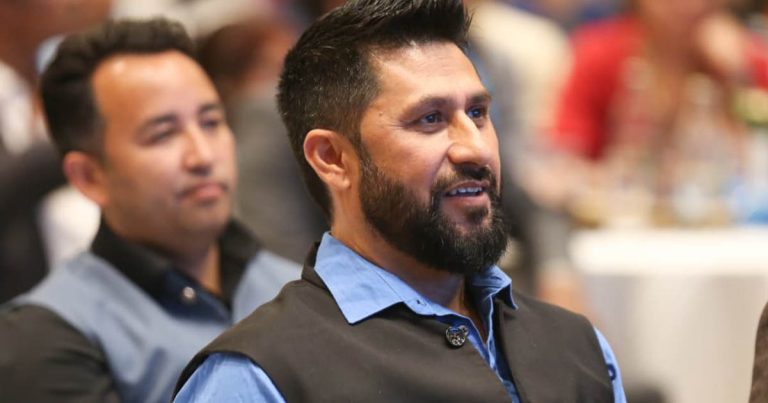
Rabi Lamichhane Released on Bail, Eligible to Contest Election Amid Legal Uncertainty
Rabi Lamichhane, chairperson of the Rastriya Swatantra Party, has been released on bail in a cooperative fraud case, making him legally eligible to contest the upcoming House of Representatives by-election, while his parliamentary status remains unresolved.


Rabi Lamichhane, the chairperson of the Rastriya Swatantra Party (RSP), has been released on bail in connection with a cooperative fraud case, opening the door for him to contest the upcoming House of Representatives by-election. However, questions remain over his ability to function fully as a lawmaker.
Lamichhane was released on Friday after submitting a bank guarantee of NPR 37.48 million at the Rupandehi District Court in Bhairahawa, court information officer Padam Aryal said.
With his release, Lamichhane is legally eligible to run in the by-election scheduled for Falgun 21. Nepal’s House of Representatives Election Act does not prevent individuals from contesting elections solely because a case is under trial, unless they have been convicted under a final court verdict.
What the Law Says on Election Eligibility
Under current law, only individuals who have received final convictions for serious criminal offenses—including corruption, rape, human trafficking, drug trafficking, money laundering, passport misuse, kidnapping, or other crimes involving moral turpitude—are barred from contesting elections.
The same restriction applies to those sentenced to life imprisonment or jail terms of 20 years or more once the verdict is final. In Lamichhane’s case, a money laundering charge registered at the Kaski District Court remains under judicial consideration.
He has not been convicted or sentenced, and the case has not reached a final verdict. As a result, the legal provisions that would disqualify a candidate do not currently apply to him. Election law also restricts individuals convicted of organized crime or homicide-related offenses from running for office until six years have passed after completing their sentence. Lamichhane, however, has not been sentenced in any organized crime case, as the matter is still under trial.
The law further states that individuals sentenced to more than five years in prison for other offenses cannot contest elections for six years after completing their sentence. This provision would apply to Lamichhane only if he were convicted and sentenced in the cooperative fraud case, which has not happened.
Suspension from Parliament Still in Place
While Lamichhane can contest the election, his ability to perform parliamentary duties or hold ministerial office remains restricted. Section 27 of the Money Laundering Prevention Act, 2008, states that any office-holder or public official is automatically suspended once a money laundering case is filed, and remains suspended until the case is resolved.
Citing this provision, Speaker Devraj Ghimire suspended Lamichhane from his parliamentary position on Poush 8, 2081, based on a letter from the Kaski District Government Attorney’s Office. Parliamentary officials said the suspension occurred automatically under the law, rather than through a discretionary decision.
Government prosecutors have sought more than NPR 307 million in damages against Lamichhane in cooperative fraud and money laundering cases combined. The suspension will remain in effect until the cases are settled.
Bid to Lift Suspension Rejected
After being released on bail, Lamichhane submitted a petition to the Federal Parliament Secretariat on Magh 18, requesting that his suspension be lifted. He argued that since he was no longer in detention, the suspension violated parliamentary rules and constitutional principles.
He also said that as an elected representative from Chitwan Constituency No. 2, he should be allowed to attend parliamentary sessions and take part in legislative proceedings. Speaker Ghimire rejected the request, citing two reasons.
He said the suspension was triggered automatically by existing law, not imposed by the Speaker or Parliament. He also said lifting the suspension without a legal basis would amount to a violation of statutory obligations.
Legal Precedent and Possible Paths Ahead
The Rastriya Swatantra Party has argued that Lamichhane’s suspension contradicts past Supreme Court rulings, pointing to the case of Nepali Congress lawmaker Tek Bahadur Gurung. In that case, the court ruled that Gurung could participate in parliamentary proceedings despite a corruption conviction that resulted only in a fine.
Legal experts, however, say current laws and precedents do not support Lamichhane’s immediate reinstatement. The government could amend the Money Laundering Prevention Act through an ordinance, or Parliament could revise the law once the new legislature is formed. Lamichhane may also challenge his suspension in the Supreme Court.
Under existing law, Rabi Lamichhane faces no barrier to contesting the upcoming election. But unless the money laundering case is resolved or the law is changed, he will remain suspended from parliamentary duties even if he wins.
As the by-election approaches, Lamichhane’s candidacy is expected to draw public attention, while the legal uncertainty surrounding his role in Parliament continues.


Written by Khoj Samachar Editorial Team | News Desk
Editorial team of Khoj Samachar responsible for publishing and managing news content, quality and timely coverage of national and global developments.
Why Nepal Needs an AI-Based Digital Traffic Management System
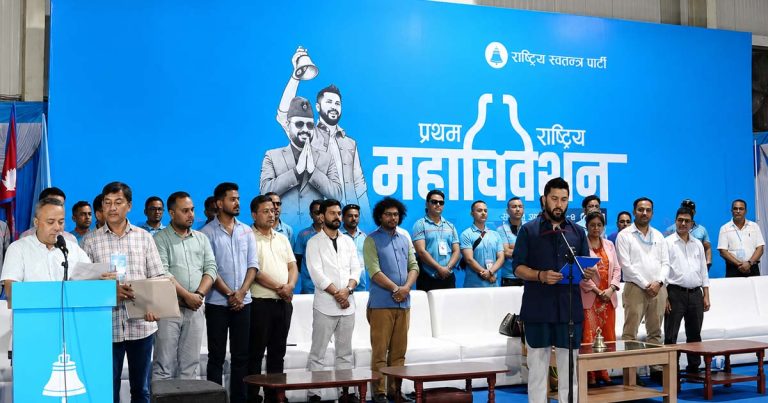
RSP Elects Rabi, Swarnim, Sobita and Bipin to Top Posts
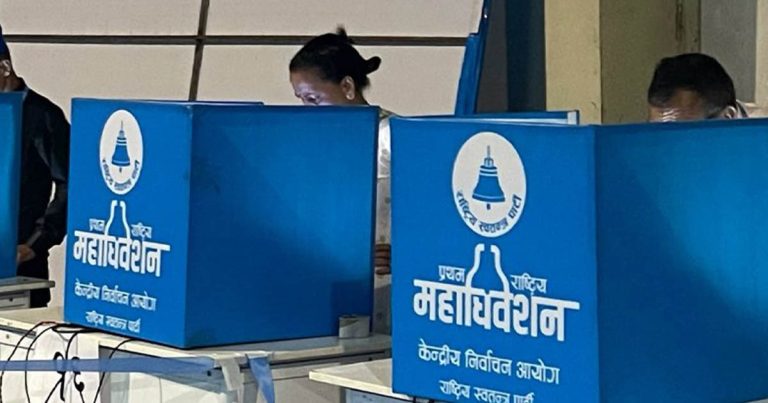
RSP Central Committee Elected Members List 2026

Mukul Dhakal: Not Even Invited to RSP Convention
Who Attended RSP’s First National Convention in Chitwan?
Mahabir Pun Appointed Minister of Science and Innovation in Nepal
RSP Starts Bagmati Convention, Leadership Race Heats Up