Nepal Signs Helicopter, Drone and Raft Rescue Agreements
Private operators will provide aircraft, drones, rafts and trained personnel for faster disaster response.


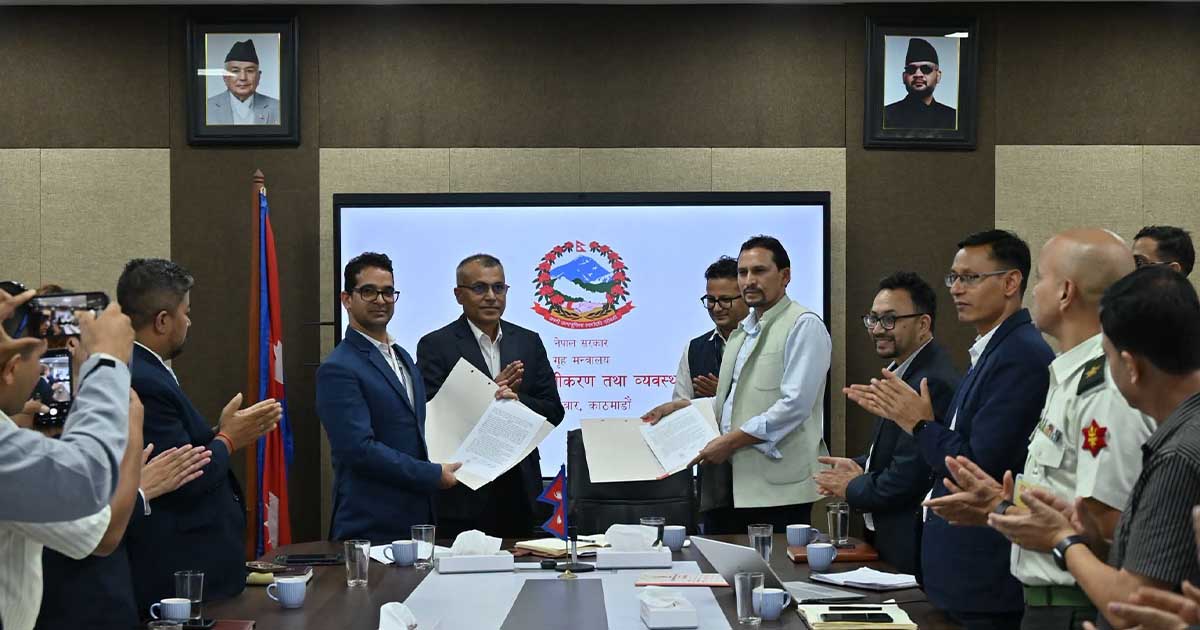
Nepal’s disaster response system is moving to place helicopters, drones and rafting crews within immediate reach when floods, landslides or other emergencies leave communities cut off.
Separate agreements signed by the National Disaster Risk Reduction and Management Authority with three private-sector organisations will allow rescue teams to draw on aircraft, aerial surveillance equipment and river-rescue resources without waiting for fresh arrangements during a crisis.
The understanding brings private rescue capacity into a pre-agreed national response mechanism. In past emergencies, reaching isolated settlements has often depended on what transport and trained personnel can be mobilised at short notice. The new arrangement is intended to reduce that delay.
Private aircraft added to emergency operations
The Authority signed memorandums of understanding with the Airline Operators Association of Nepal, the Nepal Drone Association and the Nepal Association of Rafting Agencies, widely known as NARA, at a programme held at its office.
Under the agreement with the airline operators’ association, flights required for emergency work within Kathmandu Valley will be provided free of charge.
When aircraft are needed outside the Valley for rescue missions or other disaster-response operations, services will be made available at the minimum operating cost, the Authority said.
Helicopters are expected to be used mainly in places that cannot be reached by road, settlements surrounded by floodwater and areas where injured or stranded people require immediate evacuation.
Drones to provide early information from affected areas
The Nepal Drone Association has agreed to provide drones, related equipment and pilots free of charge whenever requested by the Authority during a disaster.
The Authority will arrange travel and accommodation for the personnel deployed to operate the drones.
Aerial monitoring is expected to help emergency teams obtain immediate information from affected areas, identify dangerous locations and plan rescue routes before sending personnel into unstable or inaccessible terrain.
The information gathered through drones can also guide teams towards communities that may be cut off from road access or communication. This part of the agreement gives responders a faster way to assess the scale of an emergency without relying only on reports from the ground.
Rafts and trained crews for flood rescue
NARA will provide rafts, equipment and trained personnel free of charge when floods, inundation or other river-related disasters require emergency intervention.
The rafting resources may be used to search for and rescue people, transport relief supplies and medicines, and carry rescue personnel into affected areas.
Rafts can become the only practical means of movement when roads and bridges are submerged or damaged. By arranging access to equipment and experienced river crews in advance, the Authority expects rescue operations to begin with fewer procedural delays.
One-year agreement, with provision for renewal
All three agreements will remain in force for one year. They may be renewed through mutual consent if the participating organisations and the Authority decide to continue the cooperation.
Authority Executive Chief Pradeep Kumar Koirala said disaster management could not be handled by the government alone.
He said the impact of disasters could be reduced only through effective coordination among the government, private sector and communities, and thanked the participating organisations for committing their resources to public rescue work.
Airline Operators Association of Nepal General Secretary Muralidhar Joshi, Nepal Drone Association President Raj Bikram Maharjan and NARA Acting President Shiva Adhikari said their organisations would provide the necessary support from their respective sectors to protect lives and property during disasters.
The signing programme was also attended by National Emergency Operation Centre Under-Secretary Phanindra Prasad Poudel and representatives from the Ministry of Culture, Tourism and Civil Aviation, the Civil Aviation Authority of Nepal, the Department of Roads, the Nepali Army, Nepal Police and the Armed Police Force Nepal.
The presence of agencies responsible for aviation, roads, security and emergency coordination reflected the wider operational challenge behind the agreements. Aircraft, drones and rafts can reach people quickly, but their use during a disaster will still depend on clear communication and coordination among the institutions directing the response.

Written by Pushpa Tamang
Pushpa Tamang is Managing Editor at Khoj Samachar, leading English and Nepali bureaus, newsroom operations, and editorial standards.

Nepal, Australia Hold Talks on Trade, Investment and Tourism
Nagarik App Now Shows Blood Stocks Across Nepal

Sudan Gurung Meets Predatory Lending Victims in Bara
Hetauda Textile Industry Set to Reopen
Ghorahi Ward Member Arrested Over Engine Oil Attack
Rasuwagadhi Hydropower Stops Power Generation as Rivers Rise
Five Year Old Boy Dies in Dhorpatan Wall Collapse