Hetauda Textile Industry Set to Reopen
The government is repairing old machinery and assessing whether the state-owned factory can return to full-scale production.


The government is pushing the long-shuttered Hetauda Textile Industry towards trial production within two months, placing the immediate operation of the factory under the Nepali Army after years of announcements that failed to move beyond paperwork.
This time, work has begun inside the factory itself. An Army technical team has been deployed, old machinery is being repaired, raw materials have been purchased and the electricity system has already been restored. The trial will determine whether the state-owned industry still has a workable industrial future or remains another costly revival plan that could not survive beyond official commitment.
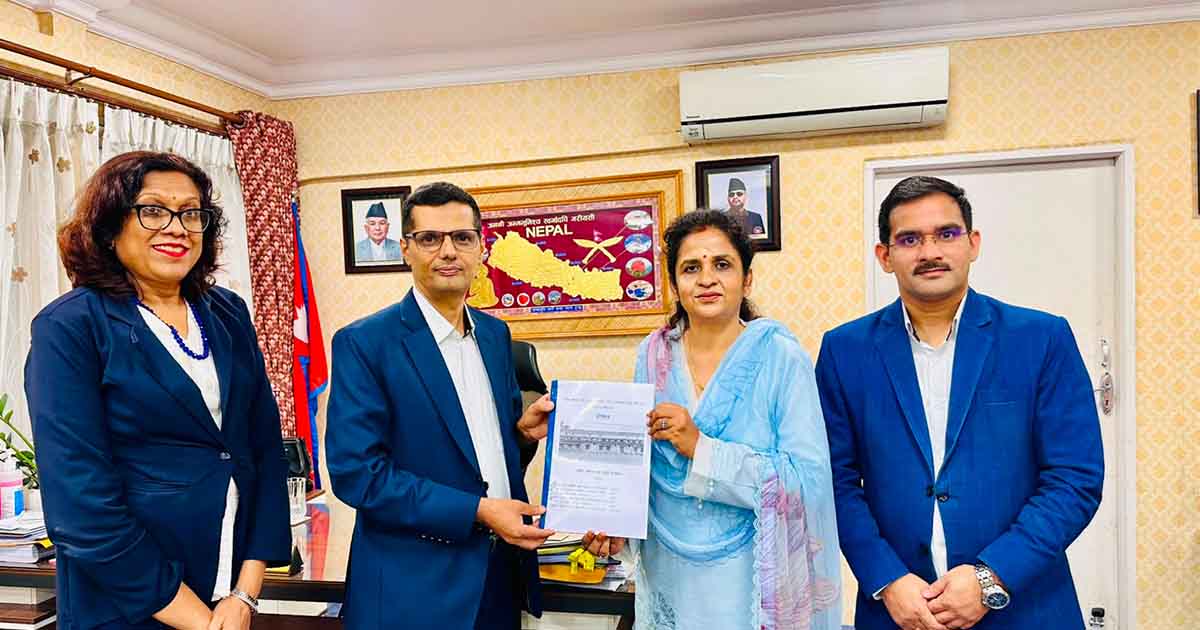
A study report outlining the factory’s present condition, the work completed so far and the next steps has been submitted to Minister for Industry, Commerce and Supplies Gauri Kumari Yadav.
The report was prepared by a task force coordinated by Ram Bandhu Subedi, chief of the ministry’s Administration and Public Enterprises Division.
Old machines to be tested before any major investment
The task force has proposed a two-stage approach. The government will first repair the machinery already installed at the factory and begin limited trial production. The results will then be used to decide whether the industry can be operated at full capacity over the long term.
Under the government’s deadline, the Nepali Army must begin producing cloth on a trial basis within the next two months.
Technicians from the Army’s Military Materials Production Directorate have started repairing the machines. The technical team stationed at the factory has also cleaned the premises and arranged the raw materials required for the initial production run.
The government does not plan to install new technology or commit a large investment at this stage. Its immediate focus is to make the old production line operational and examine what it can still deliver.
The trial is expected to provide evidence on four central issues:
- The actual operating capacity of the existing machines
- The cost of producing cloth at the factory
- The quality of the finished material
- The commercial viability of continued production
For the government, repairing the equipment is only the first test. The more difficult decision will come after production begins, when technical findings and financial calculations have to replace the repeated political promises that have surrounded the factory for years.
Army receives initial budget as infrastructure repairs begin
The Ministry of Finance released Rs 3.3 million to the account of the Military Materials Production Directorate in the first week of the month to begin the preliminary work, the report states.
The money was provided following a proposal from the Industry Ministry and will be used for machinery repairs, raw-material management and expenses connected with trial production.
The factory’s buildings and other physical structures also require repair after remaining unused for a prolonged period.
The Ministry of Physical Infrastructure Development has prepared a cost estimate of Rs 5 million for structural maintenance and has taken responsibility for carrying out the work.
Repairs to the internal electricity system were handled through the Hetauda Industrial Area Management Office. That work has already been completed, according to the report.
The division of responsibilities among the Army, the Industry Ministry, the Finance Ministry, the infrastructure authorities and the industrial area office shows that the revival effort is no longer confined to a single administrative announcement. It has entered an operational phase, although the factory has yet to produce cloth.
Full revival will depend on trial results
Once the trial production is completed, the government plans to prepare a detailed project report for the long-term operation of the industry.
That report will determine the investment required, the appropriate management structure, the factory’s realistic production capacity and the legal and policy decisions needed to run it on a sustained basis.
Receiving the task force report, Minister Yadav said the government had given priority to the Hetauda Textile Industry as an industrial asset connected with national pride.
She said the ministry would provide the coordination and support required to begin trial production within the prescribed deadline and follow the recommendations of the task force.
The proposed revival also carries a practical supply objective. If the factory can produce cloth competitively, it could increase domestic supply for uniforms and other textile requirements of government agencies.
That possibility, however, remains dependent on the trial.
The factory’s structures may be protected and its machines may run again after years of inactivity, but its long-term survival will be decided by the production figures, quality tests and economic conclusions that follow. The next two months will show whether Hetauda Textile Industry is entering a genuine revival or only another temporary phase of state-led repair.

Written by Roshani Shrestha Pathak
Roshani Shrestha Pathak is the English Bureau Chief at Khoj Samachar, overseeing English-language editorial operations and newsroom coordination.
Ghorahi Ward Member Arrested Over Engine Oil Attack
Rasuwagadhi Hydropower Stops Power Generation as Rivers Rise
Five Year Old Boy Dies in Dhorpatan Wall Collapse
Ekmaya Nepali Receives Citizenship After Ganesh’s Death

What Did Ganesh Nepali’s Family Agree With Government?
Home Minister Leads Team to Kharipati Holding Centre

Ganesh Nepali Dies During Treatment at Bir Hospital