Nepal Chief Justice Recommendation Controversy Explained
Justice Manoj Kumar Sharma’s recommendation has sparked debate over judicial appointments, political influence, and Nepal’s justice system.


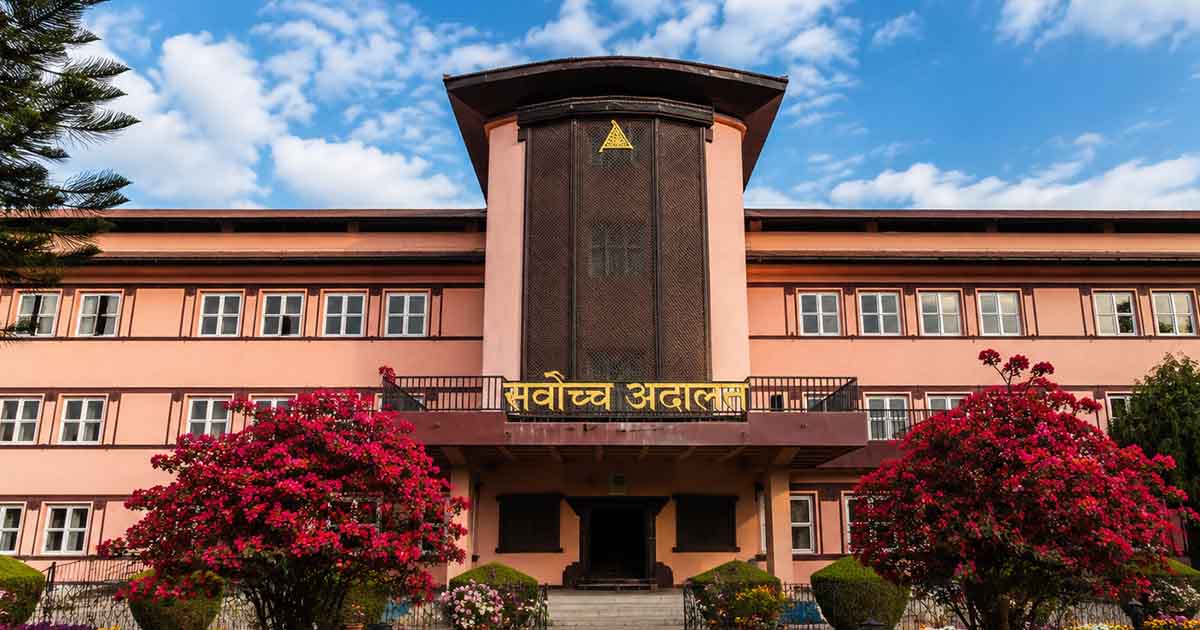
The debate surrounding the recommendation of a new Chief Justice has triggered intense political and legal discussions across Nepal, with questions being raised not only about the candidate himself but also about the broader judicial appointment system in the country. The Constitutional Council’s decision to recommend Justice Manoj Kumar Sharma, who was fourth in seniority among Supreme Court judges, has divided political leaders, legal experts, and the public.
Supporters of the recommendation argue that the decision was made on the basis of professional performance and judicial efficiency rather than seniority alone. Critics, however, claim the move could weaken established traditions within Nepal’s judiciary and increase concerns about political influence in judicial appointments. The controversy has once again placed Nepal’s justice system under national scrutiny and revived debate about how judges, including the Chief Justice, are selected and whether reforms are necessary to ensure greater independence and transparency.
Why the Chief Justice Position Holds National Importance
The Chief Justice is considered the highest authority within Nepal’s judicial system and serves as the leader of all courts across the country. The role goes far beyond issuing court verdicts, as the office directly influences the functioning of the entire judiciary, from district courts to the Supreme Court.
The Chief Justice is responsible for overseeing whether justice is being delivered properly, how judges are performing their duties, and how courts are operating nationwide. Because of this authority, the position carries enormous responsibility within Nepal’s constitutional structure.
The office also becomes highly significant during major constitutional or political disputes. Cases involving parliament dissolution, government formation, constitutional interpretation, and protection of citizens’ rights are often decided under benches led by the Chief Justice. As a result, decisions made by the Supreme Court can have a major impact on Nepal’s political direction and democratic system.
Role in Constitutional Bodies and Judicial Appointments
Apart from judicial responsibilities, the Chief Justice also plays a major role in several constitutional mechanisms. The Chief Justice is a member of the Constitutional Council, which recommends appointments to important state institutions.
These institutions include:
- Commission for the Investigation of Abuse of Authority
- Public Service Commission
- Election Commission
- National Human Rights Commission
- Office of the Auditor General
- Attorney General’s Office
- National Natural Resources and Fiscal Commission
The Chief Justice also chairs the Judicial Council, which is responsible for the appointment, transfer, promotion, and disciplinary oversight of judges across Nepal.
Because of these responsibilities, legal experts say the position must remain independent from political influence. Concerns increase whenever questions arise about political interests affecting the appointment process, as the consequences can extend beyond the judiciary into other constitutional institutions.
Many analysts warn that if the judiciary becomes too closely connected with the executive branch, it could weaken democratic checks and balances and reduce public trust in the legal system.
Past Supreme Court Decisions Linked to Justice Sharma
Much of the current controversy surrounding Justice Manoj Kumar Sharma is connected to two major Supreme Court decisions in which he was involved.
The first case involved a tax dispute related to telecom company Ncell. The Large Taxpayer Office had initially determined that the company should pay more than Rs 62 billion in taxes. However, the Supreme Court later reduced nearly Rs 18 billion from the total amount by rejecting an additional 50 percent penalty imposed by tax authorities.
Although the court ruled that Ncell still had to pay around Rs 34 billion including interest and penalties, the verdict became highly controversial because critics argued that the state lost a significant amount of revenue due to the decision.
Justice Sharma was one of the judges in the extended full bench that delivered the ruling. The bench also included several other Supreme Court justices, meaning the verdict was not issued by a single judge alone.
The second controversy relates to constitutional appointments made during the government led by former Prime Minister KP Sharma Oli. The Oli administration appointed dozens of officials to constitutional bodies through an ordinance during a politically sensitive period when the government was facing questions about its parliamentary majority.
Several petitions challenging those appointments were later filed at the Supreme Court. After lengthy hearings, the Constitutional Bench became divided over the issue.
Some judges argued that the appointments should be invalidated, while others supported the government’s decision. Justice Sharma was among the judges who favored recognizing the appointments as valid. Eventually, the appointments were upheld through a majority decision.
Critics argued that the ruling legitimized appointments made during a period of political instability and raised concerns about constitutional procedure. Supporters, however, defended the decision as legally justified.
Government’s Reason for Choosing Justice Sharma
The government has defended the recommendation by stating that performance and work efficiency were the main factors behind the decision.
According to the explanation provided by government officials, Justice Sharma had resolved more cases than other proposed candidates, making him the preferred choice despite being lower in seniority ranking.
The debate has therefore centered on two competing ideas within Nepal’s judiciary. One side believes seniority should remain the primary basis for selecting the Chief Justice in order to maintain institutional stability and tradition. The other side argues that merit, performance, and efficiency should carry greater importance.
This disagreement has fueled public debate on social media, political platforms, and within legal circles, with opinions sharply divided between supporters and critics of the recommendation.
How Judges Are Appointed in Nepal
Nepal has a three-tier court system consisting of district courts, high courts, and the Supreme Court. The appointment process differs slightly at each level but remains heavily connected to the Judicial Council and Constitutional Council.
District court judges are selected through the Judicial Council, which is composed of five members. The council includes the Chief Justice as chairperson, the law minister, a senior Supreme Court judge, a representative from the Nepal Bar Association, and a legal expert nominated by the president on the recommendation of the prime minister.
The council selects candidates through open competition before appointments are formally made through the Chief Justice.
For high court judges, the same Judicial Council recommends qualified individuals, after which appointments and oath ceremonies are carried out through the Chief Justice.
The Supreme Court appointment process is more extensive. The Judicial Council first recommends candidates, but those names must then pass through a parliamentary hearing committee. Only after parliamentary approval are the appointments finalized through the president.
How the Chief Justice Is Selected
The process for selecting the Chief Justice is different from the appointment of other judges and involves the Constitutional Council directly.
The Constitutional Council is chaired by the prime minister and includes the speaker of the House of Representatives, leader of the opposition, chairperson of the National Assembly, deputy speaker, and law minister.
Normally, the Chief Justice is also a member of the council, but when selecting a new Chief Justice, the law minister participates instead to avoid conflict of interest.
Only Supreme Court justices with at least three years of service are eligible for recommendation to the top judicial position.
After the Constitutional Council recommends a candidate, the parliamentary hearing committee reviews the nominee’s qualifications and performance. If approved, the recommendation is sent to the president for final appointment and oath-taking.
Growing Calls for Judicial Reform
The controversy has once again intensified discussions about political influence in Nepal’s judicial appointment process.
Critics argue that because political leaders dominate the Constitutional Council, judicial appointments can become vulnerable to partisan interests. This concern has led to renewed demands for structural reform within the judiciary.
Some legal observers believe Nepal should move toward a more independent and transparent appointment system similar to the Public Service Commission model. Under such proposals, judicial recruitment and evaluation would be handled through a separate autonomous mechanism designed to reduce political intervention.
Supporters of reform say greater transparency, open competition, and institutional independence are necessary to strengthen public confidence in Nepal’s judiciary. They argue that unless the system changes, controversies surrounding judicial appointments are likely to continue in the future.


Written by Roshan Shrestha
Roshan Shrestha is a Nepali investigative journalist and founder of Khoj Samachar, covering corruption, transparency, and public-interest issues.
Arzu Rana and the Passport Scandal Explained: Inside Nepal’s E-Passport Probe
Janakpur Dham Waste Management Crisis Raises Public Concern
Sudan Gurung Reopens Nepal’s Palace Massacre Debate After 24 Years

What Nepal’s NHRC Gen Z Protest Report Reveals

What Is MoFA Mitra App and How to Use It?
Deuba Couple Case: Supreme Court Cancels Arrest Warrant
Why Kaski Court’s Decision Could Reshape Rabi Lamichhane’s Case
