Prime Minister Balen Shah Calls Constitutional Council Meeting
Prime Minister Balen Shah schedules a Constitutional Council meeting as key constitutional positions, including Chief Justice, remain vacant.


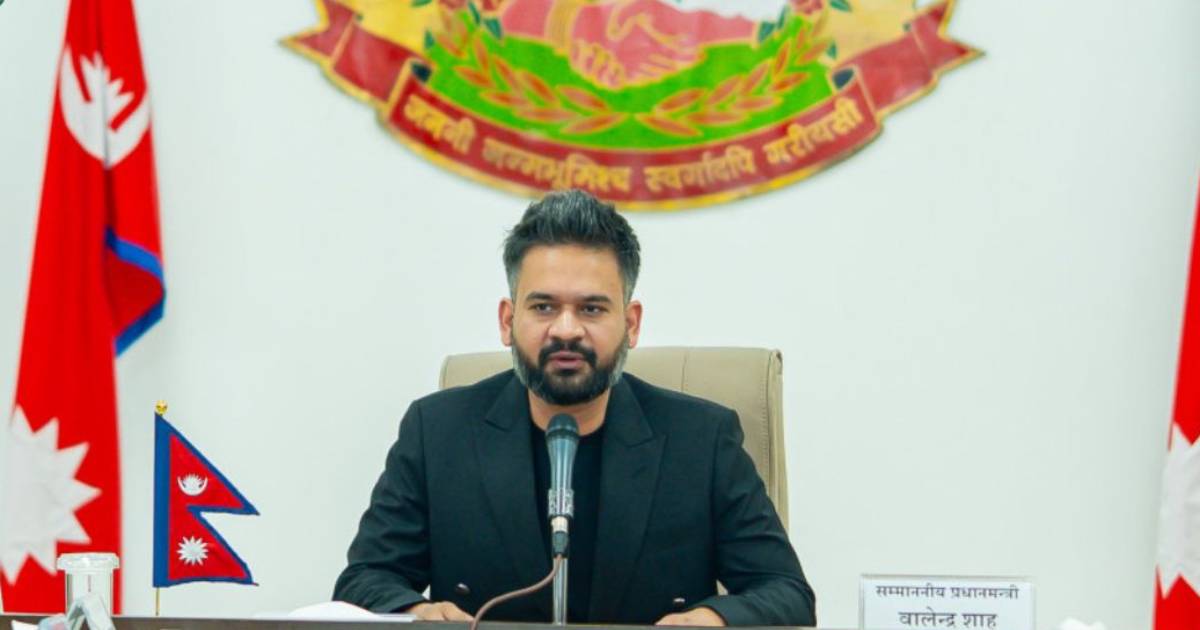
Prime Minister Balen Shah has called a meeting of the Constitutional Council at a time when several important constitutional positions in the country remain vacant, including the post of the Chief Justice.
According to the Prime Minister’s Secretariat, the meeting has been scheduled for 5 pm on May 7. The announcement comes shortly after the government introduced an ordinance related to the Constitutional Council, drawing attention from political and legal circles.
The upcoming meeting is expected to be significant as the Constitutional Council plays a key role in recommending appointments to major constitutional bodies. The recent ordinance has also added fresh debate over how decisions can now be made within the council.
Constitutional Council Meeting Scheduled
The Prime Minister’s Office confirmed that the Constitutional Council meeting will take place in the evening with discussions expected on several pending constitutional matters.
The council is responsible for recommending appointments to important constitutional positions. With a number of high-level posts currently vacant, the meeting is being closely watched.
Among the vacant positions is the office of the Chief Justice, one of the country’s most sensitive constitutional roles. The absence of appointments in such positions has increased pressure on the government to move the process forward.
Vacant Constitutional Positions Draw Attention
Several constitutional bodies are operating without full leadership after key posts remained unfilled for an extended period.
The vacant positions have raised concerns about delays in constitutional processes and the functioning of important state institutions.
The upcoming Constitutional Council meeting is expected to discuss recommendations related to these appointments, although specific agendas have not been publicly disclosed.
The issue has gained wider public attention because appointments made through the Constitutional Council directly affect the judiciary and other constitutional institutions.
New Ordinance Changes Decision-Making Process
The government recently introduced an ordinance related to the Constitutional Council, bringing changes to how decisions can be taken during council meetings.
Under the new provision, decisions can be made through a majority of three members, including the Prime Minister.
The Constitutional Council consists of six members in total. The revised arrangement means meetings and decisions can move ahead even if all members are not present.
The ordinance has become a major talking point as it changes the decision-making structure of one of the country’s most important constitutional bodies.
Role of the Constitutional Council
The Constitutional Council is responsible for recommending appointments to several constitutional positions across the country’s state institutions.
Its recommendations are considered crucial for maintaining constitutional balance and ensuring the operation of key national bodies.
The council includes six members and plays an important role in selecting officials for positions that carry long-term institutional responsibility.
Because of this role, meetings of the Constitutional Council often receive significant political and legal attention.
Focus on Chief Justice Appointment
The vacancy in the Chief Justice position has become one of the most discussed issues ahead of the meeting.
The judiciary is regarded as a central pillar of the constitutional system, and the absence of permanent leadership at the top court has increased interest in the council’s upcoming decisions.
Although officials have not confirmed whether recommendations for the post will be finalized during the meeting, the issue remains at the center of public discussion.
The Constitutional Council’s role in such appointments places the upcoming meeting under close observation from legal and political sectors.
Political and Legal Interest Growing
The combination of vacant constitutional posts and the recently introduced ordinance has intensified interest around the Constitutional Council meeting.
Observers are closely following how the council will function under the new rules and whether the revised majority provision will influence upcoming decisions.
The meeting also comes at a time when constitutional appointments are being viewed as important for maintaining institutional stability.
With several major positions still empty, the decisions taken during the council meeting could shape the operation of key state bodies in the coming period.
Meeting Expected to Carry Major Significance
The scheduled Constitutional Council meeting is likely to become an important development in the country’s constitutional process.
The government’s recent ordinance and the continuing vacancies in major positions have made the meeting more significant than routine council sessions.
Attention remains focused on whether the council will move ahead with recommendations for constitutional appointments, including the Chief Justice position.
As the meeting date approaches, political and institutional interest surrounding the Constitutional Council continues to grow.


Written by Roshan Shrestha
Roshan Shrestha is a Nepali investigative journalist and founder of Khoj Samachar, covering corruption, transparency, and public-interest issues.
Why Did an RSP MP Recall Kulman Ghising in Parliament?
Prime Minister’s Office Like Hitler’s Gas Chamber: Lawmaker
Speaker Aryal: Learn Parliament, Not Your Phone
Four Former PMs Share Stage at Madan Bhandari Event
Prachanda Urges Left Unity at Bhandari Anniversary

Ramji Yadav Faces Scrutiny After Party Election Loss

RSP Elects Rabi, Swarnim, Sobita and Bipin to Top Posts