Four Former PMs Share Stage at Madan Bhandari Event
The Madan Bhandari birth anniversary event in Kathmandu brought together Nepal's top left leaders, renewing focus on possible political cooperation.


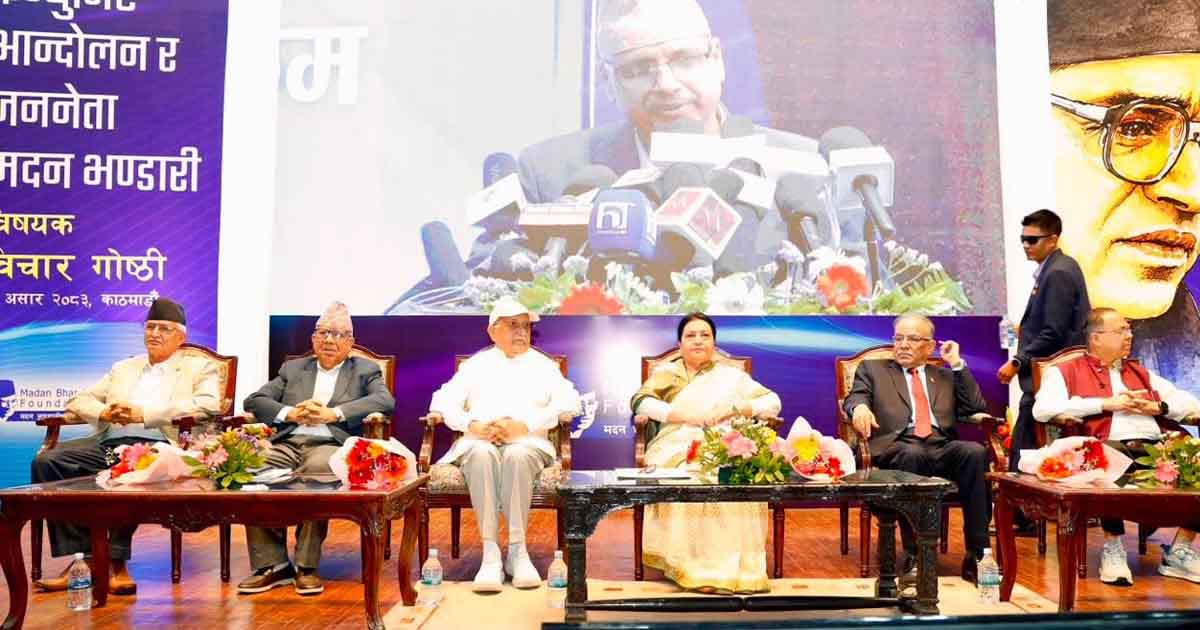
A rare gathering of Nepal’s most influential left leaders at the 75th birth anniversary of Madan Bhandari has drawn attention far beyond a commemorative event. With discussions over renewed cooperation among left parties already gaining momentum, the appearance of four former prime ministers on a single stage has intensified interest in whether the occasion marks the beginning of a broader political realignment or remains a symbolic show of unity.
The programme, organised by the Madan Bhandari Foundation at Rastriya Sabha Griha in Kathmandu, brought together CPN-UML Chair and former Prime Minister KP Sharma Oli, Nepal Communist Party (NCP) Coordinator Pushpa Kamal Dahal ‘Prachanda’, Co-coordinator Madhav Kumar Nepal, and senior leader Jhala Nath Khanal. Former President Bidya Devi Bhandari also attended the event, adding to its political significance.
Rather than focusing solely on Madan Bhandari’s political legacy, attention has shifted to what the shared platform could mean for the future of Nepal’s left politics. Recent conversations among left parties have centred on cooperation over common political agendas, making Sunday’s gathering one of the most closely watched political events in recent weeks.
Recent Remarks Have Raised Expectations
Interest in the programme grew after Prachanda’s remarks at a public event in Biratnagar, where he said an environment had emerged for cooperation with the CPN-UML both inside Parliament and through political mobilisation outside it.
While ruling out the possibility of immediate party unification, he said the two sides had developed an understanding to work together on issues of common concern.
Prachanda also reflected on the major political shifts that have defined his career, describing them as repeated “breaks from the established course.” He suggested that another significant political turn could emerge after his party’s upcoming general convention, calling it what he described as the “final turning point” of his political journey and urging party members to prepare for it.
Political Signals Under Close Watch
Against that backdrop, the speeches delivered by the senior leaders at Sunday’s event have attracted unusual attention.
Political circles are looking beyond ceremonial remarks to assess whether the gathering signals deeper coordination among Nepal’s left forces. Public interest has also grown around whether the leaders use the occasion to indicate a common political direction or simply reaffirm respect for Madan Bhandari’s legacy.
For now, the event has reinforced one reality: every public interaction among the country’s leading left figures is being viewed through the lens of possible political cooperation, even when it takes place on a commemorative stage.

Written by Pushpa Tamang
Pushpa Tamang is the Managing Editor at Khoj Samachar, overseeing both English and Nepali bureaus and leading daily editorial operations, newsroom coordination, and journalistic standards across platforms.
Prachanda Urges Left Unity at Bhandari Anniversary
Ramji Yadav Faces Scrutiny After Party Election Loss
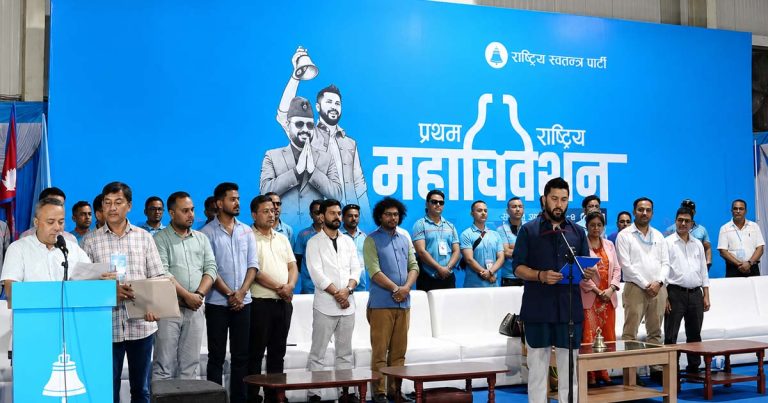
RSP Elects Rabi, Swarnim, Sobita and Bipin to Top Posts
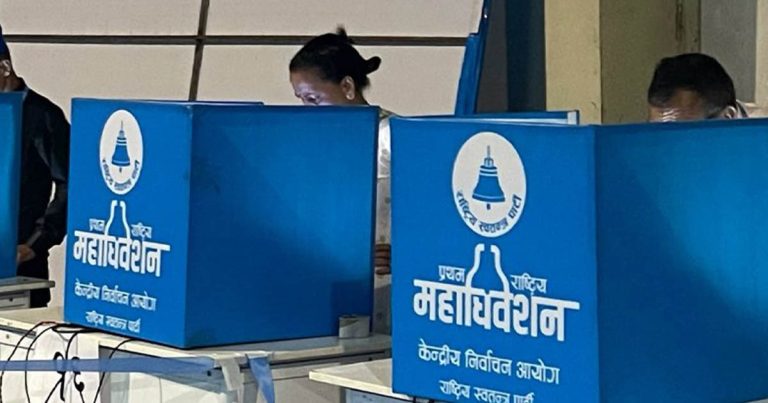
RSP Central Committee Elected Members List 2026
Why Was Sudan Gurung Criticized Despite Doing the Right Thing?
Mahesh Basnet Defends Bishnu Paudel After Arrest
Why Was UML Leader Bishnu Paudel Arrested?