Who Is Khem Bhandari and Why Was He Arrested in the Nirmala Pant Case?
The arrest of journalist Khem Bhandari has renewed attention on the unresolved Nirmala Pant case. Here's his role in the investigation, the allegations he made, and why the courts ordered his imprisonment.


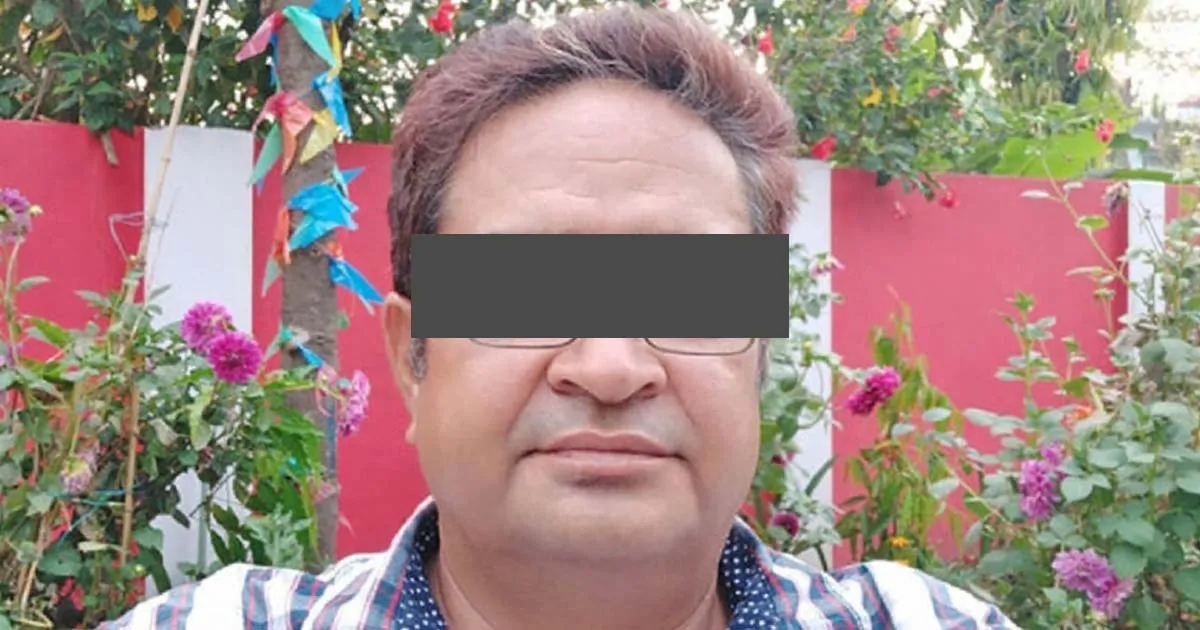
The arrest of journalist Khem Bhandari to enforce court orders has pushed the Nirmala Pant case back into the national spotlight nearly eight years after the schoolgirl’s rape and murder shook Nepal. His detention comes at a time when the government has also revived scrutiny of the long-stalled investigation by forming a fresh inquiry committee, raising renewed hopes that a case marked by controversy, conflicting narratives and unanswered questions may finally move towards a conclusion.
Inspector General of Police Dan Bahadur Karki formed a 15-member investigation committee on Chaitra 14, 2082 BS under the leadership of SSP Krishna Pangeni. Home Minister Sudan Gurung has also said that an internal review of the Nirmala Pant case is underway.
Who is Khem Bhandari?
Khem Bhandari has spent years working in journalism in Kanchanpur. He is the publisher and editor-in-chief of Manaskhand Daily, a newspaper published from Mahendranagar.
His reporting on the Nirmala Pant case became one of the most influential factors in shaping public opinion after police arrested Dilip Singh Bista as the alleged perpetrator in 2018.
Supporters credit Bhandari with keeping attention focused on flaws in the police investigation. His critics argue that he deliberately derailed the investigation to protect someone close to him by promoting allegations that lacked evidence.
Bhandari has consistently maintained that police attempted to frame a mentally unstable man while allowing the real perpetrator to escape accountability, and says his reporting prevented the investigation from going off track.
The case that divided public opinion
Nirmala Pant left home on Shrawan 10, 2075 BS, telling her family she was going to a friend’s house to complete homework. Her body was discovered the following day in a nearby sugarcane field.
A post-mortem examination confirmed she had been raped before being strangled.
After around three weeks of investigation, police arrested Dilip Singh Bista on Bhadra 2 and publicly identified him as the accused two days later.
That announcement became a turning point.
Bista had previously served a prison sentence after being convicted in the killing of his brother-in-law, but local residents widely described him as mentally unstable. Many said he often wandered alone talking to himself and was unusually shy around women.
Following his arrest, Bhandari published a series of reports arguing that police were sacrificing a mentally ill man to shield influential individuals. Those reports spread rapidly across Kanchanpur and fueled protests against both the police and the government.
Police kept Bista in custody for 24 days. During that period, investigators said he confessed to both the rape and murder, and recorded the confession on video.
The investigation, however, collapsed when forensic evidence entered the courtroom.
DNA extracted from semen found in Nirmala Pant’s vaginal swab did not match Bista’s DNA sample.
With the forensic evidence contradicting the confession, Bista was released. After regaining his freedom, he alleged that police had forced him to confess through torture while in custody.
The failure of the prosecution remains one of the defining moments in the Nirmala Pant investigation. It deepened public distrust in the investigation and ensured that debate over the case continued long after the original proceedings had stalled.
How Bhandari became a defendant
As his reporting continued, Bhandari increasingly linked the case to individuals he believed had been protected during the investigation.
Among those he named was Kiran Raj Bista, the son of then Kanchanpur Police Chief SP Dilli Raj Bista.
Bhandari alleged that the police had framed Dilip Singh Bista in order to protect the police chief’s son and had seriously mishandled the investigation.
Those allegations gained widespread public attention and contributed to a national narrative that an innocent man had been framed to protect influential figures.
Police later investigated the relationship between Bhandari and Dilip Singh Bista and concluded that the two were relatives. That finding strengthened accusations that Bhandari had attempted to influence public opinion in order to protect someone close to him.
Several legal cases followed.
The Kanchanpur District Bar Association first filed a contempt of court case, arguing that Bhandari had published material while proceedings were still before the court. He was convicted and sentenced to one hour in jail along with a symbolic fine of one rupee.
Kiran Raj Bista later filed a separate case, accusing Bhandari of damaging his reputation by linking him to the Nirmala Pant case without evidence.
In Jestha 2082 BS, Kanchanpur District Court convicted Bhandari, sentencing him to one month in prison, imposing a fine of Rs 10,000, and ordering him to pay Rs 100,000 in compensation to Kiran Raj Bista.
Bhandari appealed, arguing that he was innocent and that the verdict amounted to an attack on press freedom.
The Mahendranagar bench of the High Court Dipayal upheld the district court’s decision in Chaitra 2082 BS and added seven more days of imprisonment along with an additional fine of Rs 2,100.
- Total prison sentence: One month and seven days
- Total fine: Rs 12,100
- Compensation: Rs 100,000 payable to Kiran Raj Bista
Police arrested Bhandari this week to enforce those court decisions. After completing legal procedures, he was sent to prison.
His arrest has coincided with the formation of the new investigation committee and renewed government attention to the Nirmala Pant case.
Khoj Samachar has consistently kept the Nirmala Pant case in the public spotlight through sustained reporting. Earlier, the newsroom launched a special campaign titled Question for Sudan Gurung: When Will Nirmala’s File Reopen?, repeatedly urging the government to reopen the investigation and treat the case as a priority.
Now, with journalist Khem Bhandari in custody, a new police investigation committee in place, and the Nirmala Pant case once again at the centre of national attention, hope has been renewed that a crime which has remained unresolved for nearly eight years may finally move closer to justice.

Written by Pushpa Tamang
Pushpa Tamang is Managing Editor at Khoj Samachar, leading English and Nepali bureaus, newsroom operations, and editorial standards.
Kirtipur Holding Centre Resident Arrested After Video Post
Nepal Celebrates Asar 15 with Dahi Chiura and Paddy Day
Nepal New Traffic Bill Proposes Fines of Rs 500 to Rs 1 Lakh
Why Is Nepal Emptying Holding Centres in Five Days?
Kathmandu Traffic Fines Top Rs 2.3 Million in a Day
The Story of Shree Krishna BK
NEB Publishes Grade 12 Results, 64.13 Percent Students Pass