Shyam Kumar Ghimire Calls for Congress Unity Reform
Shyam Kumar Ghimire warns that sidelining party factions could weaken Nepali Congress ahead of future elections


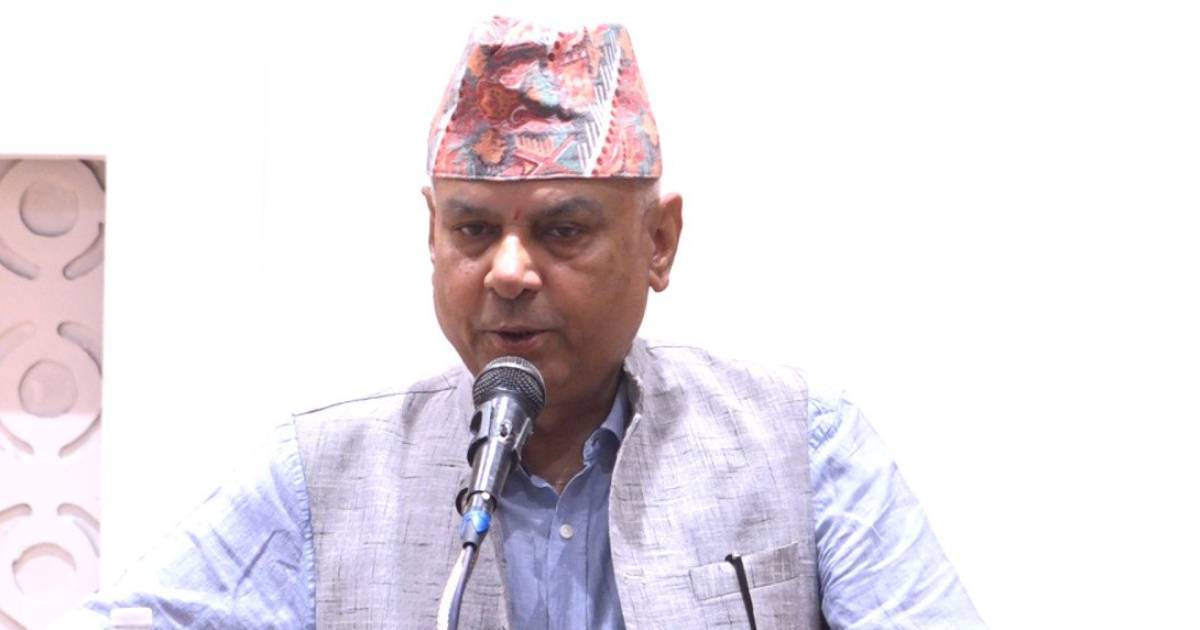
Nepali Congress leader Shyam Kumar Ghimire has urged the party leadership to move toward broader internal unity, warning that continued exclusion of different factions could deepen the party’s political challenges in upcoming elections.
Addressing a special gathering at the Bagmati Province level, Ghimire said the current leadership should avoid advancing in a one-sided manner and instead work to include all groups within the party structure. He argued that the future strength of the Nepali Congress depends on cooperation and mutual respect among leaders and members across different camps.
Leader Calls for Inclusive Party Structure
During his address, Ghimire stressed that his group’s objective was not to weaken or split the party, but to strengthen it through wider participation and internal understanding.
He said the responsibility of maintaining unity lies mainly with the establishment side, adding that recent political developments inside the party have not reflected a willingness to embrace all viewpoints. According to him, a healthy party organization cannot function properly if a significant section of members feels sidelined.
Ghimire also warned that failing to address dissatisfaction within the party could negatively affect the party’s performance in future local and provincial elections.
Questions Raised Over Central Committee Expansion
A major focus of Ghimire’s speech was the recent expansion of the party’s central committee. He questioned the legitimacy and fairness of the process, claiming that the leadership had followed a selective approach while appointing members.
According to him, only individuals close to the leadership were included in the newly expanded structure. He argued that the latest appointment of 19 members did not send a message of inclusiveness and instead increased concerns among leaders and workers who feel ignored.
He further claimed that the present committee effectively represents only a section of the party rather than the organization as a whole.
Warning Over Future Electoral Consequences
Ghimire said the party had already experienced the consequences of internal division during previous elections. He cautioned that repeating the same mistakes could result in even greater setbacks in the coming electoral cycle.
He argued that political organizations cannot remain strong if they move ahead while leaving large sections of supporters outside the decision-making process. Referring to recent election outcomes, he said the leadership must seriously reflect on whether its current approach is helping or harming the party.
- He warned that future local and provincial elections could bring worse results if unity efforts are ignored.
- He said repeated electoral setbacks should push the leadership to reconsider its strategy.
- He emphasized that political dignity and self-respect should not be sacrificed for internal power struggles.
Proposal for a New Unity Model
As part of his proposal for reconciliation, Ghimire suggested adopting a unity model similar to the one previously used during the merger between two major factions of the Nepali Congress.
He proposed converting the current central committee into a convention preparation committee that would ensure fair and respectful participation from all sides. According to him, such a move could help rebuild trust among party members and reduce growing dissatisfaction inside the organization.
The proposal was presented as a way to create a broader consensus before the next major organizational process within the party.
Call for Dialogue Instead of Exclusion
Ghimire also urged the establishment faction to move away from what he described as politics based on exclusion and confrontation. He encouraged the leadership to choose dialogue, understanding, and consensus-building instead.
He said lasting unity cannot be achieved through selective inclusion or by ignoring the concerns of party workers who have contributed to the organization for years. Stressing the emotional and political investment of ordinary members, he noted that the party had been built through the hard work and dedication of thousands of supporters.
According to him, rebuilding confidence inside the party now requires openness and collective responsibility rather than internal competition.
Pressure Builds Inside the Nepali Congress
The remarks delivered at the Bagmati Province gathering reflect growing pressure within the Nepali Congress over leadership style, representation, and internal management.
Although Ghimire repeatedly stated that his intention was not to divide the party, his comments highlighted increasing frustration among leaders who believe that decision-making has become concentrated within a limited circle.
The debate over party unity, representation, and organizational balance is expected to remain an important issue as the Nepali Congress prepares for future political and electoral challenges.


Written by Roshani Shrestha Pathak
Roshani Shrestha Pathak is the English Bureau Chief at Khoj Samachar, overseeing English-language editorial operations and newsroom coordination.
Prime Minister’s Office Like Hitler’s Gas Chamber: Lawmaker
Speaker Aryal: Learn Parliament, Not Your Phone
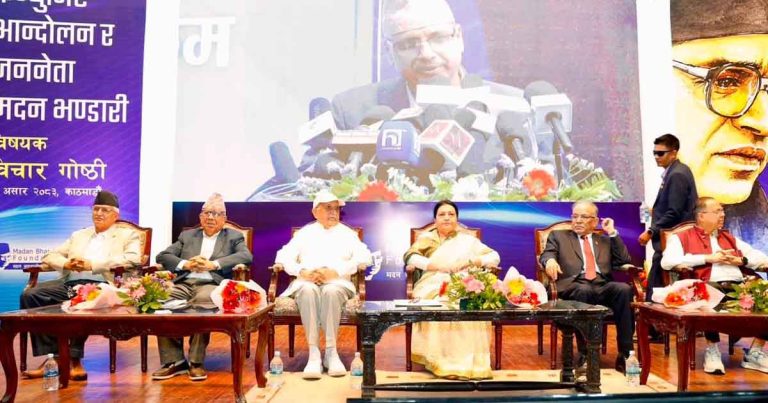
Four Former PMs Share Stage at Madan Bhandari Event
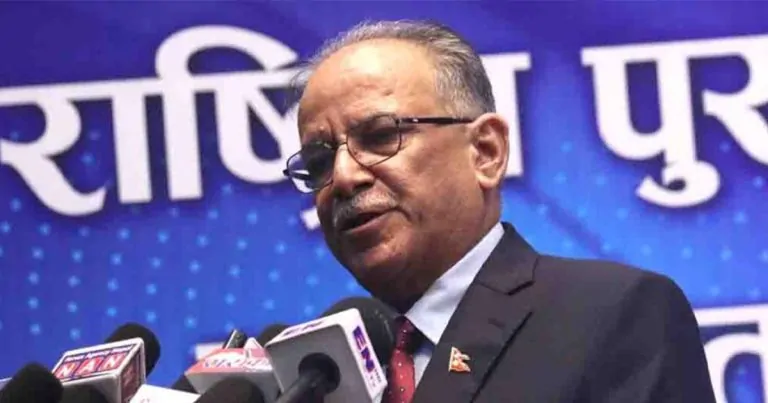
Prachanda Urges Left Unity at Bhandari Anniversary
Ramji Yadav Faces Scrutiny After Party Election Loss
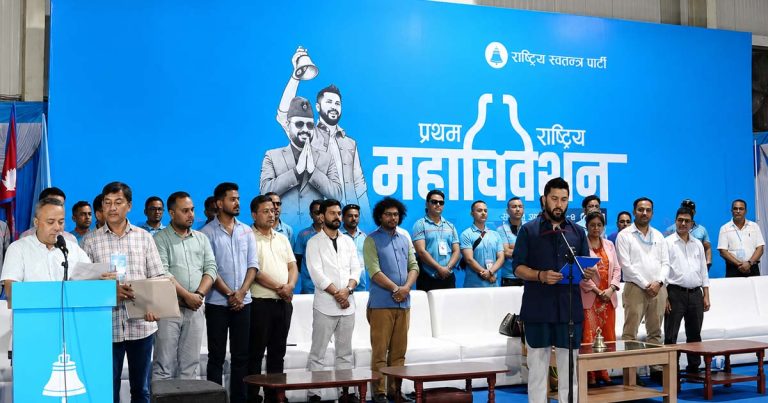
RSP Elects Rabi, Swarnim, Sobita and Bipin to Top Posts
RSP Central Committee Elected Members List 2026