
Vijay’s First 28 Days in Tamil Nadu: Welfare and Reform
From expanding free electricity benefits to tightening controls on revenue leakages, Joseph Vijay’s first month in office has centred on welfare delivery and governance reforms.


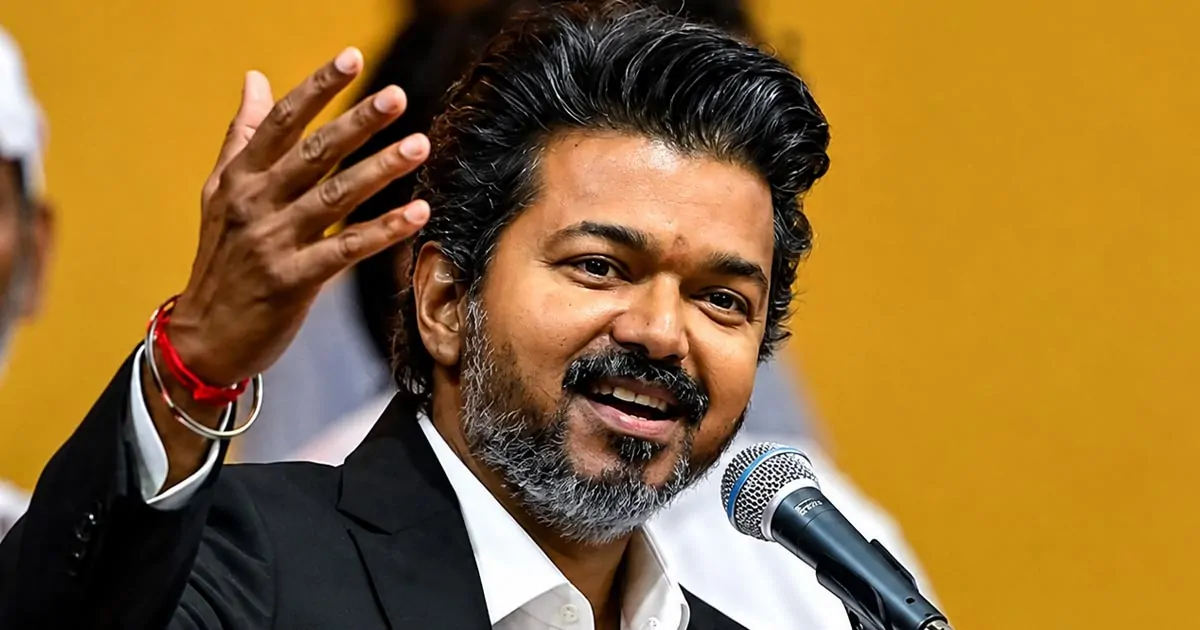
A month is too short to judge any political leader. But in Tamil Nadu, the first 28 days of Joseph Vijay’s tenure as Chief Minister have already triggered a wider conversation about governance, welfare and the role of corruption in draining public resources.
The actor-turned-politician came to power promising that social welfare would not be funded by placing additional burdens on ordinary citizens. Instead, his administration argued that money lost through leakages and entrenched systems of corruption could be redirected toward public services. His early decisions have been presented as the first test of that approach.
From Tamil Cinema Icon to Chief Minister
Joseph Vijay, one of the biggest stars in the Tamil film industry, formally entered politics with the launch of Tamizhaga Vetri Kazhagam (TVK) on February 2, 2024.
The party campaigned on an ambitious platform that combined anti-corruption promises with a long list of welfare commitments.
In the Tamil Nadu Assembly election, TVK emerged as the largest force with 108 seats in the 234-member legislature. The party fell short of the 118 seats needed to form a government on its own, but secured support from Congress and other smaller parties.
Vijay was sworn in as Chief Minister on May 10.
Tamil Nadu is smaller than Nepal in geographical size, but far larger in population and economic output. The state is estimated to have a population of around 75 million in 2026.
A Governance Model Built Around Redirecting Public Money
One theme runs through both TVK’s election manifesto and the government’s first month in office: welfare spending should be financed by recovering money lost through corruption and administrative leakages.
That argument has helped shape the government’s public messaging around several early decisions.
The most visible of those decisions has been the expansion of free electricity support for households.
200 Units of Free Electricity
The Vijay government has announced that households will receive up to 200 units of free electricity.
For lower-income families, the measure is expected to significantly reduce monthly household expenses.
Government estimates suggest that providing the subsidy across the state could cost around ₹17.3 billion annually.
The scheme includes restrictions intended to prevent higher-income households from taking advantage of the benefit.
Tamil Nadu follows a two-month billing cycle. Under the new arrangement, households consuming less than 500 units during a billing period will receive the 200-unit benefit and pay only for additional consumption. Households crossing the 500-unit threshold will not qualify for the expanded subsidy, although the earlier 100-unit free electricity benefit is expected to continue.
The government argues that the system allows relief to reach ordinary households while avoiding additional subsidies for heavy consumers.
Crackdown on Liquor Revenue Leakages
The question raised by many observers has been straightforward: where will the money come from?
The government has pointed to the state’s liquor distribution system.
For years, allegations have circulated that large amounts of money generated through liquor sales failed to reach public accounts. Claims ranged from revenue leakages to political fund collection through informal channels.
Soon after taking office, Vijay’s administration moved to dismantle what it described as party-fund mechanisms linked to the sector.
The government also permanently shut down 717 liquor outlets located near schools and religious sites.
Officials say stricter controls and reforms in the liquor sales system could stop revenue losses estimated at around ₹36 billion annually.
If those projections prove accurate, the government argues that the recovered revenue would be sufficient to finance the expanded electricity subsidy while still leaving substantial funds available for other public programmes.
Other Early Measures
Within its first four weeks, the government has also announced several other initiatives.
- A dedicated security force focused on crimes and violence against women.
- A special anti-drug task force targeting rising narcotics use among youth and students.
- A reward programme for citizens who provide evidence of corruption.
These moves reflect an effort to demonstrate administrative action while larger manifesto commitments remain under preparation.
The Promises Still Ahead
TVK’s election campaign included an extensive welfare agenda.
- Up to 200 units of free electricity.
- Six free LPG cylinders annually.
- A monthly allowance of ₹2,500 for women heading households.
- Free travel for women on government buses.
- One tola of gold and a sari for poor brides.
- A gold ring and baby kit for newborn children.
- Unemployment support ranging from ₹2,000 to ₹4,000 per month for youth.
- Annual assistance of ₹15,000 for mothers of school-going children.
- Health coverage of up to ₹2.5 million per family.
- Waiver of agricultural loans and other support programmes for farmers.
The electricity programme has already moved into implementation, while the remaining commitments are expected to be addressed through upcoming budget measures.
Whether Vijay can ultimately deliver on the full scale of those promises remains an open question. Elections are won on pledges; governments are judged on execution.
But the first 28 days have offered a glimpse of the political model his administration wants to project — one that claims welfare expansion does not require higher burdens on the poor if public money already being lost can first be recovered and redirected.

Written by Roshan Shrestha
Roshan Shrestha is a Nepali investigative journalist and founder of Khoj Samachar, covering corruption, transparency, and public-interest issues.
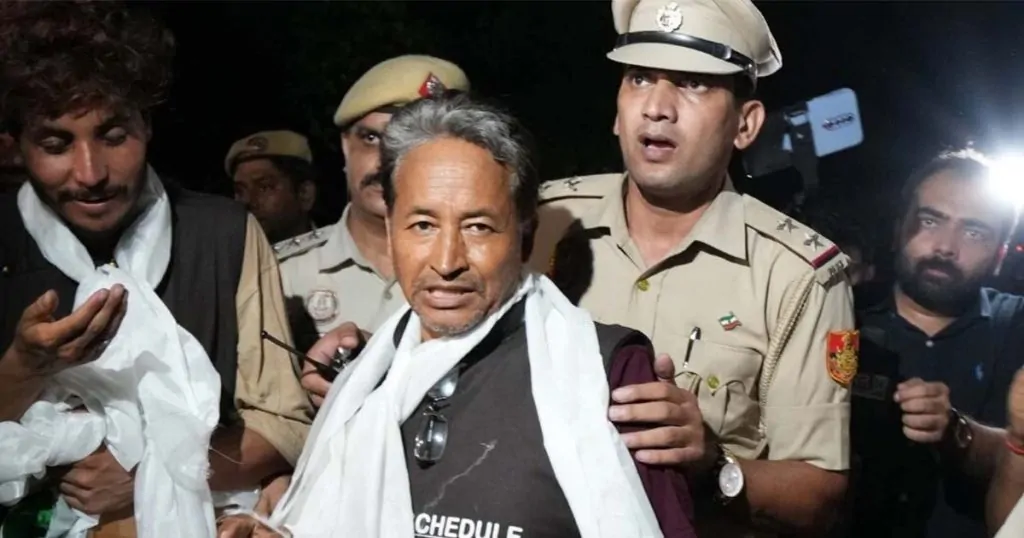
Sonam Wangchuk Update: Forced to Hospital, Says Abhijeet Dipke
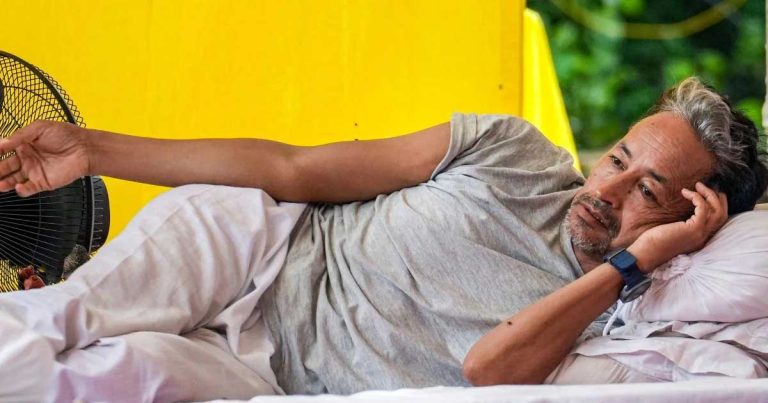
Attack Was Attempted on Sonam Wangchuk, Says Abhijeet Dipke
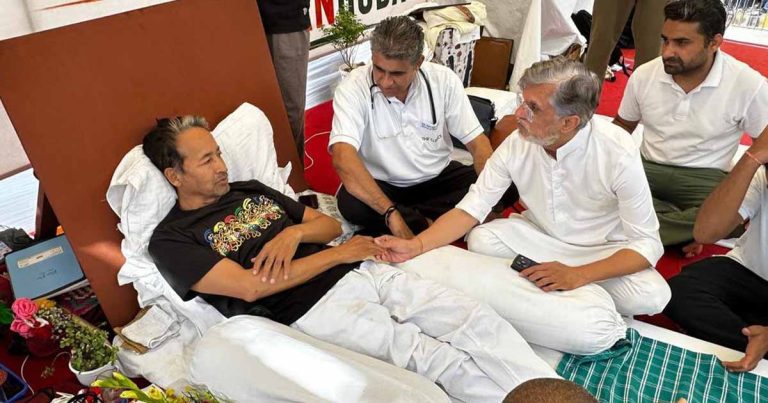
Sonam Wangchuk Vows to Survive Hunger Strike Until July 20

US Attacks Iran Again as Fighting Enters Sixth Night
Jordan Shoots Down Eight Iranian Missiles
US House Passes Permanent Daylight Saving Time Bill
Indian Crew Member Killed in Hormuz Tanker Attack