Saptakoshi Flood Rises, 21 Koshi Barrage Gates Opened
Continuous rain raises flooding and erosion concerns as authorities open 21 barrage gates.


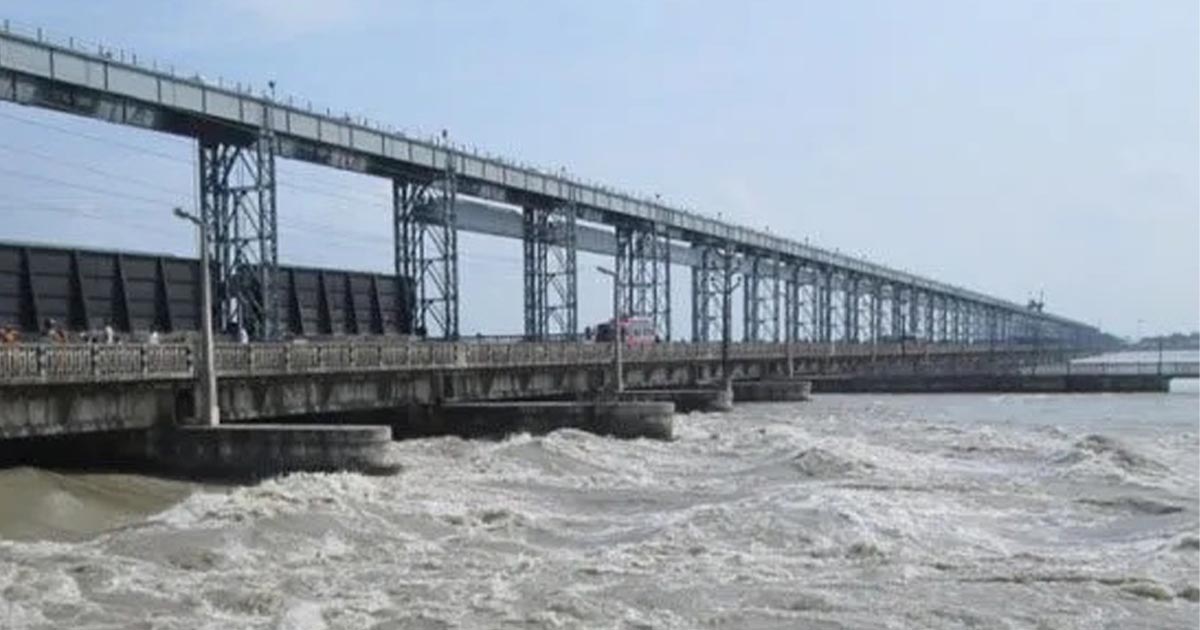
Continuous rain across eastern Nepal has pushed the Saptakoshi above the warning level at the Koshi Barrage, with the river’s flow measured at 163,230 cusecs by Wednesday night. The rising water has increased the threat of flooding and erosion in settlements along the river and across low-lying areas.
The concern is not limited to the current reading at the barrage. Rain is continuing in both the hills and the plains, and water arriving through the river’s large upstream network could drive the flow higher.
Twenty-one barrage gates opened
Authorities have opened 21 of the Koshi Barrage’s 56 gates to release the growing volume of water.
The barrage has 52 main gates and four gates leading towards the canals. Their operation is adjusted as the river rises, allowing more water to pass downstream.
Deputy Superintendent of Police Chandra Bahadur Khadka, the information officer for Sunsari Police, said the amount of water in the Saptakoshi could increase further as rainfall continues across the hill and Tarai regions.
The Koshi Barrage control room uses 150,000 cusecs as a key warning threshold. Once the flow crosses that level, a red light is switched on and a red flag is raised as a danger signal.
Wednesday night’s measurement was already more than 13,000 cusecs above that mark.
Flooding and erosion fears return along the river
Sharp changes in the Saptakoshi’s flow are closely watched throughout the monsoon because the effects can spread beyond riverside settlements in Nepal. Areas downstream in India can also face pressure when the river rises rapidly.
For communities living near the river, erosion can be as serious as flooding. A strong current can cut into embankments and riverbanks, threatening farmland, homes and access routes even before water enters settlements.
The risk usually grows during the main monsoon months, when heavy rain in the eastern hills raises water levels across the wider river system.
The Saptakoshi carries water from the Tamor, Arun, Sunkoshi, Dudh Koshi, Tamakoshi, Bhotekoshi and Indravati rivers. That network makes the river highly sensitive to rainfall across a wide geographical area.
During the dry season, stretches of the Saptakoshi can appear as a broad field of sand divided by smaller channels. Once sustained rain begins upstream, the same river can turn into a vast and forceful body of water within a short period.
With rainfall continuing, residents living near the river and in low-lying areas have been urged to remain alert to further rises, flooding and bank erosion.

Written by Pushpa Tamang
Pushpa Tamang is Managing Editor at Khoj Samachar, leading English and Nepali bureaus, newsroom operations, and editorial standards.
National ID Now Required for Old Bank Accounts in Nepal
Why Are Protests Spreading Everywhere Across Nepal Right Now?

Farmers Take Tomatoes to the Streets as Prices Crash

Nepal Rastra Bank Sets US Dollar Selling Rate at Rs 154.23

Nepal, Australia Hold Talks on Trade, Investment and Tourism

Nepal Signs Helicopter, Drone and Raft Rescue Agreements

Nagarik App Now Shows Blood Stocks Across Nepal