Former Education Minister Mahabir Pun Enters Election Race as Independent Candidate
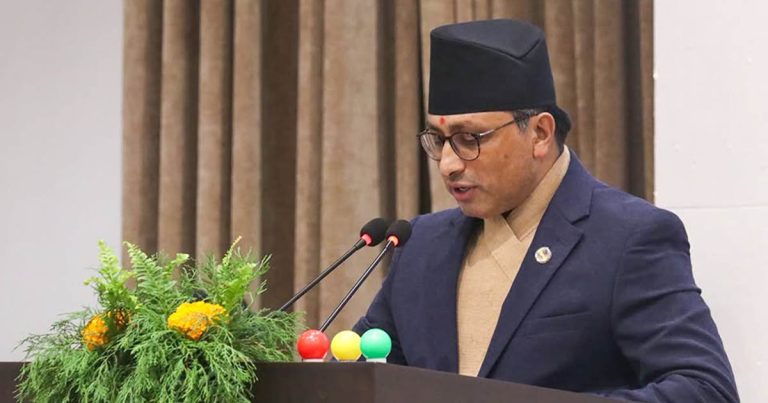
Former education minister Mahabir Pun has entered the February 21 parliamentary election as an independent candidate from Myagdi, citing stalled policy reforms and administrative limitations during his tenure.


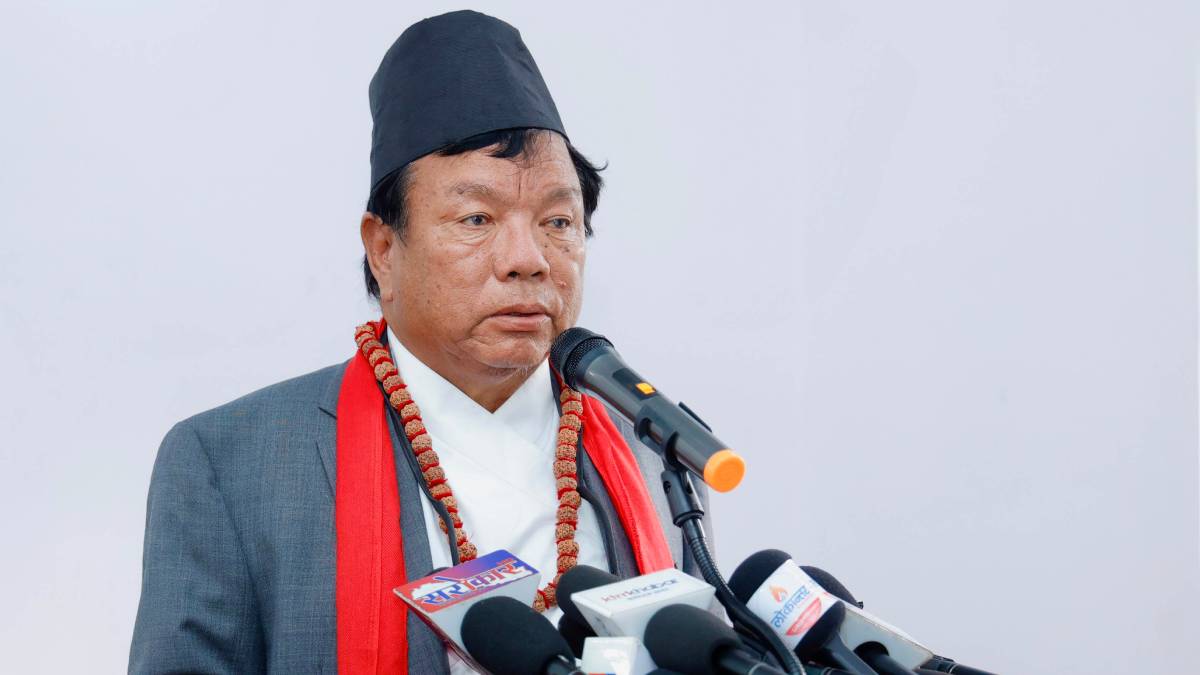
Until recently, former education minister Mahabir Pun had shown little indication that he intended to enter electoral politics. Whether in public forums or informal conversations, he was often asked the same question: “Are you also planning to contest the election?” His response was usually negative.
As the February 21 House of Representatives election approached, however, Nepal’s political landscape began to shift. One after another, sitting ministers resigned from office and announced their intention to contest the polls.
This trend triggered public criticism, with many questioning the propriety of ministers resigning mid-term to pursue electoral ambitions. At the same time, ministers who chose not to resign were also publicly thanked for maintaining institutional continuity.
Amid this debate, news broke on the morning of January 20 that Mahabir Pun had resigned from his post as education minister. Initially, the reason for his resignation was unclear. It later emerged that he had traveled to Myagdi to file his nomination as an independent candidate.
“I Entered the Race to Shake Public Thinking”
Speaking to journalists after registering his candidacy, Pun said his decision was not driven by a desire for power, but by a need to provoke serious reflection within society.
“The problem is not the bell itself, but the need to ring the bell in people’s minds,” he said.
Pun expressed disappointment with the current state of youth leadership in the country. “I once believed young leaders would bring change,” he said. “But what we see now is constant rivalry and a lack of cooperation. Everyone wants to become prime minister, yet no one is willing to work together.”
Pun said the decision to contest the election was not impulsive. According to him, he finalized his decision on the night of January 18.
“If the ordinances and regulations I had been working on had been implemented, I would not have entered the election,” he said.
He explained that those legal initiatives were aimed at strengthening Nepal’s education system and building a more robust science and technology framework.
Ordinances, Budget Issues, and the Myagdi Contest
According to Pun, several of the ordinances and regulations he proposed had already passed the Cabinet and were in the final stages of approval. However, government officials cited the election code of conduct as the reason for halting the process, arguing that major long-term legal changes cannot be introduced close to an election.
Pun, however, rejected that explanation. “These initiatives were prepared well before the election code of conduct came into effect,” he said. “I worked on them from the day I became minister. They passed multiple stages and even the Cabinet. They were stopped at the very end.”
He added that his proposal to establish a strong, independent ministry for science, technology, and innovation was also delayed at the administrative level. There has also been speculation that Pun’s resignation was linked to budgetary disputes with the Ministry of Finance. Responding to this, Pun said he had not sought funds for personal or political gain.
“I wanted to establish an innovation fund to support scientific research and technological development,” he said. “That proposal was also taken forward through an ordinance. But internally, there were misleading narratives and unnecessary accusations.”
Pun’s independent candidacy has added new attention to the Myagdi constituency. Other candidates include Karna Bahadur Bhandari from the Nepali Congress, Harikrishna Shrestha from CPN-UML, Arjun Bahadur Thapa from the Nepal Communist Party, and Yuvraj Roka from the Rastriya Swatantra Party.
With Pun now in the race, the key question facing voters is whether the reforms he was unable to complete as a minister can be realized if he secures a seat in Parliament. That answer will ultimately be decided at the ballot box.


Written by Roshan Shrestha
Roshan Shrestha is a Nepali investigative journalist and founder of Khoj Samachar, covering corruption, transparency, and public-interest issues.
Khawalung School Video: What Happened Between Teacher and Student?
Nepal to Fine Fuel Pumps Up to NPR 1 Million for Shutting Down
Why Susta Residents Have Come to Kathmandu?
Nepal Government to Print National ID Cards Itself
Mahabir Pun Appointed Minister of Science and Innovation in Nepal
Sudan Gurung Back as Home Minister
Everything You Need to Know About the 2026/27 National Budget