Speaker DP Aryal Meets PM Balen Shah as Parliament Remains Disrupted
Opposition parties continued obstructing Nepal’s Parliament, demanding Prime Minister Balen Shah answer lawmakers directly.


Prime Minister Balen Shah remained absent from Nepal’s lower house on Thursday as opposition parties once again blocked proceedings in the House of Representatives, escalating tensions over the government’s accountability to Parliament.
The disruption unfolded moments after the parliamentary session began, with opposition lawmakers rising from their seats and refusing to allow the meeting to continue unless the prime minister appeared in person to respond to lawmakers’ questions. Their demand has become a recurring flashpoint inside Parliament in recent days, reflecting growing frustration over what opposition parties describe as the government’s continued unwillingness to directly engage with elected representatives.
As the deadlock deepened, Speaker Dol Prasad Aryal suspended the House session for 15 minutes and left the Parliament building to hold discussions with the prime minister at the Office of the Prime Minister and Council of Ministers in सिंह दरबार.
Officials from the Speaker’s secretariat said the prime minister was briefed on the ongoing parliamentary obstruction and the opposition’s demands regarding his appearance in the chamber. The Speaker later returned to Parliament following the meeting.
Opposition presses for direct parliamentary accountability
Opposition lawmakers have been insisting that the prime minister participate in a formal question-and-answer session under Rule 56 of the House of Representatives regulations, which allows lawmakers to directly question the head of government inside Parliament.
The issue has increasingly evolved beyond a procedural disagreement. Opposition parties have framed the prime minister’s continued absence as a broader concern about executive accountability and the government’s relationship with Parliament itself.
For several consecutive meetings, opposition members have used obstruction tactics to pressure the government, arguing that avoiding parliamentary questioning weakens democratic oversight and diminishes the role of the legislature.
The standoff has also intensified political scrutiny over the government’s handling of parliamentary responsibilities at a time when tensions between the ruling side and opposition forces are already running high on multiple national issues.
Deadlock shows no immediate sign of ending
Despite the Speaker’s intervention and consultations with the prime minister, there were few indications on Thursday that the situation would immediately improve.
Political insiders familiar with the discussions indicated that the likelihood of Prime Minister Shah appearing in Parliament later in the day remained low, raising further uncertainty over whether the House would be able to resume normal proceedings.
The continuing disruption has begun drawing wider concern within political circles, where questions are increasingly being raised about the government’s responsiveness to parliamentary mechanisms and constitutional accountability.
With neither side showing signs of backing away from its position, the parliamentary impasse appears set to continue, prolonging uncertainty inside Nepal’s federal legislature and further straining relations between the government and opposition benches.

Written by Pushpa Tamang
Pushpa Tamang is Managing Editor at Khoj Samachar, leading English and Nepali bureaus, newsroom operations, and editorial standards.
Prime Minister’s Office Like Hitler’s Gas Chamber: Lawmaker
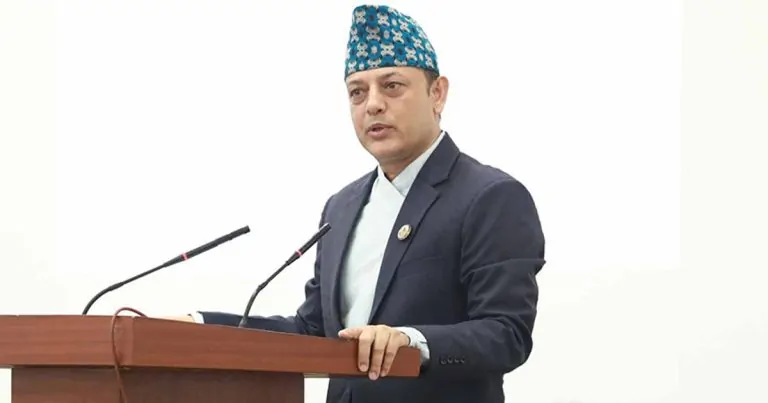
Speaker Aryal: Learn Parliament, Not Your Phone
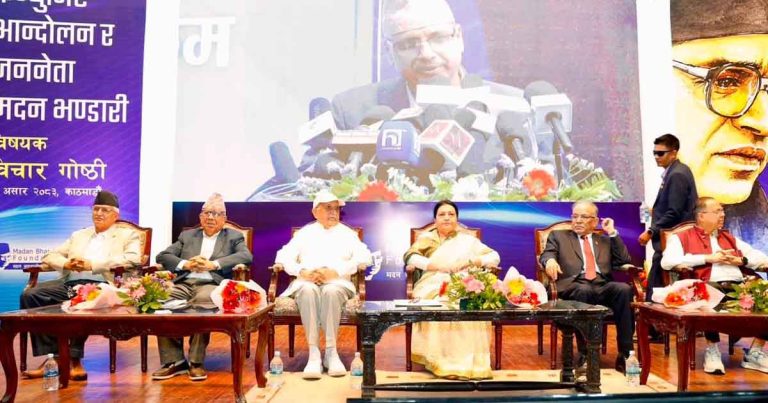
Four Former PMs Share Stage at Madan Bhandari Event
Prachanda Urges Left Unity at Bhandari Anniversary
Ramji Yadav Faces Scrutiny After Party Election Loss
RSP Elects Rabi, Swarnim, Sobita and Bipin to Top Posts
RSP Central Committee Elected Members List 2026