Don’t Worship Leaders
Nepal’s democratic culture continues to suffer when political leaders, journalists and activists are elevated beyond public accountability.


When journalists stop being journalists and become untouchable figures, when activists are elevated beyond accountability, and when political leaders are treated like gods instead of public representatives, democracy begins to weaken from within.
That is the crisis Nepal has been trapped in for years.
A journalist raises their voice loudly for a few months and people begin worshipping them. An activist manages to collect donations or lead a campaign and suddenly becomes beyond criticism. A leader delivers one or two good speeches or projects and supporters immediately turn them into some kind of national saviour.
Then the relationship between citizens and public figures changes completely.
Citizens disappear. Followers remain.
And once someone becomes a “god” in the eyes of the public, accountability dies quietly.
A leader who is treated like a leader can still be questioned. Journalists can investigate them. Citizens can criticise them. Voters can reject them in the next election.
That pressure forces leaders to work.
But when that same leader is turned into a figure that cannot be criticised, public oversight collapses. Supporters stop asking questions. Every criticism begins to feel like betrayal. Slowly, institutions become weaker while personalities become larger.
Nepal has repeatedly fallen into that cycle.
Every few years, a new figure rises. People project hope onto them. Supporters begin defending everything they do. Public criticism becomes emotional rather than political. Debate disappears. Loyalty replaces scrutiny.
Then eventually the same public becomes disappointed again.
The problem is not only leaders. The deeper problem is a political culture that keeps turning politicians, journalists and activists into symbols that stand above accountability.
Democracy survives through citizens, not devotees
In functioning democracies, leaders are treated as temporary public representatives, not sacred personalities.
Norway is often cited as one of the world’s most stable and developed democracies. But that stability did not emerge because Norwegians worshipped leaders. It emerged because institutions remained stronger than personalities.
If a minister makes a mistake there, media organisations question them immediately. Public criticism is normal. Resignation is considered part of political responsibility, not national humiliation.
People do not behave like followers protecting a supreme figure. They behave like citizens supervising elected representatives.
That culture forces leaders to remain accountable.
Finland follows a similar political culture. Public trust there is built around systems, education, transparency and institutions — not personality cults.
A prime minister can walk publicly without creating hysteria. Leadership is evaluated through governance and competence, not through emotional hero worship or social media frenzy.
The same pattern appears in Sweden.
Governments change. Political parties rise and fall. But institutions continue functioning because the public sees leaders as replaceable administrators, not divine protectors of the nation.
That distinction matters.
When systems become stronger than individuals, democracies mature.
What happens when leaders become untouchable
History also shows the opposite.
North Korea spent decades turning one ruling family into something beyond political leadership. Public criticism disappeared. Fear replaced citizenship. The state demanded loyalty instead of participation.
The result is visible even today — a country where leadership remains powerful but ordinary people remain trapped without basic freedoms.
Iraq under Saddam Hussein followed a similar path. The entire state slowly revolved around one personality. Images, speeches and propaganda replaced institutional politics. Eventually the country became dependent on one individual rather than democratic systems.
War, instability and destruction followed.
Libya experienced its own version of the same story under Muammar Gaddafi. At first many people viewed him as a symbol of national hope. But over time criticism became dangerous, dissent was treated as betrayal and public institutions weakened beneath personality-driven rule.
When public frustration finally exploded, the country collapsed into prolonged instability and conflict.
These examples are different countries with different histories, but they reveal one common truth:
Societies weaken when citizens stop acting like citizens and begin acting like devotees.
Nepal still has time to change
Nepal’s political frustration today did not emerge only because leaders failed. It also emerged because the public repeatedly abandoned institutional thinking and invested emotionally in individuals.
That cycle keeps repeating.
One leader disappoints the public, another personality rises, supporters gather around them, criticism becomes emotional, and eventually the same collapse returns again.
Democracy cannot function properly in that environment.
Journalists must remain journalists. Activists must remain activists. Leaders must remain leaders.
None of them should stand above public criticism.
A healthy democracy needs citizens who can question, disagree, criticise and replace leaders when necessary. The moment people become emotionally dependent followers instead of politically conscious citizens, accountability disappears.
And once accountability disappears, no country moves forward for long.

Written by Roshan Shrestha
Roshan Shrestha is a Nepali investigative journalist and founder of Khoj Samachar, covering corruption, transparency, and public-interest issues.
Why Nepal Needs an AI-Based Digital Traffic Management System
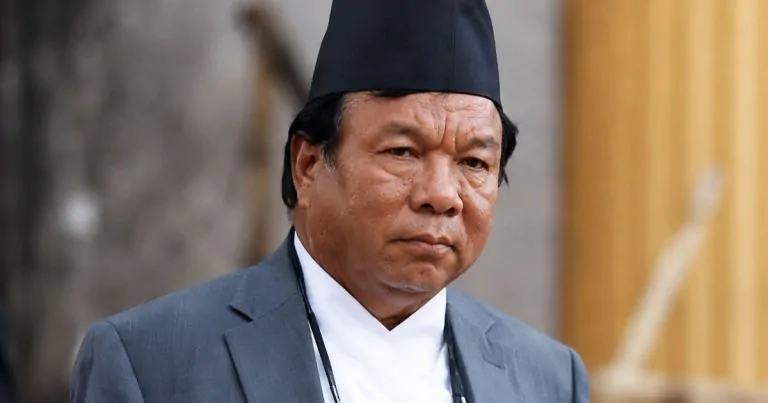
Mahabir Pun Appointed Minister of Science and Innovation in Nepal

What Nepal’s NHRC Gen Z Protest Report Reveals
Khoj Samachar Expands Multilingual Publishing With Hindi Edition
Climate Change Is Draining Oxygen From Rivers Worldwide
Gagan Thapa Says Congress Will Not Compromise on Citizens’ Rights

Summer Heat Is Rising, Follow These Simple Precautions