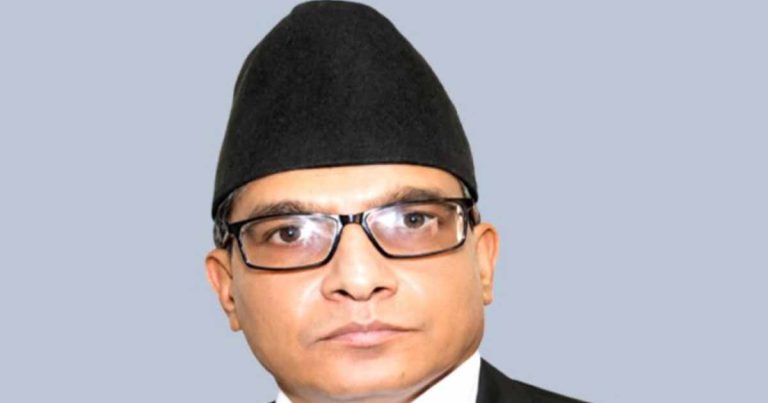
Manoj Kumar Sharma Set to Become Nepal’s Chief Justice
Lawmakers review complaints and judicial reform plans as Nepal moves closer to appointing a new Chief Justice.


Nepal’s parliamentary hearing committee has intensified preparations to conclude the confirmation process of proposed Chief Justice Dr. Manoj Kumar Sharma, as pressure mounts to end the prolonged leadership vacuum within the judiciary.
Parliamentary hearings for Sharma formally began earlier Tuesday after the Parliamentary Hearing Committee circulated complaints filed against him along with his proposed judicial work plan among lawmakers. A total of 16 complaints — 11 submitted through email and five through written petitions — were registered against the proposed Chief Justice as lawmakers prepared to review his judicial record, leadership vision and reform agenda.
During Tuesday’s committee meeting, chairperson Bodhanarayan Shrestha said the hearing process should not be unnecessarily delayed at a time when Nepal’s judicial system has been operating amid uncertainty for months. He argued that timely decisions were necessary to restore institutional stability within the Supreme Court.
Questions had emerged after the committee advanced parts of its schedule, with some lawmakers expressing concern that members had not been given sufficient time to study the complaints against Sharma and examine his proposed roadmap for judicial reform in detail. Responding to those concerns, Shrestha insisted the process was not being rushed irresponsibly and said discussions with complainants and parliamentary members would help clarify the issues raised during the hearing process.
The committee is currently reviewing complaints registered against Sharma alongside his plans for court administration and judicial reform. While some lawmakers continued to call for additional time for internal study, committee leadership signaled that prolonging the process further could deepen uncertainty surrounding the country’s highest court.
Judiciary under pressure for reform
Sharma’s nomination has drawn close political and legal attention at a time when Nepal’s judiciary continues to face criticism over judicial accountability, case backlogs, delays in justice delivery and declining public trust in the court system.
The hearing process is constitutionally mandatory before the formal appointment of a Chief Justice. Only after parliamentary endorsement can the president officially appoint the nominee. In practice, such hearings often evolve into broader debates about judicial independence, governance inside the courts and institutional credibility.
Legal and political observers have increasingly viewed Sharma’s confirmation process not merely as the appointment of an individual judge, but as a broader test of how Nepal’s judiciary intends to respond to growing public demands for reform and transparency.
Oath ceremony expected Tuesday evening
Preparations have also begun for Sharma’s swearing-in ceremony following parliamentary approval.
According to Supreme Court sources, the oath-taking ceremony has been scheduled for Tuesday evening after 6 pm at Shital Niwas. Under Nepal’s constitutional framework, the chief justice takes the oath of office before President Ram Chandra Poudel.
After taking the oath, Sharma is expected to formally assume office at the Supreme Court later the same day.


Written by Pushpa Tamang
Pushpa Tamang is Managing Editor at Khoj Samachar, leading English and Nepali bureaus, newsroom operations, and editorial standards.

Nepal to Fine Fuel Pumps Up to NPR 1 Million for Shutting Down
Why Susta Residents Have Come to Kathmandu?
Nepal Government to Print National ID Cards Itself
Everything You Need to Know About the 2026/27 National Budget
Deuba Couple Case: Supreme Court Cancels Arrest Warrant

UML Returns Rs 38.6 Million After VIP Treatment Controversy
Singha Durbar Toilets Remain in Poor Condition