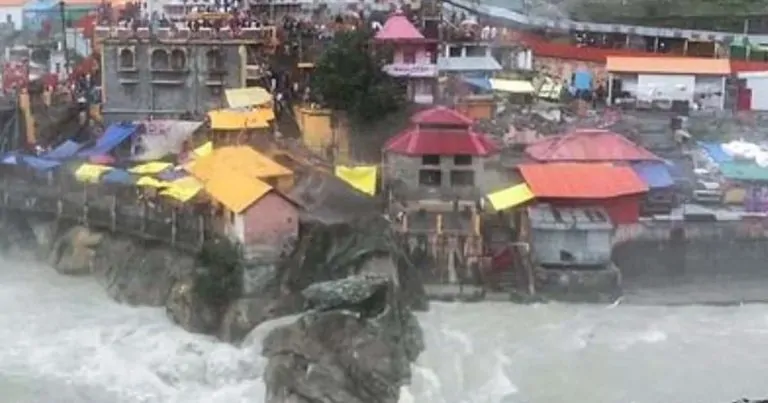
Sonam Wangchuk Vows to Survive Hunger Strike Until July 20
The education activist’s condition has worsened during his indefinite fast demanding accountability over the NEET-UG paper leak.


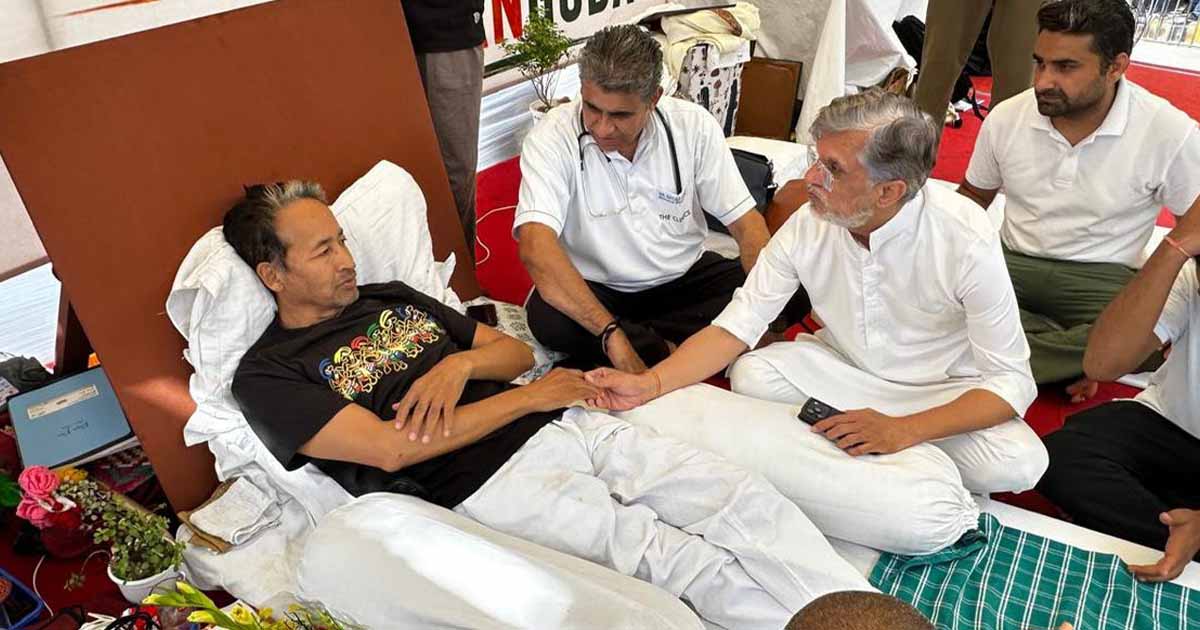
The hunger strike by education and environmental campaigner Sonam Wangchuk has entered a critical phase, with his health deteriorating after nearly three weeks without food. As concern grows over his condition, the Delhi High Court has directed the central and Delhi governments to ensure he receives daily medical examinations and any treatment considered necessary by government doctors.
Wangchuk began his indefinite fast on June 28, demanding the resignation of Union Education Minister Dharmendra Pradhan over the NEET-UG examination paper leak case. On Friday, his protest reached its 20th day, shifting attention beyond the political demand itself to the question of protecting the life of a peaceful protester.
Doctors warn of rising health risks
Medical teams monitoring Wangchuk say he has lost more than nine kilograms since the fast began and now weighs 56.9 kilograms. Doctors have also recorded elevated ketone levels, indicating that his body has moved beyond using stored glucose and fat for energy.
Dr. Satish Lamba, who has been overseeing his condition, said Wangchuk remains mentally alert but his physical condition has entered a dangerous stage.
As the body’s reserves are exhausted, muscle tissue begins breaking down, he said, adding that rising uric acid levels suggest the process has already started. Doctors have warned that prolonged fasting could soon begin affecting vital organs if his condition worsens further.
He remains under round-the-clock medical observation, with emergency intervention likely if his health declines further.
Delhi High Court orders daily monitoring
Hearing a public interest petition over Wangchuk’s health, a bench led by Chief Justice Devendra Kumar Upadhyaya and Justice Tushar Rao Gedela directed authorities to conduct regular health checks and provide prompt medical care whenever required.
- The court said every citizen’s life is valuable.
- It instructed government authorities to make every possible effort to protect Wangchuk’s life.
- If government doctors recommend treatment or medical intervention, authorities must act without delay.
The court’s intervention has added a humanitarian dimension to a protest that had largely been viewed through a political lens.
Wangchuk refuses to end his fast
Despite mounting health concerns, Wangchuk has reiterated that he will not call off the hunger strike without a response from the government. Ending the protest prematurely, he said, would send the wrong message.
Addressing supporters at Jantar Mantar, he urged people to join the planned peaceful march to Parliament on July 20.
“I may look weak from outside, but I remain strong inside,” he said, expressing confidence that he would continue until the planned demonstration.
In an emotional appeal to supporters, he added that if they failed to make the movement successful, “I will return as a ghost.”
Student groups, including the Revolutionary Youth Organisation, the All India Students’ Association and the Students’ Federation of India, have joined the protest in solidarity.
Opposition leaders back the protest but urge caution
As Wangchuk’s condition has worsened, opposition leaders have increasingly visited the protest site.
Former Delhi Chief Minister Arvind Kejriwal, Samajwadi Party MP Dimple Yadav, farmer leader Rakesh Tikait and Congress leader Pawan Khera have all expressed support for the movement.
Kejriwal repeated the demand for Education Minister Dharmendra Pradhan’s resignation and even suggested Wangchuk should instead be appointed education minister. He also urged the central government not to ignore the concerns being raised by young people.
The Congress party has also backed the demand for accountability over the examination controversy while appealing to Wangchuk to end his fast in view of his deteriorating health.
Congress general secretary K.C. Venugopal said Wangchuk had raised questions that reflected broader concerns over failures in India’s examination system and the lack of accountability. Pawan Khera, after meeting Wangchuk, argued that the form of the protest should evolve because risking one’s life alone was unlikely to force the government to act.
NEET controversy keeps accountability in focus
The NEET-UG paper leak and allegations of irregularities in competitive examinations have fuelled widespread anger among students and parents across India. Wangchuk’s hunger strike has brought those concerns back to the centre of national political debate.
Opposition parties argue that restoring confidence in the examination system requires accountability at the highest political level. The government has not publicly issued a substantive response to Wangchuk’s specific demands.
With the planned Parliament march approaching on July 20, the direction of the movement now depends not only on the government’s response but also on whether Wangchuk’s health allows him to continue his protest.

Written by Roshani Shrestha Pathak
Roshani Shrestha Pathak is the English Bureau Chief at Khoj Samachar, overseeing English-language editorial operations and newsroom coordination.
US Attacks Iran Again as Fighting Enters Sixth Night

Jordan Shoots Down Eight Iranian Missiles
US House Passes Permanent Daylight Saving Time Bill
Indian Crew Member Killed in Hormuz Tanker Attack

South Korean Sailor Found Dead Near Northern Sea Border

US-Iran Clash Raises Gulf Alarm After Drone Attacks
Iran-America War Update: Hormuz Strait Closed