Iran-America War Update: Hormuz Strait Closed
IRGC links the indefinite shutdown to US intervention as military attacks and diplomatic efforts continue across the region.


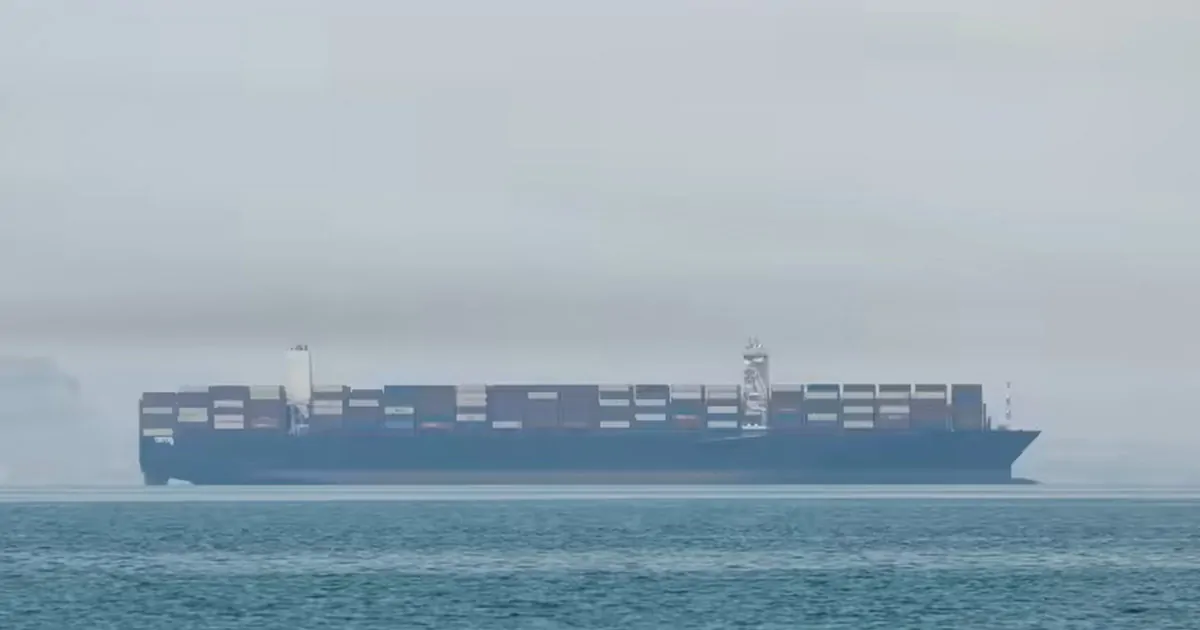
Iran’s Islamic Revolutionary Guard Corps has declared the Strait of Hormuz closed indefinitely, warning that no vessel will be allowed through the strategic waterway until the United States ends its intervention in the region.
The announcement pushes the confrontation beyond missile exchanges and military threats. It places commercial shipping, energy supplies and the rules governing one of the world’s most sensitive maritime routes directly inside the conflict.
For countries dependent on oil and gas transported through Hormuz, the immediate concern is not limited to how long the closure may last. The larger question is now who controls access to the passage, under what conditions, and whether any negotiated shipping arrangement can survive the widening US-Iran confrontation.
Iranian state media quoted the IRGC Navy as accusing foreign powers of trying to impose what it called “illegal routes” for vessels in the strait.
Iranian officials said ships attempting to enter through routes established without Tehran’s approval would not be accepted.
“The strait will not reopen until the United States ends its intervention in the region,” Iranian media quoted the IRGC as saying.
The force also warned that any military operation aimed at breaking the closure would face a strong response.
A prolonged disruption in Hormuz would carry consequences far beyond regional security. It could affect international energy supplies, crude oil prices and maritime trade at a time when military exchanges across West Asia are already placing pressure on a fragile ceasefire.
Declaration follows Muscat talks
The IRGC announcement came only hours after Iran and Oman held discussions in Muscat on a possible arrangement for the safe movement of vessels through the strait.
Oman is understood to have proposed two separate routes that ships could use while crossing Hormuz. Iran had previously opposed such an arrangement.
The two sides, however, agreed to continue technical and political discussions on navigation.
Iranian Foreign Minister Abbas Araghchi also discussed possible measures for safe passage during his visit to Oman. The closure declared by the IRGC while those talks were still under way has created fresh uncertainty over whether any practical agreement can be implemented.
The timing also exposes a difficult gap between diplomacy and military authority. Negotiators may continue discussing routes and guarantees, but the IRGC’s position suggests that passage will remain tied to the wider political and military confrontation with Washington.
Qatar’s prime minister has also contacted officials in the United Arab Emirates and Jordan, calling for de-escalation, renewed diplomatic efforts and implementation of an understanding between the United States and Iran.
Trump threatens overwhelming response
US President Donald Trump has issued a severe warning to Iran as the Hormuz crisis deepens.
Trump said Iran would face a broad military assault if an attempt were made on his life. He claimed that 1,000 missiles were ready to be fired towards Iran and that thousands more could be used if required.
He also warned that Iran would be “completely destroyed” if Tehran acted on threats against him.
The remarks followed accounts of calls for revenge against Trump during the funeral of former supreme leader Ayatollah Ali Khamenei.
Iran’s new supreme leader, Mojtaba Khamenei, has pledged to avenge what he described as his father’s “innocent blood”. His first public message after the funeral indicated that the confrontation with the United States could deepen further.
The language coming from both sides has left little space between deterrence and escalation. Threats that may once have been used to pressure negotiations are now being issued while attacks are continuing and a major international shipping route has been declared closed.
Washington and Tehran dispute state of negotiations
Trump has said Iran asked for negotiations to resume and that the United States agreed.
At the same time, he declared that the ceasefire between the two countries had ended.
Iran rejected his account.
Foreign Ministry spokesperson Esmaeil Baghaei said Tehran had not requested the reopening of direct negotiations with Washington. He said Iran had only agreed to receive a visit from Qatari mediators.
US officials have said technical-level communication is continuing despite the conflicting public claims.
The two governments are therefore presenting sharply different versions of the diplomatic process. Washington says Tehran sought renewed talks. Iran says it merely accepted mediation.
The exchange suggests that communication channels have not fully collapsed, but it also shows how little political trust remains around them. Any discussion over Hormuz will now take place under the pressure of an unstable ceasefire, continuing attacks and public threats from both capitals.
Attacks spread across the region
The latest confrontation intensified after the United States carried out new air strikes inside Iran.
Tehran then launched missiles towards regional countries allied with Washington.
Air raid sirens sounded in Bahrain, Kuwait, Qatar and Jordan. Bahrain hosts the headquarters of the US Navy’s Fifth Fleet, while American troops and military aircraft are also stationed in Jordan.
The United States said its strikes on Iranian targets were carried out after attacks on vessels in the Strait of Hormuz.
Iran later announced that it had attacked US military bases in the region for two consecutive nights.
The attacks and counterattacks over the past two days have raised fears that the weakened ceasefire could collapse into a wider war.
The closure of Hormuz adds another layer of risk. Naval forces, commercial vessels and energy shipments are now operating in the same narrow space as military threats and competing claims over authorised routes.
Even if some vessels attempt to move under a negotiated arrangement, the absence of agreement over who can approve those routes could itself become a trigger for confrontation.
Lebanon remains under pressure
The regional tension is not confined to Iran and the United States.
Israeli air strikes have targeted several areas of southern Lebanon. At least seven people were injured in an attack in the al-Mansouri area.
Lebanon has confirmed that it will participate in the next round of talks with Israel. The meeting is expected to take place in Rome.
Diplomatic efforts are therefore continuing on several fronts, but so are air strikes, missile attacks and warnings of retaliation.
After Iran’s declaration on Hormuz, attention is now centred on whether maritime traffic can continue under any temporary arrangement and whether the dispute over the strait will undermine the diplomatic contacts already under way.
The crisis has reached a point where the movement of a single vessel through a contested route could carry consequences far beyond the waterway itself.

Written by Pushpa Tamang
Pushpa Tamang is Managing Editor at Khoj Samachar, leading English and Nepali bureaus, newsroom operations, and editorial standards.

Heavy Rain Triggers Landslides in Uttarakhand
Dalai Lama Birthday Controversy in Nepal: Tibet-China Risk Explained
Oil Prices Rise as US-Iran Tensions Flare

Is It Illegal for Nepalis to Get an Aadhaar or PAN Card in India?

Germany: Six died in Stade Shooting

Neymar Gives $250K for Venezuela Earthquake Victims
Kolkata Warehouse Collapse Update: 5 Dead, 2 Arrested