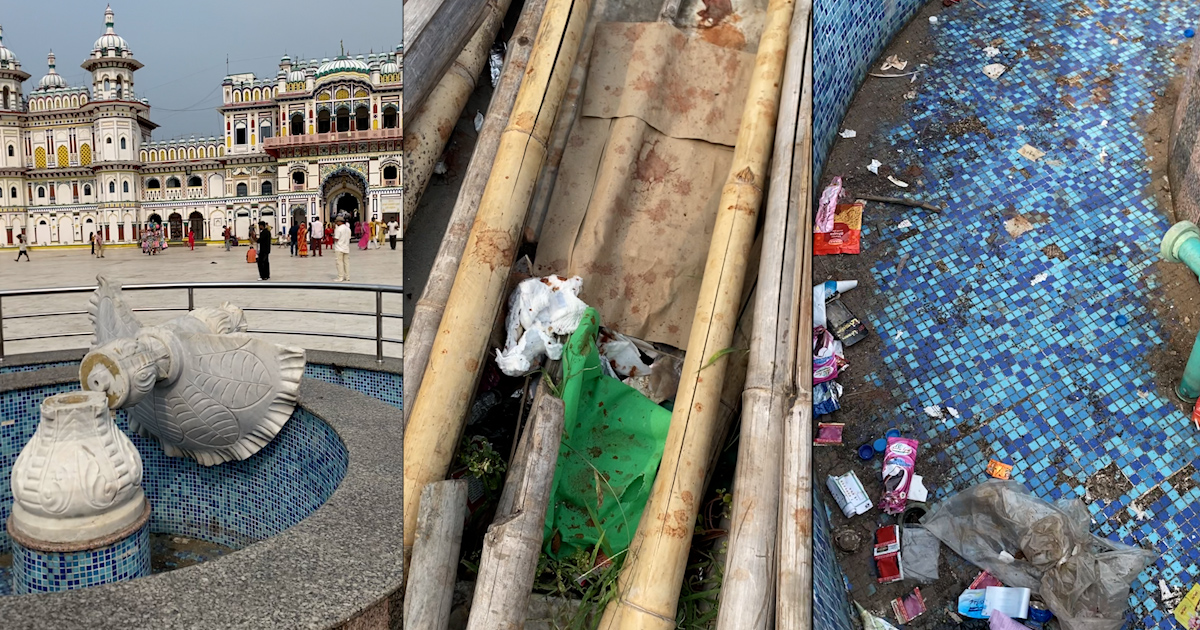
Janakpur Dham, the capital of Madhesh Province and one of the most important religious destinations for Hindus around the world, is facing growing concerns over poor waste management. This report is based on concerns raised through Khoj Samachar’s “Janata Sanga Media” initiative, a public-participation platform launched earlier to bring local issues directly into the spotlight.
A complaint submitted by Janakpur resident Sanjay Mandal through the program, along with photographs and video evidence, shows garbage accumulating across religious sites, public spaces, market areas, the railway station, and sacred ponds that attract thousands of pilgrims every year.
The issue is no longer being viewed only as a cleanliness problem. Residents say it is beginning to affect the image of Janakpur Dham itself, a city whose identity is deeply tied to faith, culture, and tourism.
Waste Seen Even Around Janaki Temple
Garbage has been found at several locations within and around the Janaki Temple complex, one of the most revered Hindu pilgrimage sites and the birthplace of Goddess Sita according to religious belief.
Thousands of devotees visit the temple daily. Locals say the presence of plastic waste, food packaging, and other litter around the temple premises is undermining both the spiritual atmosphere and the city’s reputation as a religious destination.
Many residents question why the city’s most prominent landmark continues to struggle with basic sanitation despite its national and international importance.
Markets and Public Spaces Also Affected
The situation is not limited to religious sites.
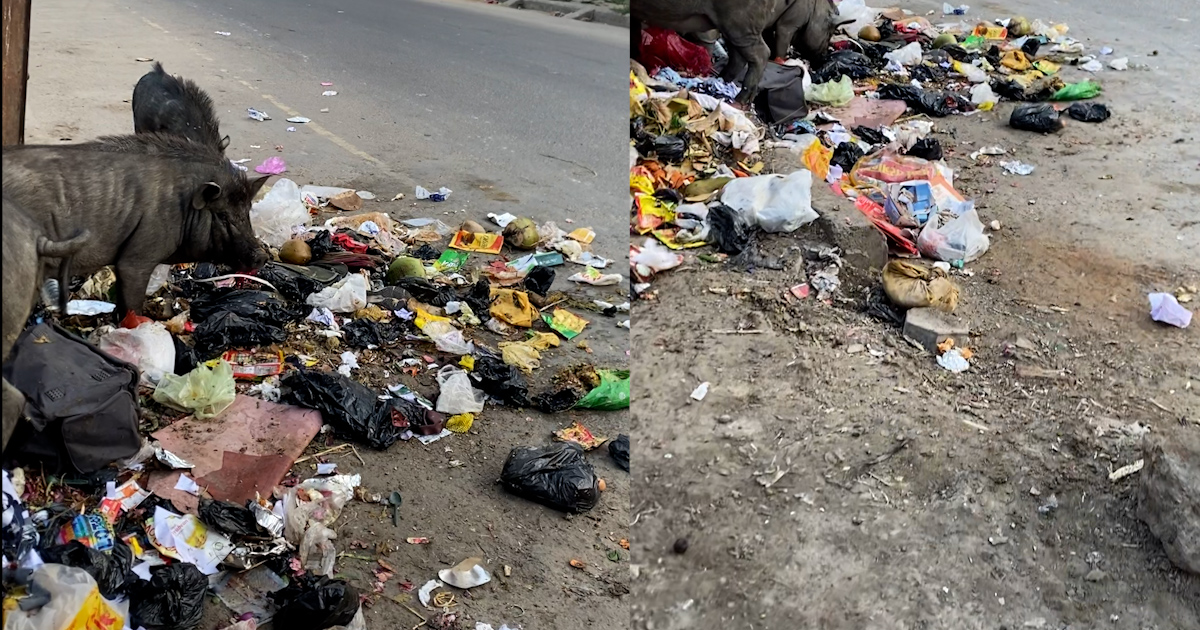
Waste piled up at Janakpurdham Chowk.
Residents say waste has been piling up along roadsides, market areas, public squares, and major intersections across Janakpur Dham. The lack of regular collection and effective waste disposal has led to foul smells in several parts of the city.
People living in the area say the problem has gradually worsened over time.
Railway Station Leaves a Poor First Impression
The Janakpur Railway Station, which serves as a major entry point for visitors arriving from different parts of Nepal and India, has also been affected by poor waste management.
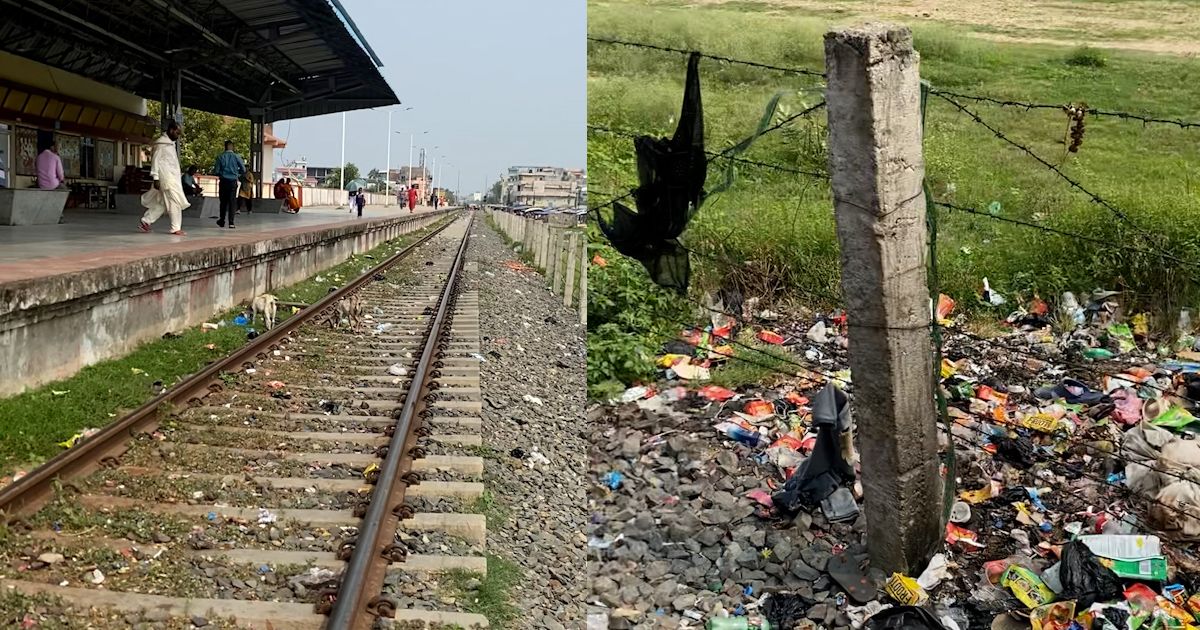
Garbage scattered around Janakpur Railway Station.
For many travelers, the station provides their first view of Janakpur Dham. Locals say improving sanitation around the station should be a priority because it reflects directly on the city’s image.
Yet complaints continue about unmanaged waste in and around the station area.
Sacred Ponds Under Pressure
The condition of Dhanush Sagar and Ganga Sagar, two religiously significant ponds located near Janaki Temple, has become another source of concern.
According to religious tradition, many devotees bathe in these ponds before visiting the temple. Hundreds of people use the ponds every day, while the number rises sharply during festivals and religious events.
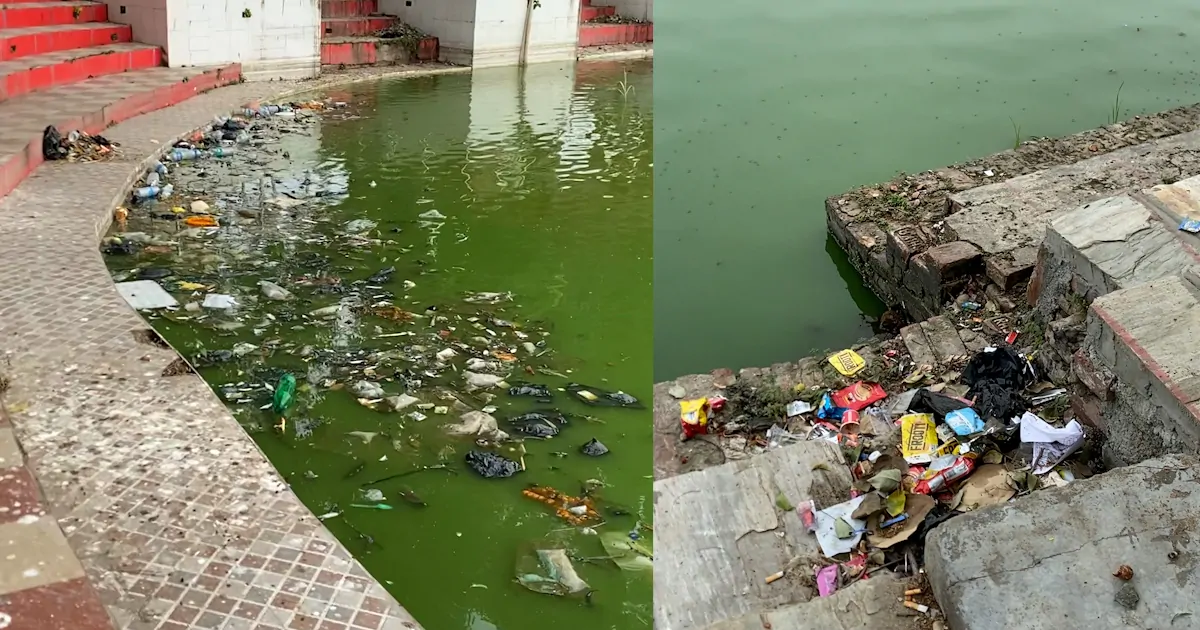
Garbage around Dhanush Sagar (left) and Ganga Sagar (right).
Residents say waste is now visible both around the ponds and in the water itself.
They argue that the deterioration of these sacred sites threatens not only religious sentiment but also the overall experience of pilgrims visiting the city.
Youths Carried Collected Waste to Government Offices in Protest
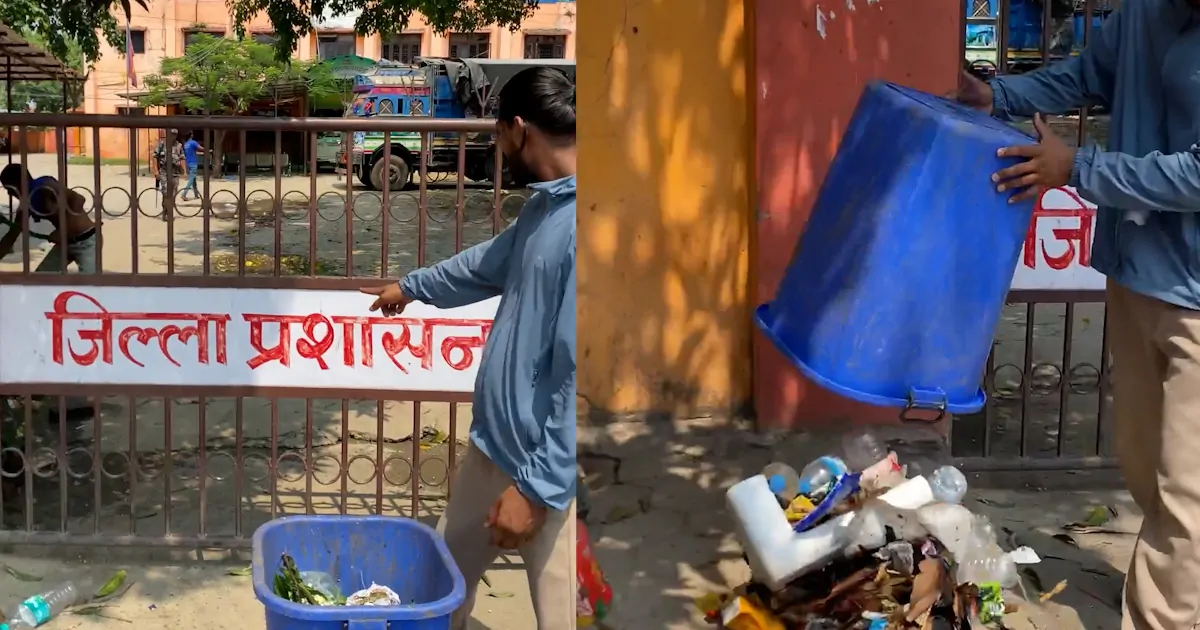
Garbage dumped outside the District Administration Office during a protest.
Locals say they had repeatedly raised concerns about the worsening waste management situation with the relevant authorities and urged them to take corrective action. However, they claim that no meaningful measures were taken despite repeated complaints.
Frustrated by the lack of response, local youths collected garbage from different parts of Janakpur Dham and transported it to the gates of the Office of the Chief Minister and Council of Ministers as well as the District Administration Office in Dhanusha as a symbolic protest.
According to residents, the garbage had been collected from public spaces across the city where waste had remained unmanaged for extended periods. They said the protest was intended to draw the attention of authorities and highlight the growing sanitation problems affecting religious sites, public areas, and tourist destinations in Janakpur Dham.
Participants hoped the demonstration would encourage the concerned agencies to take immediate action and improve waste management services in the city. However, residents say they have yet to see significant improvements following the protest.
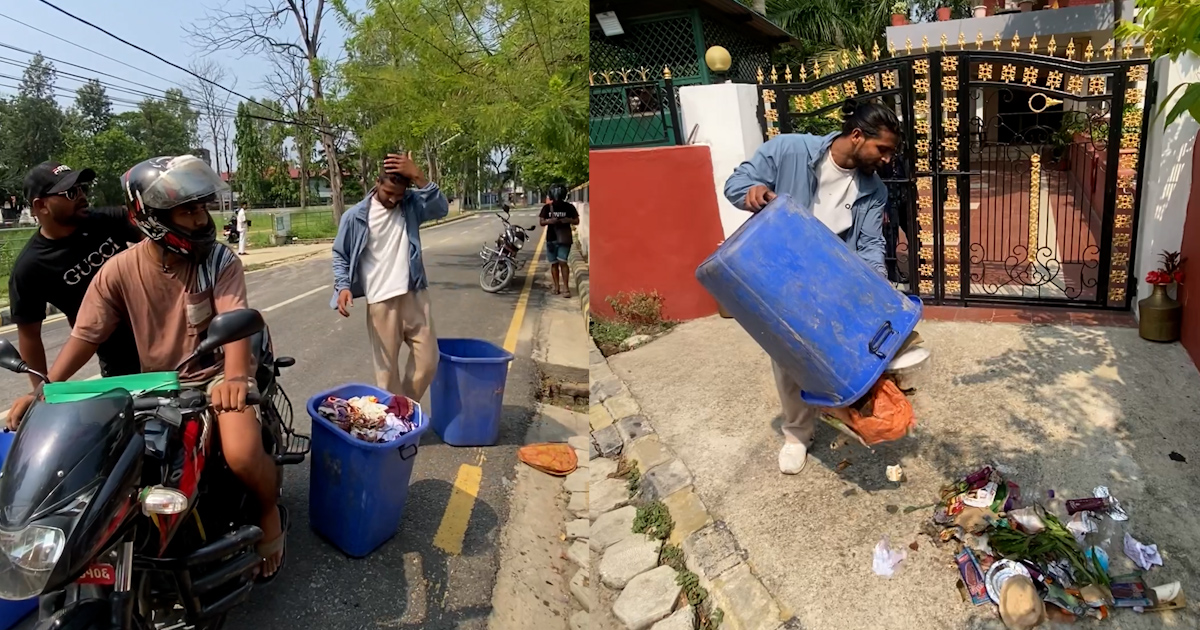
Locals dump garbage outside the Chief Minister’s residence in protest.
Participants hoped the demonstration would force authorities to take immediate action. They say significant improvements have yet to materialize.
Stray Cattle Eating Plastic Waste
Residents also highlighted another consequence of unmanaged garbage.
According to locals, stray cattle frequently consume plastic waste discarded on roads and public spaces. Many animals become ill after eating plastic, and some die.
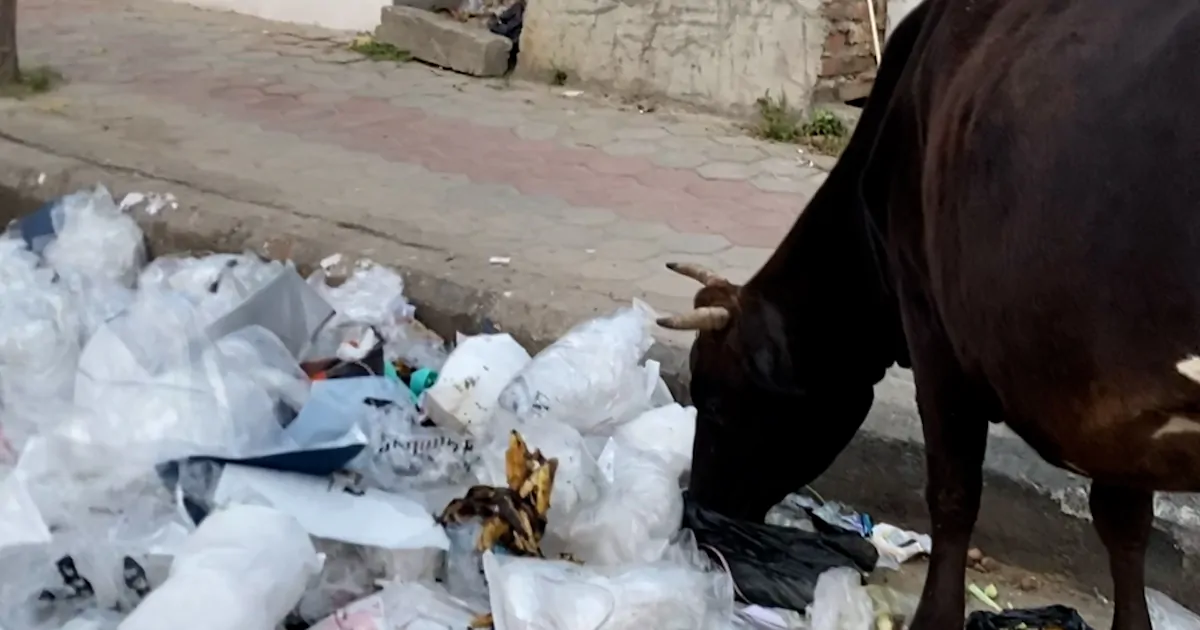
Cow feeding on plastic waste in Janakpurdham.
The problem does not end there. When dead animals are not removed and managed in time, residents say the resulting odor creates additional environmental and public health concerns.
Concerns Over Public Health and Religious Reputation
Residents warn that continued pollution around sacred sites such as Dhanush Sagar and Ganga Sagar could have consequences beyond aesthetics.
They fear that pilgrims bathing in contaminated surroundings may face health risks, while the deterioration of important religious landmarks could damage the city’s standing as a major pilgrimage destination.
Residents Call for Immediate Action
Local residents have urged the federal government, the Madhesh Province government, Janakpur Dham Sub-Metropolitan City, and other concerned agencies to take immediate and effective measures to address the waste management crisis.
They argue that protecting Janakpur Dham’s religious, cultural, and tourism identity requires sustained attention to sanitation and waste management. Residents say the growing accumulation of garbage has become a year-round concern, particularly during the summer months when high temperatures accelerate the decomposition of waste and intensify foul odors in public areas.
According to locals, unmanaged garbage attracts flies, mosquitoes, and stray animals, increasing the risk of sanitation-related health problems. They warn that stagnant waste around residential neighborhoods, marketplaces, and religious sites could contribute to the spread of diseases and create an unhealthy environment for both residents and visitors.
The concern is particularly significant in Janakpur Dham because thousands of pilgrims and tourists visit the city throughout the year. Residents say poor sanitation not only affects public health but also creates a negative impression among visitors arriving to experience the city’s religious and cultural heritage.
Locals further stress that sacred sites, public spaces, roadsides, transportation hubs, and religious ponds require regular cleaning and proper waste disposal systems. They believe stronger monitoring, increased public awareness, and more efficient waste collection services are necessary to prevent the situation from deteriorating further.
For residents, the issue is not simply about keeping streets clean. It is linked to public health, religious faith, tourism promotion, environmental responsibility, and the dignity of a city that holds special significance for millions of devotees.