Sudan Gurung Reopens Nepal’s Palace Massacre Debate After 24 Years
The Home Minister’s decision to revisit issues linked to the 2001 palace massacre has renewed public attention on one of Nepal’s most disputed and unresolved national tragedies.


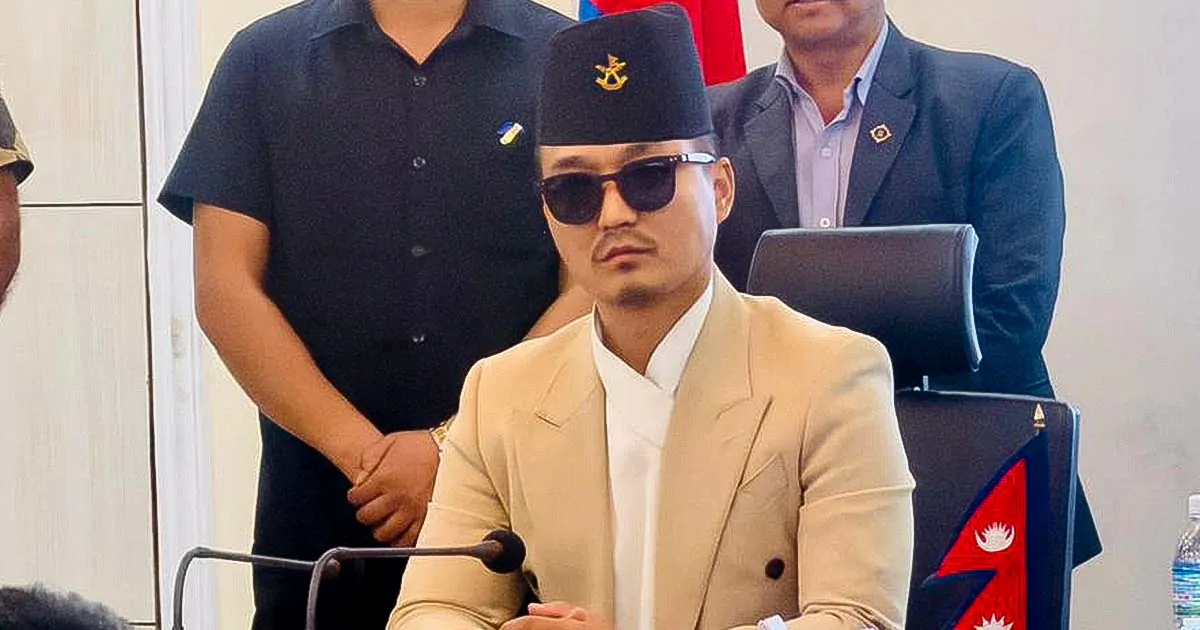
Sudan Gurung has returned to the Home Ministry just 48 days after stepping down from the post he held for only 26 days. His comeback has drawn sharply different reactions. Some see a minister determined to act after navigating months of political turbulence. Others view his return through the lens of governance concerns and unfinished controversies.
What has drawn the most attention, however, is not his return itself but one decision announced on the day he resumed office.
Among four decisions unveiled after assuming charge, Gurung indicated that the government would revisit issues related to Nepal’s 2001 royal palace massacre, a case that has remained one of the country’s most disputed and emotionally charged national tragedies for nearly a quarter of a century.
For many Nepalis, the event is more than a historical episode. It is a wound that never fully healed and a question that never entirely disappeared.
A Case That Never Left Public Memory
The Narayanhiti Palace massacre remains one of the most consequential events in modern Nepali history.
King Birendra Shah, Queen Aishwarya, Prince Nirajan, Princess Shruti and several other members of the royal family were killed inside the royal palace during a family gathering on June 1, 2001 (Jestha 19, 2058 BS).
The incident fundamentally altered Nepal’s political trajectory and continues to occupy a unique place in the country’s collective memory.
Successive generations have grown up hearing competing explanations, unanswered questions and deeply conflicting interpretations of what happened that night.
Gurung’s latest move has pushed the issue back into national conversation.
The Official Investigation and Its Findings
Following the killings, an investigation committee was formed under the authority of then-King Gyanendra Shah.
The two-member panel consisted of then Chief Justice Keshav Prasad Upadhyaya and then Speaker Taranath Ranabhat. A proposal was reportedly made to include senior UML leader Madhav Kumar Nepal in the inquiry, but he declined participation.
The committee examined the scene, reviewed evidence and collected statements from more than one hundred individuals before submitting its report within seven days.
Its conclusion was clear.
According to the official report, then Crown Prince Dipendra Shah opened fire on members of the royal family after tensions linked to family disagreements, including disputes surrounding his desire to marry Devyani Rana. The report also cited heavy alcohol consumption before the incident.
The investigation concluded that Dipendra carried out the shootings and later turned the weapon on himself.
That finding became the state’s official version of events.
Why Doubts Persist After Twenty-Four Years
The official report did not end public skepticism.
Over the years, alternative theories, suspicions and unresolved questions continued to circulate among sections of Nepali society. Many of those discussions focused on circumstances surrounding Gyanendra Shah, who was outside Kathmandu at the time of the killings.
Questions have also repeatedly emerged regarding forensic details, the direction of gunshot wounds, procedures followed after Dipendra was injured, postmortem-related controversies and the handling of the crime scene.
None of those claims, however, have been conclusively supported by publicly established evidence.
The absence of definitive answers has allowed speculation to survive far longer than in most national investigations.
The palace massacre gradually evolved from a criminal case into a symbol of unanswered history.
Foreign Conspiracy Claims Remain Unproven
Various geopolitical theories have also surfaced over the years.
Some commentators have speculated about the possible involvement of foreign intelligence agencies, including India’s RAW or the United States’ CIA, citing regional political circumstances of the time.
Other claims have suggested that individuals resembling or impersonating Dipendra may have played a role in the attack.
Despite years of discussion, no official investigation or publicly verified evidence has substantiated such allegations.
As a result, these claims remain part of public speculation rather than established fact.
A Political Decision With High Stakes
For more than two decades, no formal new investigation gained meaningful momentum.
That is why Gurung’s announcement carries significance beyond the Home Ministry itself.
If the government proceeds with a fresh review or reinvestigation, it could trigger renewed scrutiny of historical records, institutional decisions and long-standing public narratives.
The move also presents political risks.
Any attempt to revisit one of Nepal’s most sensitive national events is likely to face intense public attention, competing interpretations and pressure from multiple sides.
Yet many Nepalis still believe important questions remain unanswered.
Whether the government ultimately launches a formal investigation, and how far it is willing to pursue the matter, may determine whether one of Nepal’s oldest unresolved debates moves closer to closure or enters another chapter of controversy.

Written by Pushpa Tamang
Pushpa Tamang is Managing Editor at Khoj Samachar, leading English and Nepali bureaus, newsroom operations, and editorial standards.

Three Years Overdue, Seleghat–Ramechhap–Sanghutar Road Still Muddy
Why the Supreme Court Halted Nepal’s New Property Probe Commission
Fake Bhutanese Refugee Scam in Nepal: Full Verdict and Sentences
Nepal Cabinet Release of All Three Miterbyaj Commission Reports
Sudan Gurung Meets Predatory Lending Victims in Bara
Sudan Gurung Makes Citizens Feel the State Is Present
Why Was Sudan Gurung Criticized Despite Doing the Right Thing?