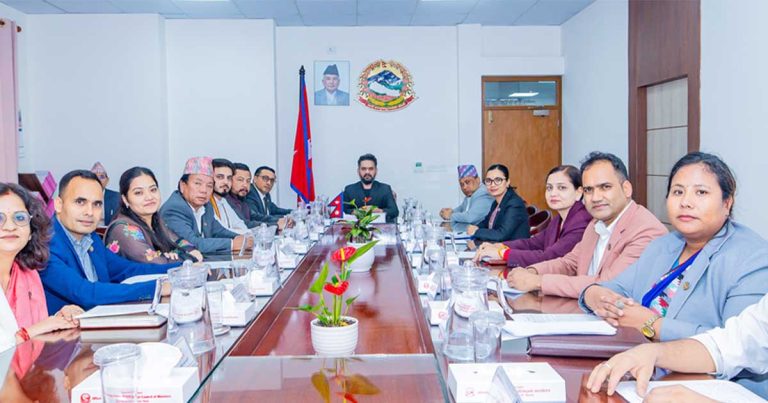
Fact Check: Viral Claim About DP Aryal’s 27-Vehicle Convoy
Claims circulating on social media left out key details about who was travelling in the convoy and why.


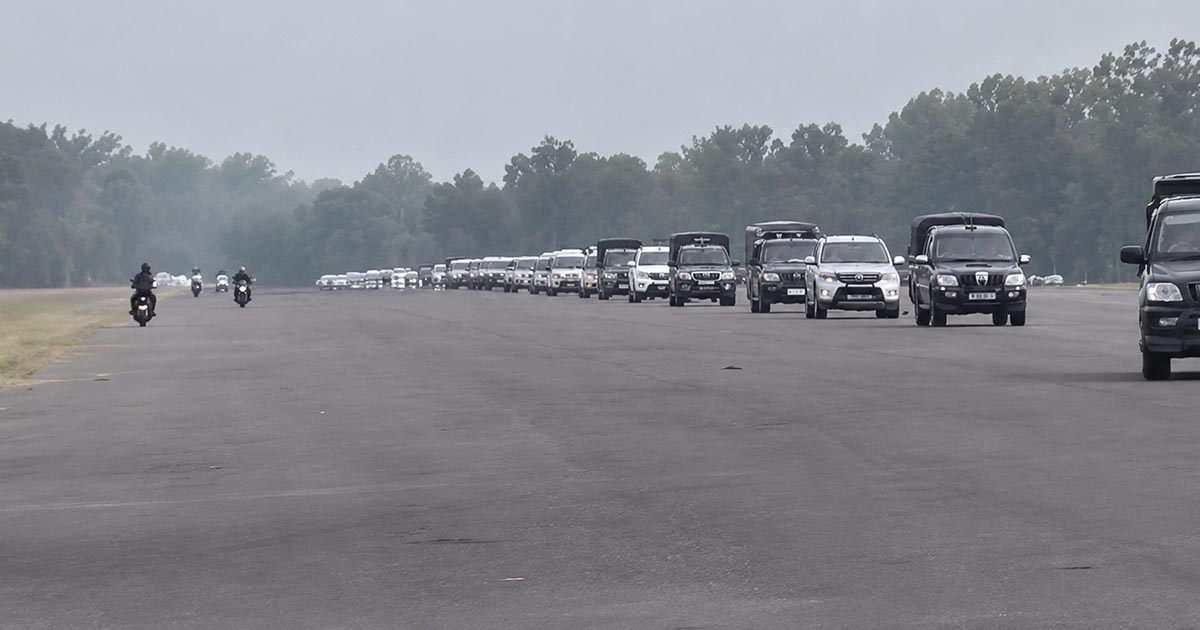
A video showing a long convoy of government vehicles has been circulating widely on social media, with many users claiming that the entire fleet was being used solely for the movement of Speaker DP Aryal. The footage triggered criticism over the apparent scale of state resources and security arrangements.
But the convoy seen in the video was not carrying only the Speaker. It was transporting a large group of constitutional office holders, provincial parliamentary leaders, senior officials and security personnel attending an inter-legislature conference in Sudurpashchim Province.
The controversy highlights a familiar pattern in Nepal’s social media landscape, where short video clips often travel faster than the context needed to understand them. In this case, a convoy linked to a high-profile public event was widely interpreted as the personal travel arrangement of a single official.
Why So Many Government Vehicles Were on the Road
The gathering brought together speakers and deputy speakers from all seven provinces, along with officials from the federal parliament and provincial assemblies.
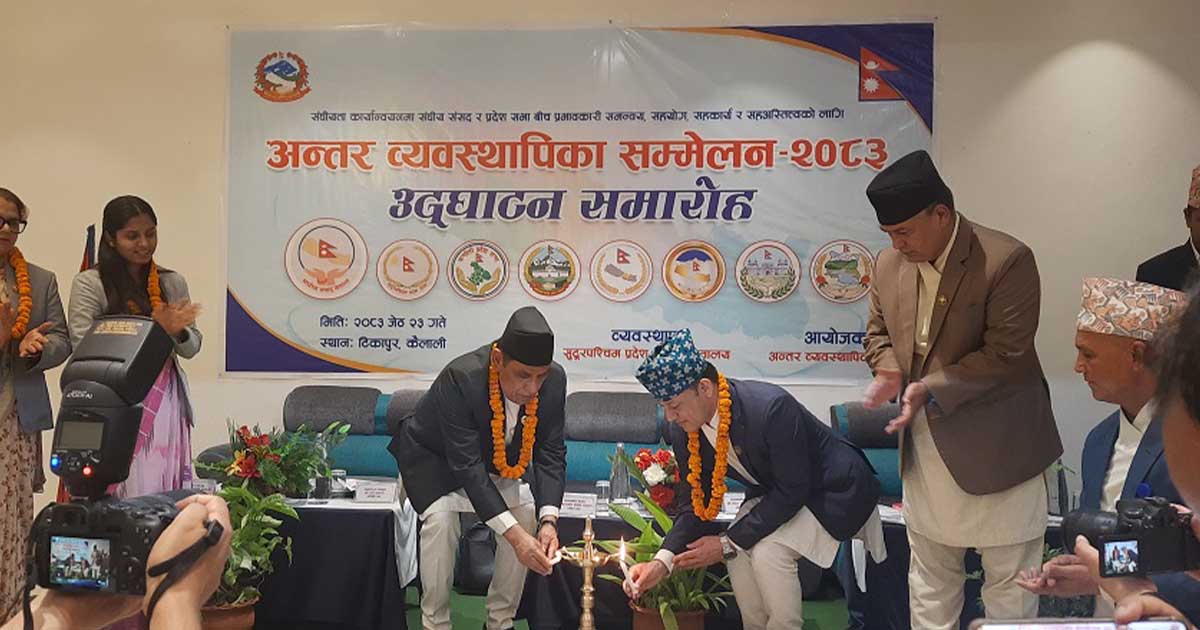
As part of the security protocol, participants were moved together in a coordinated convoy. Since each office holder is already entitled to an official vehicle, the number of government vehicles increased significantly when all participants travelled as a group.
The video shows more than two dozen vehicles, leading many viewers to assume that the entire convoy was dedicated to Speaker Aryal.
Sudurpashchim Speaker Responds to Criticism
Addressing the issue through a press conference, Sudurpashchim Province Assembly Speaker Bhim Bahadur Bhandari rejected claims that all 27 vehicles were assigned to Speaker DP Aryal.
According to Bhandari, the convoy included:
- Seven vehicles for provincial speakers
- Seven vehicles for deputy speakers
- Seven vehicles for provincial assembly secretaries
- One vehicle for National Assembly Chair Narayan Dahal
- Vehicles used by the Deputy Speaker of the House of Representatives, district administration officials and security agencies
Bhandari said Speaker Aryal’s own movement involved only three vehicles in total — his official vehicle and two accompanying security vehicles positioned at the front and rear.
Public Scrutiny Remains Legitimate
The criticism surrounding the convoy has also reopened a broader discussion about public spending, official privileges and the expectations citizens place on elected representatives in a country where economic hardship remains a daily reality for many people.
Questions about government expenditure and displays of power are not new. Citizens regularly expect public officials to demonstrate restraint and accountability in the use of state resources.
At the same time, assessing such incidents requires a full understanding of the circumstances. In this case, the convoy reflected the presence of multiple high-ranking officials travelling under a coordinated security arrangement rather than the movement of a single constitutional office holder.
The Importance of Context in the Age of Viral Content
The episode serves as another reminder that viral videos do not always tell the complete story.
Photos and clips shared online can quickly shape public opinion, especially when they involve politicians, government spending or state privileges. Yet without context, even authentic footage can create a misleading impression.
The debate surrounding the convoy linked to Speaker DP Aryal appears to be one such case. Many viewers concluded that all vehicles in the convoy belonged to a single official, while details later showed that the fleet was carrying participants from a major national gathering of parliamentary leaders and officials.
In an era when information spreads instantly, verifying both facts and context before drawing conclusions has become as important as the information itself.

Written by Roshan Shrestha
Roshan Shrestha is a Nepali investigative journalist and founder of Khoj Samachar, covering corruption, transparency, and public-interest issues.
What Did Gyanendra Shahi Say to His Trolls?
Sobita Gautam Leads Nepal’s 166-Bill Legal Reform Drive
Bishnu Paudel Released Without Bail by Special Court
Industry Ministry Recovers Rs 467 Million in Unpaid Rent

Rekha Thapa Criticises Taxes, Says ‘Swarnim Nepal’
Supreme Court Orders Immediate Release of Former UML MP Koiri
Government Restores Personal Secretary Facility for Lawmakers