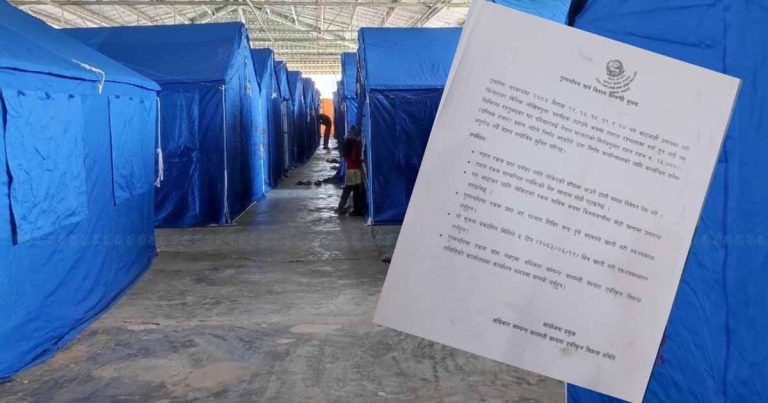
Government Started Returning Money to Cooperative Victims
Small depositors from three troubled cooperatives have started receiving refunds as the government moves ahead with repayments and loan recovery.


The return of savings to victims of Nepal’s cooperative crisis was always going to become one of the government’s most politically sensitive and morally urgent tests. For years, thousands of ordinary citizens had been pleading for the return of money they had deposited into cooperatives that later collapsed amid fraud allegations, financial mismanagement and political protection networks.
Now, just 50 days after the formation of the new government, the repayment process has formally begun.
On Tuesday, the government started returning savings to depositors linked to three problematic cooperatives, marking the first concrete step toward addressing one of Nepal’s most emotionally charged financial crises. A total of 378 small depositors received their money back on the first day.
Among them were 215 depositors from Kantipur Cooperative, 156 from Shiv Shikhar Multipurpose Cooperative and seven from Pashupati Cooperative.
The government has now announced a broader target of repaying around 1,000 depositors every day as the process expands nationwide.
A crisis that destroyed public trust
The scale of the cooperative crisis remains staggering.
According to the Problematic Cooperatives Management Committee, nearly 76,000 depositors across Nepal have been affected, with more than Rs 46 billion in savings tied up in troubled cooperatives.
Of those victims, around 18,000 are considered large depositors who had saved more than Rs 500,000 each. The remaining 58,000 are smaller savers — ordinary citizens who had deposited amounts below that threshold, often representing lifetime earnings, retirement savings, medical funds or money set aside for children’s education.
For many families, the crisis became deeply personal.
Over the past three years, cooperative victims repeatedly gathered on the streets demanding the return of their savings. Some collapsed during protests. Others reportedly lost access to urgent medical treatment after their savings became inaccessible. In several cases, families say financial hardship worsened after their money became trapped inside failed cooperatives.
The anger was never only about money. It was also about abandonment.
Many victims believed the state had failed to act while politically connected individuals continued to escape accountability.
Why the issue became politically unavoidable
The repayment process is also deeply tied to Nepal’s recent political landscape and the rise of the Rabi Lamichhane-led Rastriya Swatantra Party (RSP).
For a large section of cooperative victims, the election became an opportunity to support a political force they believed would finally prioritise their demands. Many depositors openly expressed hope that a new government would move faster than previous administrations in recovering and returning their savings.
That expectation created enormous pressure on the new leadership.
At the same time, the cooperative scandal became politically entangled with allegations targeting Rabi Lamichhane himself. For nearly two years, the national debate surrounding cooperatives increasingly revolved around accusations and counter-accusations linked to him, while victims continued waiting for actual financial relief.
Critics of previous governments argue that political energy was spent more on weaponising the issue than solving it.
That is one reason why the current administration faced immediate pressure to show visible progress on repayments rather than allowing the crisis to remain trapped in endless investigations and political rhetoric.
Questions over where the money will come from
Even before repayments began, questions had emerged over how the government planned to fund the process.
Some critics warned against using taxpayer money to compensate victims while the individuals accused of misusing cooperative funds remained unpunished. Public frustration grew around the idea that ordinary citizens could ultimately bear the burden for financial crimes committed by a small group of cooperative operators.
The government, however, insists that repayments are not intended to become a permanent liability on the state treasury.
Officials say the current plan focuses on recovering money directly from cooperative operators and borrowers. According to the ministry, more than Rs 20 million has already been recovered through debt collection efforts.
Authorities have also stated that even if temporary state support becomes necessary to accelerate repayments, the money would later be recovered from the responsible individuals and institutions.
The real test is still ahead
For now, the beginning of repayments has brought a measure of relief and cautious optimism among victims who had almost lost hope of seeing their savings again.
But the first 378 repayments are only a small fraction of a much larger crisis involving tens of thousands of families across the country.
The government now faces the far more difficult challenge of sustaining repayments, recovering stolen assets and ensuring legal accountability against those genuinely responsible for cooperative fraud.
And as public debate continues around the political dimensions of the scandal, one principle remains widely shared across the spectrum: if anyone — including Rabi Lamichhane — is ultimately proven guilty in the cooperative case, they too must face legal action under the law.


Written by Pushpa Tamang
Pushpa Tamang is Managing Editor at Khoj Samachar, leading English and Nepali bureaus, newsroom operations, and editorial standards.
Balen Government at 100 Days: How Many of Its Promises Were Delivered?
Who Is Khem Bhandari and Why Was He Arrested in the Nirmala Pant Case?

Kirtipur Holding Centre Resident Arrested After Video Post

Nepal Celebrates Asar 15 with Dahi Chiura and Paddy Day
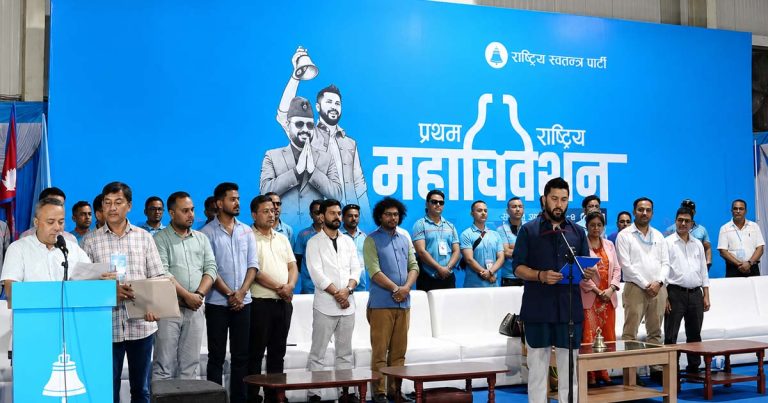
RSP Elects Rabi, Swarnim, Sobita and Bipin to Top Posts
RSP Central Committee Elected Members List 2026
Nepal New Traffic Bill Proposes Fines of Rs 500 to Rs 1 Lakh