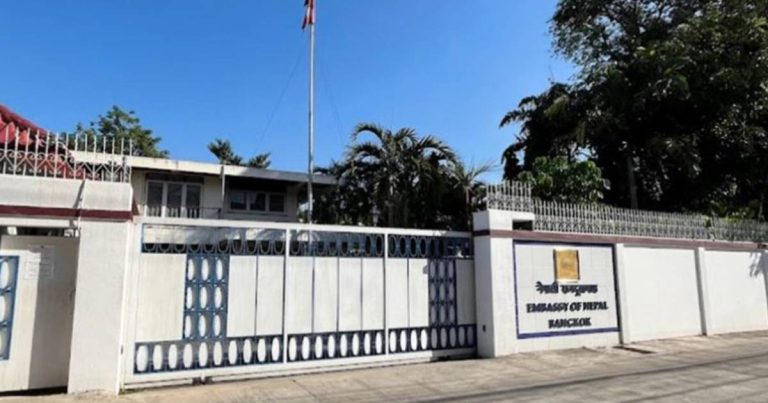
Nepal Apologises After False Claim on Amrit Jha’s Release
The Foreign Ministry issued an apology a month after wrongly announcing that detained Nepali sailor Amrit Jha had been freed from Iranian custody.


The false announcement made by Nepal’s own Foreign Minister about the release of Nepali sailor Amrit Jha from an Iranian prison has now come back to haunt the government itself.
Exactly one month after the minister publicly claimed that Jha had been freed from Iranian custody, Nepal’s Ministry of Foreign Affairs has finally issued an apology, admitting that the information released through official channels was inaccurate.
The controversy has once again exposed a painful reality many Nepalis living abroad already know too well — for thousands of migrant workers and overseas employees, the Nepali state often appears absent precisely when its citizens need protection the most.
For families with members working overseas, migration is no longer a choice but an economic necessity. Yet when those same workers become stranded, jailed, exploited or trapped in foreign legal systems, hopes of timely intervention from Kathmandu remain painfully low.
The cases of Amrit Jha and earlier Bipin Joshi became nationally discussed examples because they reached the media spotlight. But beyond those names lies a far larger and quieter crisis involving countless Nepalis stuck in prisons, detention centers and legal disputes across different countries.
Very few of them return home through meaningful state intervention.
For years, Nepal’s foreign policy apparatus has been criticized for lacking urgency, preparedness and diplomatic effectiveness when dealing with vulnerable citizens abroad. Activists, migrant rights groups and even affected families repeatedly argue that rescue efforts often move only after public pressure intensifies.
In many cases, community networks, volunteer campaigners and Nepali migrants already living in those countries end up doing far more practical work than official institutions.
That frustration now surrounds the Amrit Jha case as well.
How Amrit Jha ended up in Iranian custody
Amrit Jha, a resident of Triyuga Municipality in Udayapur district, had spent years working in the maritime sector after studying ship navigation in Thailand.
For nearly a decade, he worked as a sailor captain for a Dubai-based company operating international cargo vessels through Gulf waters and major maritime routes.
In early January 2026, Jha had reportedly departed from Dubai on a vessel assigned for fuel transportation operations. But while approaching waters near Qeshm Island close to the highly sensitive Strait of Hormuz, the vessel was intercepted by Iran’s Revolutionary Guards.
Iranian authorities accused the ship of involvement in illegal cargo and fuel smuggling activities.
Jha, however, was operating the vessel under company instructions as part of his professional duty.
He and six Indian crew members were subsequently detained and transferred to a prison facility in Bandar Abbas.
The arrest immediately pushed his family into desperation back home in Nepal. After managing to contact relatives, Jha informed them about his detention, prompting appeals to the government for diplomatic assistance.
Political transition and a misleading announcement
At the time of the incident, Nepal was under the interim administration led by Sushila Karki. Later, a new government backed by the Rastriya Swatantra Party took office, with Shishir Khanal becoming Foreign Minister.
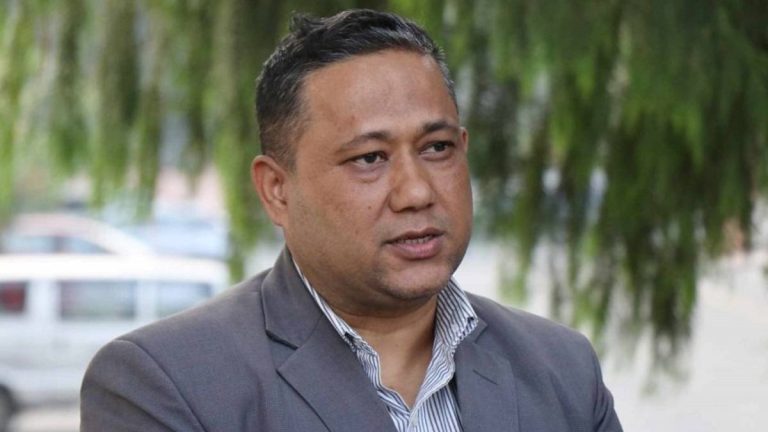
Weeks after assuming office, Khanal posted on social media claiming that Amrit Jha had already been released from Iranian custody and that preparations were underway to bring him back to Nepal.
The statement quickly drew praise online, with many presenting it as an example of effective diplomatic action by the newly formed government.
But the celebration did not last long.
Within days, it became clear that Jha had not actually been released. The minister’s public claim was false.
The issue triggered sharp criticism because the misinformation did not come from rumors or unofficial channels — it came directly from Nepal’s top diplomatic leadership on a matter involving an imprisoned citizen in a foreign country.
Despite growing criticism, the Ministry of Foreign Affairs remained publicly silent on the controversy for nearly a month.
That silence finally broke on Monday, when the ministry released an official statement apologizing for the incorrect information previously circulated regarding Jha’s release.
Case still under review in Iran
According to the ministry, Iranian court authorities have now requested an additional “expert report” related to the case. Only after that process is completed will further clarity emerge regarding Jha’s possible release.
The ministry also claimed that Nepal’s embassy in Qatar has continued diplomatic coordination efforts concerning the matter.
Still, for many Nepalis, the apology alone does little to restore confidence.
The larger concern goes beyond one incorrect statement.
The Amrit Jha episode has reopened uncomfortable questions about Nepal’s ability to protect its citizens abroad, the competence of diplomatic institutions, and the tendency of governments to seek public praise before securing actual outcomes.
For families whose survival depends on migration, those questions are no longer abstract policy debates.
They are matters of fear, uncertainty and survival itself.

Written by Pushpa Tamang
Pushpa Tamang is Managing Editor at Khoj Samachar, leading English and Nepali bureaus, newsroom operations, and editorial standards.
9 Detained After 453 Nepalis Rescued from India
453 Nepalis Rescued from India, Probe Underway

What Is MoFA Mitra App and How to Use It?
Labour Ministry Raids Manpower Firm in Lalitpur
Nepal Reaffirms Claim Over Lipulekh and Kalapani

Nepali Citizen Amrit Jha Released from Iranian Custody
Foreign Minister Shishir Khanal Signals PM Balen’s India Visit