Nepal Supreme Court Order Came After Demolitions
Debate has intensified after the Supreme Court halted settlement demolitions only after bulldozer operations had already taken place.


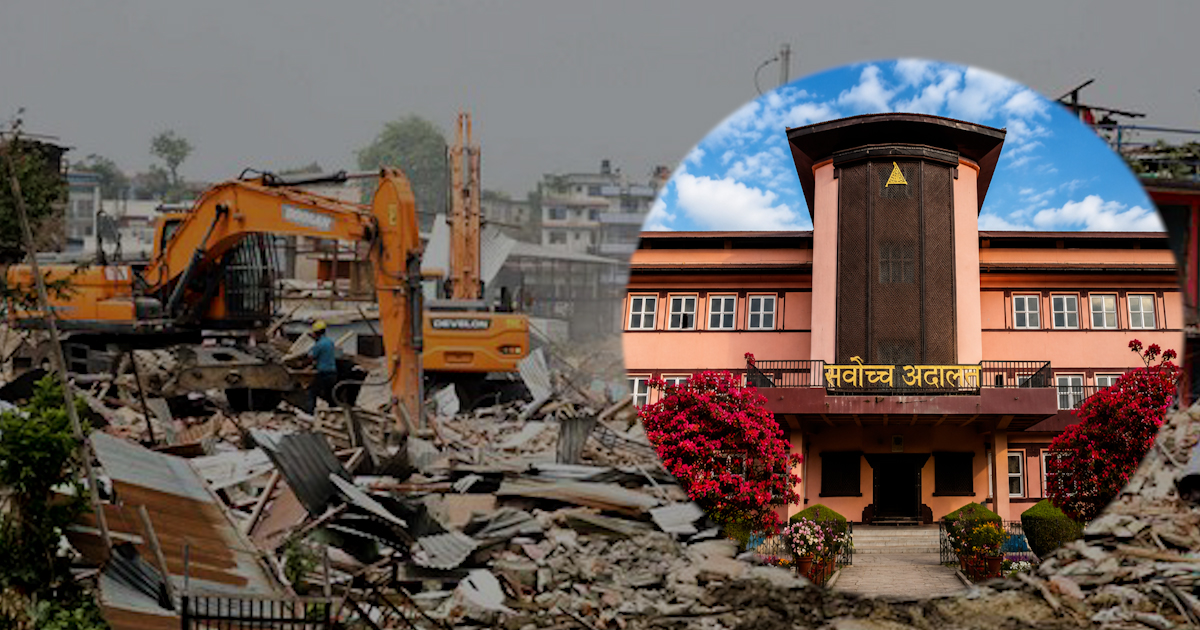
Nepal has once again witnessed a major debate over informal settlements after the Supreme Court issued an interim order stopping unmanaged demolition drives in different parts of the country. The order came after bulldozer operations had already been carried out in several settlement areas, especially around riverbanks in Kathmandu, leaving many families displaced and uncertain about their future.
The court’s decision has now become a major relief for settlement communities who had been protesting against forced demolitions for the past week. From the very beginning, Khoj Samachar had continuously raised one main concern — first identify genuine landless families, arrange proper rehabilitation, and only then move forward with demolition activities. The latest developments show that both the court and political parties have now echoed the same demand.
Supreme Court Orders Government to Stop Unmanaged Demolitions
The Supreme Court issued an interim order directing the government to immediately stop bulldozer operations in informal settlements unless proper management and rehabilitation plans are prepared first.
The order clearly states that demolitions should not continue in an uncontrolled manner without ensuring arrangements for displaced families. The court also pointed out that many people whose homes had already been destroyed were still struggling to access even basic needs and support services.
Because of this, the government has now been instructed to provide necessary facilities and support to affected residents until proper rehabilitation measures are completed.
While delivering the interim order, the court also took into consideration information provided by human rights organizations regarding the condition of displaced communities.
Rastriya Swatantra Party Had Earlier Directed the Government
Even before the Supreme Court order, pressure on the government had already started increasing from different sides.
A recent secretariat meeting of the Rastriya Swatantra Party had reportedly directed the government to identify all genuine landless families and distribute legal land ownership documents within a fixed timeline.
The party had also proposed forming a powerful commission that would complete the identification process before any large-scale demolition campaign moves forward.
At the same time, many settlement communities were worried that the government could ignore political recommendations and continue bulldozer operations anyway. However, the Supreme Court’s latest order has now created stronger legal pressure against unmanaged demolitions.
From the first day discussions about removing settlements began, Khoj Samachar had repeatedly highlighted the same issue — identify real landless families first, manage their rehabilitation properly, and only then take further action.
Government’s Nationwide Instructions Now Face Legal Obstacle
Before the court’s intervention, the government had reportedly instructed Chief District Officers across all 77 districts to identify informal settlements and areas considered to be under encroachment.
Authorities were asked to send reports to the ministry and proceed with clearance operations after receiving approval and security support.
The move was viewed as preparation for a broader nationwide campaign targeting informal settlements in different districts.
However, the Supreme Court’s interim order has now effectively blocked immediate implementation of such actions without proper rehabilitation planning.
Legal observers believe the decision could force authorities to reconsider how future settlement clearance operations are carried out across Nepal.
Settlement Protests Expanded Across Different Regions
The demolition issue had already triggered protests in multiple locations over the past week.
In several areas, local residents organized demonstrations demanding that authorities separate genuine landless citizens from people accused of illegally occupying land for commercial or political interests.
Different forms of protest were seen in various places.
- Roadside demonstrations by affected communities
- Tyre-burning protests in some areas
- Public gatherings demanding rehabilitation before demolition
- Symbolic protests using household utensils and banners
Many protesters argued that families who had been living in settlements for decades should not suddenly be removed without alternative housing arrangements.
The growing demonstrations also increased political pressure on the government as public debate surrounding landless communities continued to expand nationwide.
Large Population Could Be Affected Nationwide
One major reason why the issue has become highly sensitive is the large number of people connected to informal settlements across Nepal.
According to figures repeatedly discussed during protests and public debate, more than one million families are believed to be living under landless, unmanaged, or informal settlement conditions.
In population terms, this could affect more than 40 to 50 million people either directly or indirectly connected to settlement-related concerns, according to claims raised during the movement.
Because of this scale, critics argue that large-scale demolition campaigns without proper planning could create serious social and economic pressure throughout the country.
There are also fears that if bulldozer operations continue nationwide in the same manner seen in Kathmandu, massive numbers of citizens could end up displaced at the same time.
Questions Raised Over Timing of Bulldozer Operations
The timing of the demolition drives has also become part of the controversy.
Critics claimed that authorities initially carried out bulldozer operations during public holidays and weekends because court hearings would be delayed even if legal petitions were filed immediately.
Although the Supreme Court eventually issued an interim order, many settlement areas around Kathmandu riverbanks had already faced demolition before the legal process moved forward.
As a result, some settlement communities have already suffered major losses despite the latest court intervention.
The court order has now temporarily stopped further expansion of bulldozer operations, especially in areas where legal questions remain unresolved.
Debate Continues Over Constitutional Rights and Rehabilitation
The issue has now developed into a wider national debate about constitutional rights, housing security, and state responsibility.
Supporters of the Supreme Court order argue that Nepal’s constitution guarantees citizens basic rights related to food, shelter, and clothing. Because of this, they say the government cannot remove vulnerable families without first arranging proper alternatives.
Another major argument raised during the debate is the legal principle that innocent people should not suffer while authorities attempt to control wrongdoing elsewhere.
Many settlement residents have reportedly been living in the same areas for 20 to 30 years. Critics of unmanaged demolitions argue that authorities must first identify genuine landless families separately before carrying out any further bulldozer campaign.
For now, the Supreme Court’s interim order has provided temporary relief to many affected communities while increasing pressure on the government to focus on identification, rehabilitation, and long-term settlement management before taking further action.


Written by Roshan Shrestha
Roshan Shrestha is a Nepali investigative journalist and founder of Khoj Samachar, covering corruption, transparency, and public-interest issues.
Health Worker Security Bill Feedback Ends Today
Home Minister Reviews Security After Sunsari Clash
One Arrested After Doctor Assault at Narayani Hospital
Nepal Plans IVF Rules to Strengthen Patient Safety
Heavy Monsoon Rain Raises Flood Risk Across Nepal
Young Doctors Demand Legal Limits on Hospital Duty Hours
Heavy Monsoon Rain Puts Nepal on Alert