West Bengal Election Result: BJP Wins 206 Seats
Bharatiya Janata Party secures historic victory in West Bengal, ending 15-year rule of Trinamool Congress with strong voter shift


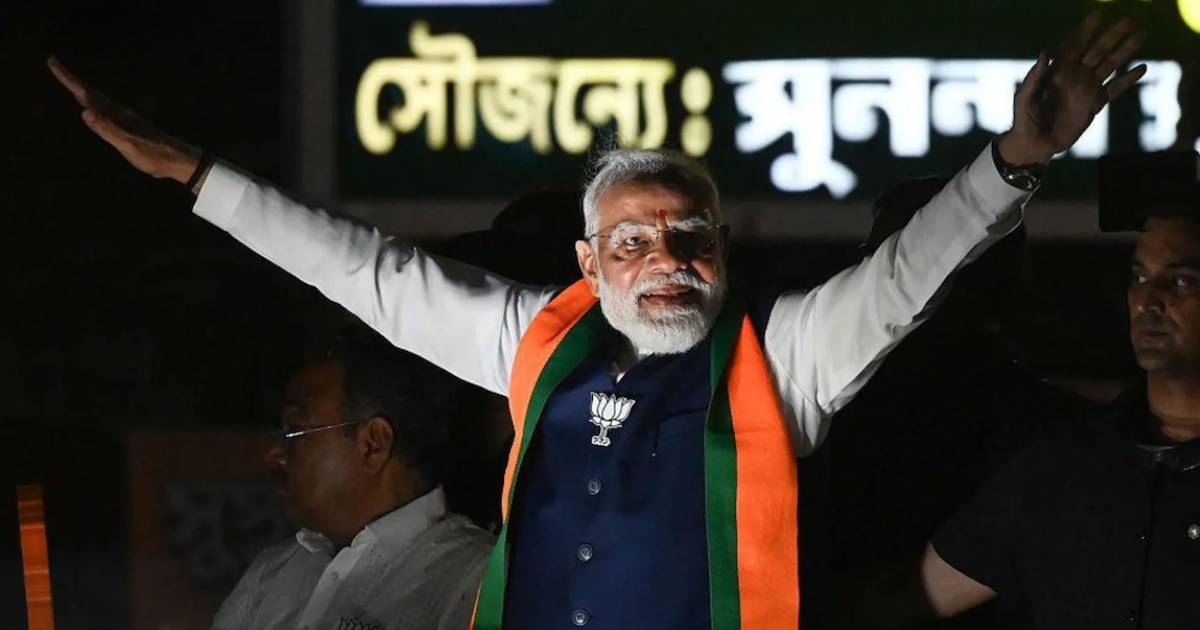
West Bengal has witnessed a major political shift as the results of the state assembly elections have been declared, marking a historic moment in its political landscape. T
he Bharatiya Janata Party has secured a decisive victory, winning 206 out of 294 seats, paving the way to form a government in the state for the first time.
This outcome ends a 15-year rule of the Trinamool Congress, led by Mamata Banerjee, which has been reduced to 80 seats. The result reflects not only a change in leadership but also a deeper transformation in voter behavior, political alliances, and electoral dynamics across the state.
A Historic Victory for the Bharatiya Janata Party
The West Bengal assembly election results have delivered a clear mandate in favor of the Bharatiya Janata Party. With 206 seats secured in a 294-member assembly, the party has achieved a significant milestone by entering power in a state where it previously had limited influence.
This victory is particularly notable given the long-standing dominance of the Trinamool Congress. After 15 years in power, the ruling party faced a major setback, managing to win only 80 seats. The outcome highlights a dramatic shift in public sentiment and signals a new political chapter for the state.
Anti-Incumbency and Consolidation of Opposition Votes
One of the key factors behind the West Bengal assembly election result is the presence of strong anti-incumbency sentiment. After more than a decade in power, dissatisfaction with the ruling government appears to have grown among sections of the electorate.
Political analysts suggest that this dissatisfaction translated into a consolidation of votes against the Trinamool Congress. Rather than being driven solely by religious polarization, the election outcome reflects a broader unification of voters seeking change.
The Bharatiya Janata Party emerged as the primary alternative, benefiting from this consolidated opposition support.
Some experts argue that other parties, particularly the Congress, could have attracted these votes but failed to mobilize effectively. Over the years, the Bharatiya Janata Party has steadily increased its vote share in the state, particularly since 2014, contributing to its strong performance in this election.
Role of Voter Turnout and Electoral Revision Process
Another important element influencing the West Bengal assembly election result is voter participation. Data analysis indicates that approximately 3.1 million eligible voters did not cast their ballots in this election.
In many constituencies, the margin of victory was narrow. This suggests that even a small shift in voter turnout could have influenced the outcome. The electoral revision process, which updates voter rolls, may have also played a role in shaping the final results.
Analysts note that such factors, combined with changing perceptions among voters, contributed to the advantage gained by the Bharatiya Janata Party in closely contested seats.
Weak Performance of Congress and Left Parties
The election saw a clear decline in the influence of traditional political forces such as the Congress and left-wing parties. Instead of a multi-cornered contest, the battle largely narrowed down to the Trinamool Congress and the Bharatiya Janata Party.
This shift had a significant impact on the distribution of votes. Many voters who were dissatisfied with the ruling party did not view the Congress or left parties as viable alternatives. As a result, anti-incumbency votes were largely directed toward the Bharatiya Janata Party.
The weak organizational presence and limited campaign activity of these parties further reduced their ability to compete effectively. In several constituencies, candidates from these parties performed poorly, reflecting their diminished role in the state’s political landscape.
Debate Over Religious Polarization
The West Bengal assembly election result has also sparked discussions around the role of religious polarization. Some observers point to a consolidation of Hindu votes as a contributing factor in the Bharatiya Janata Party’s success.
However, other analysts challenge this view, arguing that the outcome cannot be explained solely by religious factors. They emphasize that dissatisfaction with governance and the search for an alternative played a more significant role.
There is also a perspective that polarization was more visible in urban areas, where narratives around demographic concerns influenced voter behavior. Despite these claims, the overall impact of religious factors remains a subject of debate among political experts.
Impact of Divided Minority Votes
Another factor highlighted in the analysis of the West Bengal assembly election result is the distribution of minority votes. Some analysts believe that the division of Muslim votes among multiple candidates weakened the electoral strength of the Trinamool Congress.
According to this view, fragmented voting patterns prevented a unified challenge against the Bharatiya Janata Party in several constituencies. This, in turn, contributed to the party’s success in closely contested seats.
However, not all experts agree with this interpretation. Some argue that voters simply supported candidates based on individual preference rather than strategic considerations. They contend that labeling the outcome as a result of vote division oversimplifies the complex nature of voter behavior.
A Turning Point in West Bengal Politics
The West Bengal assembly election result marks a significant turning point in the state’s political history. The rise of the Bharatiya Janata Party as the governing force represents a major shift from the established political order.
This outcome reflects a combination of factors, including anti-incumbency sentiment, changing voter preferences, and the declining influence of traditional parties. It also highlights the evolving dynamics of electoral politics in the region.
As the new government prepares to take charge, the focus will now shift to governance and addressing public expectations. The election result has not only reshaped the political map of West Bengal but also set the stage for a new phase in its democratic journey.


Written by Roshani Shrestha Pathak
Roshani Shrestha Pathak is the English Bureau Chief at Khoj Samachar, overseeing English-language editorial operations and newsroom coordination.

Is It Illegal for Nepalis to Get an Aadhaar or PAN Card in India?

Germany: Six died in Stade Shooting

Neymar Gives $250K for Venezuela Earthquake Victims

Kolkata Warehouse Collapse Update: 5 Dead, 2 Arrested

Colombia Beat Uzbekistan 3-1 in World Cup Opener

6.7-Magnitude Earthquake Shakes Indonesia’s Sulawesi

Saudi Arabia vs Uruguay Ends 1-1