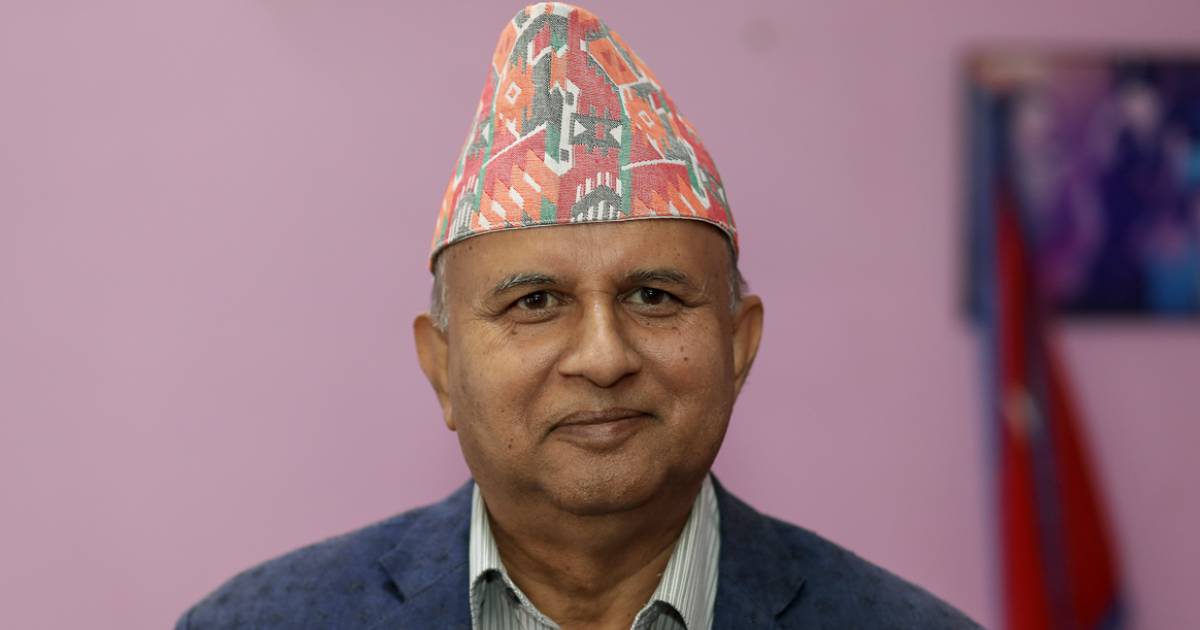
Shankar Pokharel, the general secretary of Nepal’s main opposition party, has warned against what he described as growing tendencies of retaliation and bias in the operation of the state. His remarks came through a statement posted on social media, where he stressed that democratic governance must be guided by constitutional values, institutional continuity, and respect for established procedures.
The senior leader said democratic systems become vulnerable when governments attempt to weaken institutions through politically motivated actions. He argued that maintaining continuity in state structures is essential for preserving public trust and political stability, especially during periods of political disagreement and transition.
Pokharel Raises Concerns Over State Conduct
Shankar Pokharel expressed concern over what he sees as retaliatory and prejudiced behavior emerging in the name of governance. He said actions driven by political motives can damage the credibility and continuity of state institutions.
According to him, governments are not temporary entities shaped only by changing political leadership. Instead, he said the state functions through uninterrupted institutional processes that must be protected regardless of who holds power at a given time.
Pokharel stated that weakening institutional systems for short-term political objectives could create instability and undermine democratic norms.
Warning Against Institutional Instability
The UML general secretary argued that attempts to disrupt institutional continuity could have long-term consequences for democratic governance. He said institutions should remain stable and function independently of political revenge or partisan interests.
In his statement, Pokharel emphasized that the state carries an uninterrupted legacy and responsibility. He noted that damaging this continuity in the name of running the government goes against democratic principles and accepted political values.
He also suggested that such practices may create uncertainty within public institutions and reduce confidence in the rule of law.
Call for Respect Toward Constitutional Values
Pokharel stressed that respect for legal procedures, constitutional provisions, and established systems forms the foundation of democracy. He said governments and political actors must operate within these boundaries to protect democratic traditions.
He argued that ignoring institutional norms can gradually weaken constitutional governance. According to him, democracy depends not only on elections but also on the protection of systems that ensure accountability and continuity.
The statement highlighted the importance of following established methods and respecting institutions regardless of political competition.
Concerns About Authoritarian Tendencies
The senior UML leader also warned that actions motivated by retaliation and prejudice could encourage authoritarian tendencies. He said democratic societies must remain cautious about any practices that weaken institutional balance or reduce respect for constitutional order.
Pokharel stated that democracy requires tolerance, institutional respect, and adherence to rules. Without those principles, he said political systems risk moving toward instability and concentrated power.
He suggested that maintaining democratic culture is just as important as maintaining formal political structures.
Social Media Statement Draws Attention
Pokharel delivered his remarks through a post on Facebook, where he shared his concerns regarding recent political behavior and governance practices. The statement quickly drew attention within political circles because of its focus on democratic values and institutional continuity.
The comments reflected broader concerns often raised in Nepal’s political environment regarding the relationship between governance, constitutional processes, and political rivalry.
His message focused mainly on protecting democratic systems rather than targeting any individual figure directly.
Emphasis on Democratic Foundations
Throughout his statement, Pokharel repeatedly emphasized that democracy is sustained through respect for laws, procedures, and institutions. He argued that governments must avoid actions that appear politically motivated or retaliatory.
He maintained that institutional continuity is essential for ensuring stable governance and protecting democratic credibility. According to him, political differences should not become a reason to weaken state systems or constitutional practices.
Pokharel also stressed that democratic values require restraint from all sides and that institutions must remain above partisan interests.
- Pokharel warned against retaliatory behavior in state governance.
- He said institutional continuity is essential for democracy.
- The UML leader emphasized respect for constitutional values and procedures.
- He cautioned that politically motivated actions could encourage authoritarian tendencies.
- The remarks were shared through a Facebook statement.
Focus on Rule-Based Governance
Pokharel concluded his remarks by underlining the need for rule-based governance and institutional respect. He said democracy functions effectively only when governments follow constitutional principles and maintain continuity in state systems.
The statement reinforced his view that democratic governance should remain free from revenge-driven practices and political prejudice. He argued that protecting institutions and respecting constitutional methods are necessary to preserve political stability and democratic credibility in the country.