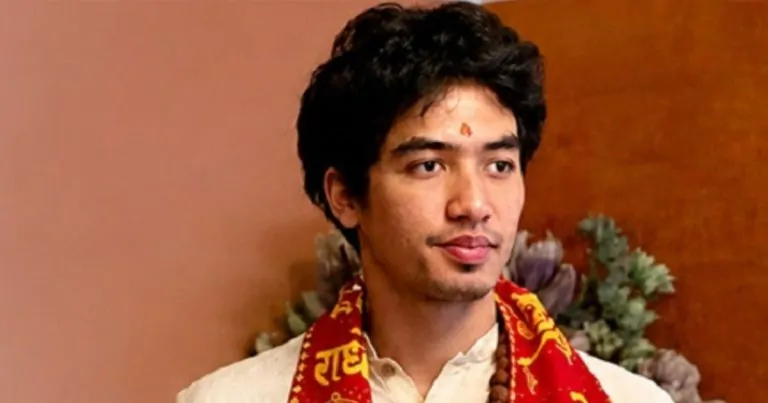
Why RSP Is Beginning to Struggle in Madhesh
Internal factionalism, ticket disputes and protests against elected lawmakers are exposing growing unrest inside RSP’s Madhesh organisation.


Rastriya Swatantra Party (RSP) is beginning to face visible internal strain in Madhesh — a region that had delivered one of the party’s most unexpected electoral breakthroughs during the last parliamentary election.
Madhesh Province has 32 seats under the House of Representatives. During the election, RSP secured victory in 31 constituencies while also receiving more than 1.3 million proportional votes nationwide. A large share of that momentum had come from Madhesh itself.
But less than two months after the election, the party now appears to be struggling to manage the very support base that lifted it so rapidly.
The tension is no longer limited to whispers inside party circles. It has now started surfacing openly in district-level meetings, leadership disputes and factional confrontations.
One such incident unfolded in Bara on Friday.
Protests erupt during district meeting in Bara
A district-level extended meeting of RSP being held at a hotel in Kalaiya turned chaotic after party workers began chanting slogans against four elected lawmakers from Bara.
The situation deteriorated quickly inside the meeting hall. Police eventually escorted all four lawmakers out of the venue after assessing that the dispute could spiral further. Supporters from rival groups also pushed and shoved each other outside the venue.
The four lawmakers elected from Bara are Rahbar Ansari, Arabind Sah, Ganesh Dhimal and Chandan Singh.
The immediate trigger behind the protest was the recent expulsion of former district chairperson Chandan Swarnakar from the party. His ordinary membership was also revoked.
Swarnakar remains a well-known figure among local RSP cadres in Bara. Many workers there believe his organisational presence inside the district is stronger than some of the elected representatives themselves.
After his expulsion, supporters loyal to him accused the elected lawmakers of orchestrating disciplinary action against him ahead of the upcoming district convention.
Old political culture inside a “new” party
A deeper frustration has also started building inside RSP in Madhesh because many of the party’s district leaders, provincial coordinators and even lawmakers are themselves former politicians from Congress, UML, Maoist and Madhesh-centric parties.
For many workers, the party may be new, but the internal behaviour increasingly feels familiar.
Factional lobbying, power struggles, influence-based politics and attempts to dominate local structures have already started appearing inside the organisation.
That contradiction is now becoming difficult for RSP cadres in Madhesh to ignore.
Many leaders who failed to secure space or opportunities in older parties entered RSP carrying the same political habits with them. Workers say that has started weakening the party from within.
Amresh Kumar Singh had already hinted at internal friction
The internal unease had also surfaced publicly a few days earlier when Amresh Kumar Singh spoke about problems developing inside RSP’s Madhesh structure during a media interview.
Unlike many newly elected faces in Madhesh who rose largely through the anti-establishment wave and Balen Shah’s popularity, Amresh Singh had already built his own independent political base over several elections.
He had previously won elections from the same region both as a Congress candidate and as an independent.
In that interview, Singh hinted that personal interests and factional calculations had already begun shaping internal politics inside RSP as well.
At the time, many RSP supporters dismissed those remarks lightly.
But the developments now unfolding in districts like Bara have started giving those concerns more weight.
Why Chandan Swarnakar says he was targeted
The party accused Swarnakar of financial irregularities and of working against RSP candidates during the election.
Following recommendations from the disciplinary commission, the central committee decided to remove him from both the district leadership and ordinary membership.
But Swarnakar claims the action was politically motivated.
According to him, one major disagreement began during ticket distribution ahead of the election.
In a recent interview with Nepal Press, he alleged that around 20 to 22 individuals were encouraged to submit candidacy forms after being promised tickets, with each person reportedly paying Rs 25,000 during the process.
But when tickets were eventually distributed, he claimed preference was given to individuals who had recently entered RSP from other political parties.
Swarnakar says he repeatedly raised concerns inside the party demanding that those applicants either receive fair treatment or have their money returned.
He believes that stance angered elected lawmakers.
He has also accused some lawmakers of informally promising mayoral and ward chair tickets ahead of upcoming local elections despite central-level instructions against arbitrary ticket distribution.
Swarnakar claims he possesses evidence of such activities and believes party leaders wanted to block him from contesting the upcoming district convention leadership.
His supporters say that is why they chose Friday’s meeting to publicly confront the four lawmakers together.
Battle for control before local elections
Despite the protests, the programme eventually continued under heavy police presence.
But the incident has exposed a larger battle already underway inside RSP in Madhesh.
The competition is increasingly centred around who controls future ticket distribution ahead of local elections.
RSP still lacks a deeply rooted organisational structure across much of Madhesh. The party expanded rapidly during the election largely because of anti-establishment anger, the youth wave and the broader popularity surrounding figures like Balen Shah.
Turning that sudden electoral momentum into a stable and disciplined political organisation now appears to be proving far more difficult.

Written by Roshan Shrestha
Roshan Shrestha is a Nepali investigative journalist and founder of Khoj Samachar, covering corruption, transparency, and public-interest issues.
Majid Ansari and Gen Z Arrests Raise Kirtipur Police Questions
Kulman to Energy Minister: Give NEA a Full-Time Chief
Is the Balen Government Heading Toward Authoritarianism?
Santosh Rajbanshi: When Will Farmers Get Fertilizer?
Lima Adhikari Urges EU Air Safety List Review
Bhutanese Refugee Scam: 16 Convicted, 7 Acquitted, 8 Fled
Kulman Ghising: Government Has Energy, Needs Experience