Santosh Rajbanshi: When Will Farmers Get Fertilizer?
Farmers across the Tarai and hills say delayed fertilizer supplies, weak irrigation support and recurring policy failures are threatening this year’s rice cultivation.



Nepal’s dependence on agriculture comes into sharp focus every monsoon, yet many farmers are again entering the most crucial phase of rice cultivation without the chemical fertilizer they need. Across the Tarai and the hills, delayed supplies have slowed planting, exposing long-standing weaknesses in agricultural planning that successive governments have failed to address.
Rice transplantation remains behind expectations even as the planting season reaches the latter part of Asar. Farmers say the problem is no longer limited to fertilizer alone. In many farming areas, low electricity voltage has made it difficult to operate irrigation pumps, while the shortage of fertilizer has left newly prepared fields without essential nutrients. Together, the two problems are threatening this year’s crop.
The situation has also reached Parliament.
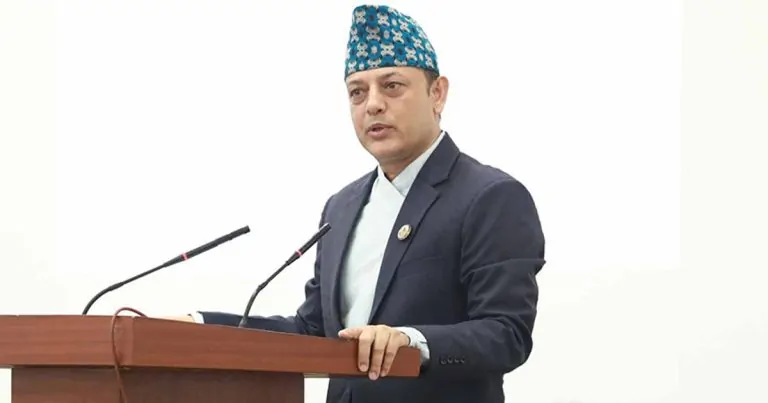
Rastriya Swatantra Party lawmaker Santosh Rajbanshi, elected from Morang-4, told the House that farmers are ready to pay for fertilizer but are still unable to obtain it. He urged the government to respond before the planting season slips further behind.
A Familiar Crisis With No Lasting Answer
Fertilizer shortages have become an almost annual feature of Nepal’s farming calendar. Every major cultivation season brings similar complaints from farmers, raising fresh doubts about whether the country’s procurement and distribution systems have improved despite repeated political commitments.
The latest shortage has again revived criticism that emergency responses continue to replace long-term planning. For many farmers, uncertainty over fertilizer has become as predictable as the planting season itself.
Analysts point to several external pressures affecting supplies. Tensions in the Middle East, disruptions in international shipping and the decision by major producing countries such as India, China and Bangladesh to prioritize domestic demand have all affected fertilizer availability.
But they argue these factors alone do not explain Nepal’s recurring difficulties. Delays in procurement, weak supply management and the absence of a long-term strategy remain central reasons why shortages continue to return year after year.
Concerns Over New Subsidy Priorities
The government’s proposed changes to agricultural subsidy policy have also drawn concern from the farming sector.
Under the proposed approach, larger agricultural investment projects would receive greater priority. Stakeholders fear this could leave small and medium-scale farmers with fewer opportunities to benefit from government support. Earlier subsidy programmes, though modest, had allowed a wider section of farmers to receive assistance. With those schemes becoming more limited, rural farmers may face even greater pressure.
Calls for Domestic Fertilizer Production Grow Stronger
The repeated supply crisis has renewed demands for Nepal to establish its own chemical fertilizer industry instead of relying almost entirely on imports.
Supporters of the idea argue that dependence on foreign suppliers leaves the country vulnerable to international disruptions at precisely the time farmers need fertilizer most. They say a long-term national policy is essential if Nepal hopes to avoid repeating the same crisis every planting season.
Agriculture remains one of the pillars of Nepal’s economy, supporting millions of rural households. When farmers cannot access fertilizer, irrigation and other basic services at the right time, the consequences extend beyond individual harvests, affecting food security, agricultural output and the wider rural economy. The immediate challenge is to manage this year’s shortage, but the larger test remains whether Nepal can finally break a cycle that has persisted for years.

Written by Pushpa Tamang
Pushpa Tamang is Managing Editor at Khoj Samachar, leading English and Nepali bureaus, newsroom operations, and editorial standards.

Lima Adhikari Urges EU Air Safety List Review
Bhutanese Refugee Scam: 16 Convicted, 7 Acquitted, 8 Fled

Kulman Ghising: Government Has Energy, Needs Experience

Jaybir Deuba Named in Money Laundering Notice
Why Did an RSP MP Recall Kulman Ghising in Parliament?
Prime Minister’s Office Like Hitler’s Gas Chamber: Lawmaker
Speaker Aryal: Learn Parliament, Not Your Phone