Lalitpur Smart Barrier Closes at Red Light, Opens at Green
The automated system closes during red lights and reopens on green to improve pedestrian safety and traffic discipline.


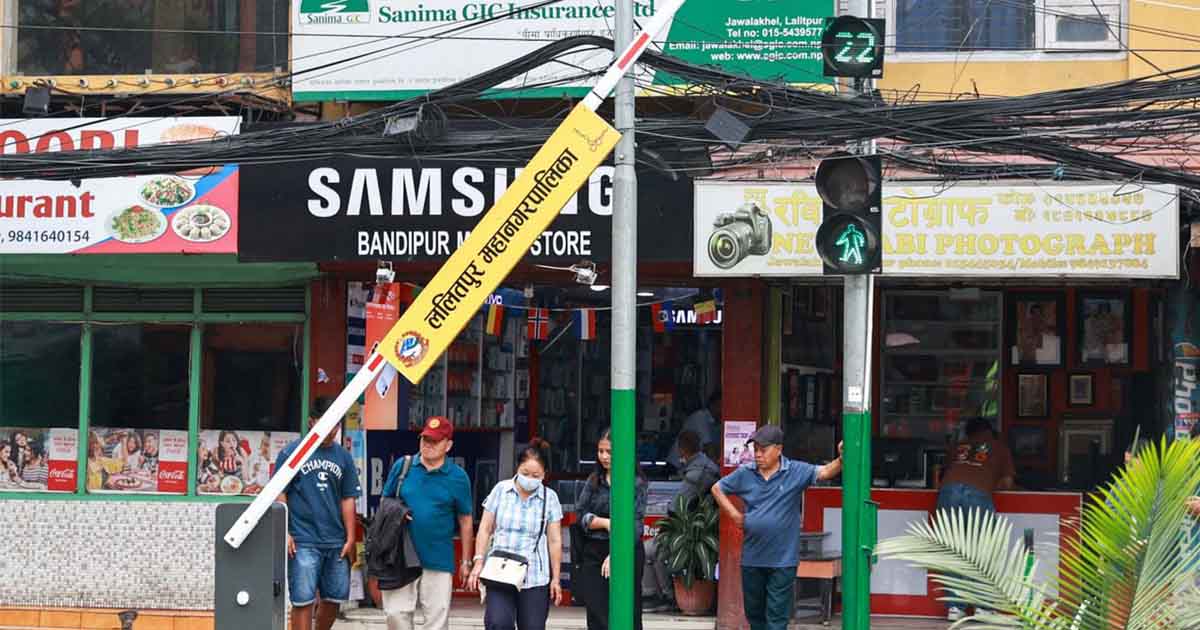
Lalitpur Metropolitan City has begun testing a digitally operated smart safety barrier at a zebra crossing in Jawalakhel, marking another step in its effort to integrate technology into urban traffic management. The system is designed to prevent pedestrians from crossing the road while the traffic signal is red, addressing a growing concern over unsafe road-crossing practices that continue to increase the risk of accidents.
Rather than depending solely on manual enforcement, the metropolitan city is moving toward technology-driven traffic control that encourages compliance through automated systems.
How the Smart Barrier Works
The digital barrier has been installed on both sides of the zebra crossing. It automatically closes when the traffic light turns red, preventing pedestrians from entering the road. Once the signal changes to green, the barrier opens automatically, allowing people to cross safely.
The objective is to reduce unsafe crossings without requiring constant intervention from traffic police.
Lalitpur Expands Its Digital Governance Approach
Under the leadership of Mayor Chiribabu Maharjan, elected from the Nepali Congress, Lalitpur Metropolitan City has increasingly adopted digital technologies across different sectors of urban management.
The latest smart barrier follows the city’s wider effort to modernize public services under the idea of using digital solutions for everyday civic challenges.
Advanced smart surveillance cameras have also been installed at several intersections through coordination between the metropolitan city and Nepal Traffic Police. These cameras can detect traffic violations even when officers are not physically present, strengthening enforcement through technology.
The Jawalakhel installation is currently being operated as a pilot project. If the system delivers positive results, the metropolitan city plans to expand similar smart barriers to other busy intersections.
A Model Other Cities May Consider
The pilot has also renewed discussion about whether similar digital systems should be introduced in other municipalities, particularly in Kathmandu Valley and other rapidly growing urban centers.
Recent incidents of unmanaged roadside parking in New Road during periods when municipal police were absent have highlighted the limitations of relying entirely on physical personnel for traffic regulation.
A broader digital system could strengthen enforcement beyond pedestrian crossings. Automated cameras capable of identifying vehicles parked in no-parking zones and issuing digital penalties could improve compliance regardless of whether officers are stationed at the location.
Technology Can Strengthen Urban Discipline
As cities become more congested, investment in digital infrastructure may prove more sustainable than relying solely on stricter penalties or increased manpower.
If local governments, including Kathmandu Metropolitan City and other municipalities, prioritize long-term digital traffic management systems, public compliance with traffic rules could gradually improve through consistent enforcement rather than occasional monitoring.
The smart safety barrier introduced in Lalitpur represents more than a new piece of equipment. It signals the beginning of a technology-based approach to pedestrian safety and traffic management. If expanded successfully, such systems could contribute to safer, more orderly, and more efficient roads across Nepal.

Written by Roshani Shrestha Pathak
Roshani Shrestha Pathak is the English Bureau Chief at Khoj Samachar, overseeing English-language editorial operations and newsroom coordination.

Swarnim Wagle’s Secretariat Tells Investors Not to Panic

Nepal Government Increases Employee Salaries by 21 Percent

Tax Upon Tax for Nepal’s Public, Personal Secretaries for Lawmakers
Pathao, InDrive Riders to Pay 5% VAT on Earnings from Friday

Minister Yadav Presses US to Restore Nepal Trade Preference

Khawalung School Responds to Viral Teacher-Student Video

Nepal Cabinet Release of All Three Miterbyaj Commission Reports