Dhading-1 Election: Can Ashika Tamang Break Through?
Ashika Tamang has joined the Rastriya Swatantra Party and secured a ticket from Dhading-1 for the upcoming parliamentary election, drawing attention for her Gen-Z support as well as internal party dissent.


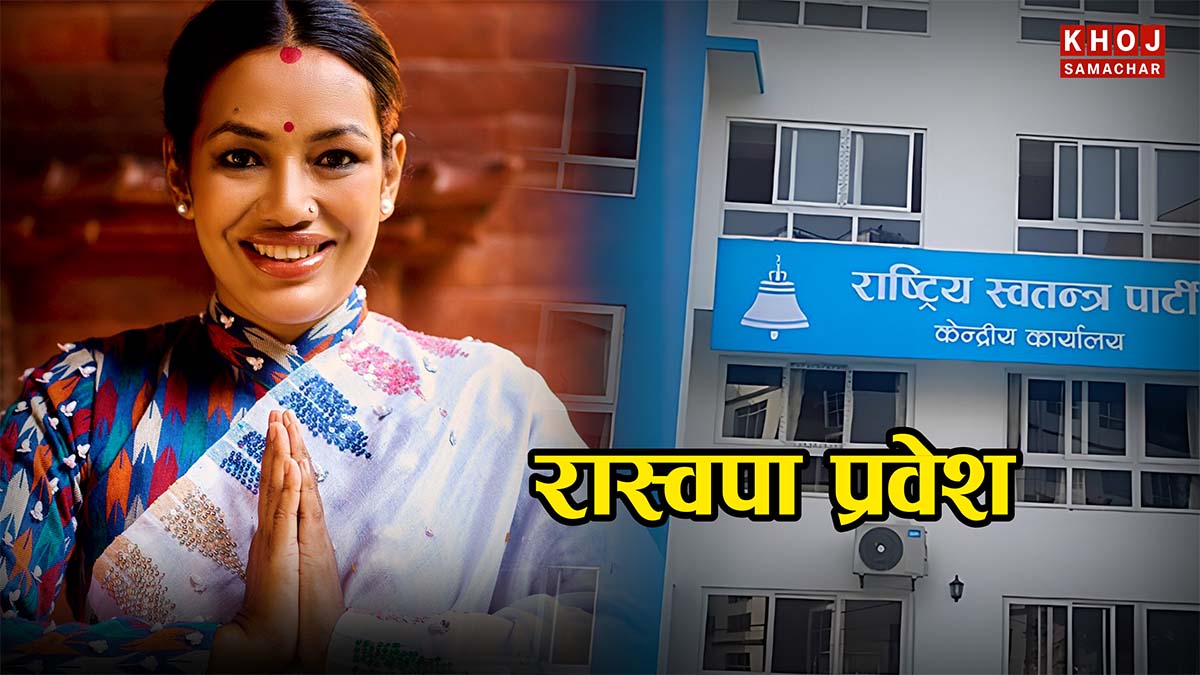
In recent times, particularly after the Gen-Z movement, Ashika Tamang has remained in the public spotlight. She gained wide recognition for standing close to the injured and affected, gradually shaping an image as a social activist. On Monday, Tamang formally joined the Rastriya Swatantra Party (RSP).
Along with her party entry, she has also received the party ticket to contest the upcoming House of Representatives election scheduled for Falgun 21 from Dhading Constituency No. 1.
However, the decision to nominate Tamang has triggered internal dissent within the RSP itself. Some party leaders have openly opposed the ticket distribution, with a few even threatening resignation, stating that they are unable to politically “carry” her candidacy.
This report takes an in-depth look at the political landscape of Dhading-1, examining voter statistics, the RSP’s chances of victory, past election results, and why the constituency could pose significant challenges for Ashika Tamang.
From Activism to Public Controversy
Born and raised in Dhading, Tamang later entered the entertainment sector before traveling to Germany for work. She married a German citizen, became a mother of two, and eventually returned to Nepal, choosing to work actively in her homeland.
Her activism gained visibility through public interventions—questioning overpriced bottled water, exposing public urination in public spaces, protesting excessive parking fees at the airport, and opposing toll charges at the Saga suspension bridge.
Tamang was arrested one times, spending up to two weeks in custody. Following the Gen-Z movement, she personally visited injured protesters, providing financial support door to door, which further fueled her viral, controversial, yet socially driven public image.
As with any public figure, Tamang carries both positive and negative perceptions. However, after the Gen-Z movement, online discourse strongly suggested that she should enter mainstream politics. Whether this social media support can be converted into actual votes under the bell election symbol remains a key question and an issue of growing public interest.
Dhading-1: Past Election Results and Political Reality
Looking at the 2079 general election results, Dhading-1 had 132,354 registered voters, of whom 80,615 participated in voting. From the then ruling alliance, CPN (Unified Socialist) leader Rajendra Prasad Pandey secured victory with 36,018 votes. His closest rival, UML candidate Bhumi Prasad Pandey, received 27,997 votes. The RSP, which was newly formed at the time, finished third, with comedian Himesh Pant securing 12,494 votes.
Historically, Dhading-1 is regarded as a stronghold of communist parties, while the Nepali Congress is considered comparatively weak. This time, RSP is fielding Ashika Tamang from a constituency where it had previously placed third. Although both time and candidates have changed, victory will not come easily for Tamang.
Vote Risks, Opportunities, and the Road Ahead
During her activist phase, she had major confrontations with hotel entrepreneurs in the same constituency. Hotel owners along the market corridor remain openly opposed to her. Tamang had raised strong objections against what she described as arbitrary pricing of food and accommodation along highway hotels.
Following these protests, hotel associations across Dhading united against her, even submitting formal complaints to the then Chief District Officer, demanding legal action.
These factors indicate a high risk of vote loss for Tamang, particularly because urban and market areas—where RSP traditionally draws stronger support—may now be divided. In rural areas, voters have historically favored established parties, making the challenge even more complex.
On the other hand, there are strong factors working in Tamang’s favor. Despite being only three months old during the previous election, RSP managed to secure over 12,000 votes in the constituency.
The current political environment is significantly different. Public sentiment across the country favors new political forces, and Tamang’s popularity among young voters has surged since the Gen-Z movement.
Her vote share is expected to surpass that of previous RSP candidates. Additionally, internal divisions within the Nepali Congress are likely to benefit emerging parties. The growing influence of youth-centric figures, including leaders like Balen Shah aligning with RSP, is also expected to boost the party’s overall vote base.
Taking all factors into account, there is little doubt that Tamang will significantly increase the RSP vote count compared to Himesh Pant. However, securing a win will require immediate and focused action.
If victory is the goal, Tamang must leave the Kathmandu Valley and dedicate the coming month entirely to Dhading—engaging directly with local residents. This includes open dialogue with hotel entrepreneurs, acknowledging past mistakes, conducting self-reflection, and clearly explaining why a new political alternative is necessary at this time.
She must also mobilize Dhading’s Gen-Z and youth population living abroad, encouraging them to communicate with their families back home about the importance of changing voting patterns. If such a comprehensive grassroots campaign is launched effectively, Tamang’s chances of victory could significantly improve.
Ultimately, however, the final decision rests in the hands of the voters of Dhading-1.


Written by Roshan Shrestha
Roshan Shrestha is a Nepali investigative journalist and founder of Khoj Samachar, covering corruption, transparency, and public-interest issues.
Why Nepal Needs an AI-Based Digital Traffic Management System
Mahabir Pun Appointed Minister of Science and Innovation in Nepal
MP Ashika Tamang Gets Angry During Parliament Session
Don’t Worship Leaders

What Nepal’s NHRC Gen Z Protest Report Reveals
Khoj Samachar Expands Multilingual Publishing With Hindi Edition
What Ashika Tamang Said After Thapathali Traffic Dispute