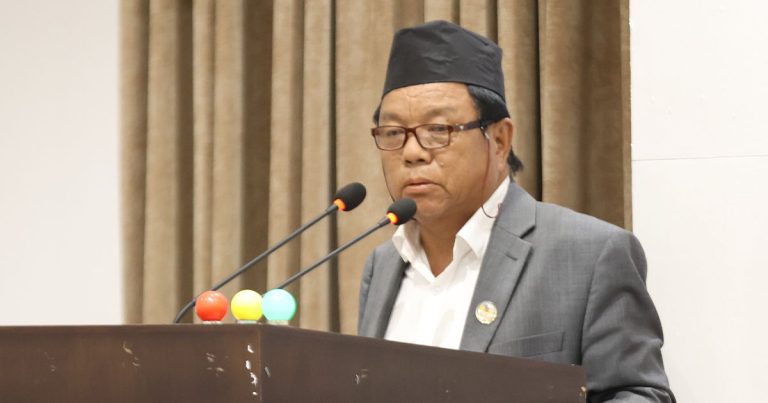
Bangladeshi Student Leader Sharif Osman Hadi Killed During Election Campaign, Inqilab Mancha Issues 24-Hour Ultimatum
The killing of student leader Sharif Osman Hadi during an election campaign has intensified political tensions in Bangladesh, as Inqilab Mancha demands swift action from the government.


The killing of Bangladeshi student leader Sharif Osman Hadi during an election campaign has pushed the country into fresh political turmoil, as authorities have failed to arrest the attackers more than a week after the shooting. The anti–Sheikh Hasina platform Inqilab Mancha has responded by giving the government a 24-hour ultimatum to act.
Addressing a gathering following Hadi’s funeral in Dhaka, Inqilab Mancha Member Secretary Abdullah Al Jaber openly questioned the government’s seriousness in investigating the killing.
He warned that if there is no visible progress within 24 hours, Home Affairs Adviser Mohammed Jahangir Alam Chowdhury and the Chief Adviser’s Special Assistant Khuda Baksh Chowdhury should step down, taking moral responsibility for the delay.
Hadi’s younger brother, Abu Bakr Siddiki, also expressed frustration, asking how a gunman could escape after carrying out a daylight shooting in the heart of the capital. “Seven or eight days have passed, yet the killer is still free,” he said, calling for the immediate arrest and prosecution of those involved.
Capital Sees Massive Turnout as Thousands Bid Final Farewell
On Saturday, Dhaka witnessed an extraordinary outpouring of grief as thousands gathered to pay their last respects to Hadi, a prominent figure linked to last year’s student movement. The parliament complex quickly filled beyond capacity, with mourners spilling onto Manik Mia Avenue, one of the city’s widest roads.
Hadi was shot last Friday while leaving a mosque in Dhaka. He suffered a critical head injury and was first taken to local hospitals before being airlifted to Singapore on December 15 for advanced treatment. Despite days of medical care, he died on Thursday.
People from all walks of life—students, traders, professionals, and ordinary citizens—attended the funeral. Many were visibly emotional as chants of “We are all Hadi, we will fight” echoed through the crowd. A trader from Mirpur said the sheer size of the gathering showed how deeply Hadi was respected, adding that he had never seen such a crowd before.
Political Impact, Regional Tensions, and Government Response
Hadi was among the most recognizable leaders of the student movement that erupted last August against former Prime Minister Sheikh Hasina. Affiliated with Inqilab Mancha, he was campaigning as an independent candidate from the Dhaka-8 constituency ahead of the general election scheduled for February.
His death has been followed by violent incidents in Dhaka and other parts of the country, including vandalism and arson targeting media offices, political properties, and public infrastructure.
Analysts say the killing could also affect Bangladesh–India relations, noting that Hadi was a vocal critic of India. Although recent diplomatic efforts had aimed to ease tensions between the two countries, the incident has created new uncertainty.
At the funeral, interim government Chief Adviser Mohammed Yunus described Hadi as an “immortal martyr.” He assured the public that everyone involved in the killing would be brought to justice and face the maximum possible punishment. Yunus also announced that the government would take responsibility for the welfare of Hadi’s wife and his only child.
To prevent further unrest, Dhaka Metropolitan Police deployed a large number of security personnel across sensitive areas of the capital. Officers equipped with body cameras and riot-control gear were stationed around key locations, while border security force battalions were also deployed amid concerns about renewed violence.


Written by Khoj Samachar Editorial Team | News Desk
Editorial team of Khoj Samachar responsible for publishing and managing news content, quality and timely coverage of national and global developments.
Why Nepal Needs an AI-Based Digital Traffic Management System
Mahabir Pun Appointed Minister of Science and Innovation in Nepal
Don’t Worship Leaders

What Nepal’s NHRC Gen Z Protest Report Reveals
Khoj Samachar Expands Multilingual Publishing With Hindi Edition
Climate Change Is Draining Oxygen From Rivers Worldwide

Summer Heat Is Rising, Follow These Simple Precautions