Sobita Gautam Leads Nepal’s 166-Bill Legal Reform Drive
The law ministry will monitor drafting, review outdated laws and bring citizen proposals into the legislative process.



Nepal’s Ministry of Law, Justice and Parliamentary Affairs has declared fiscal year 2083/84 the “Year of Legal Reform and Lawmaking”, placing 166 proposed bills at the centre of an effort to clear years of legislative delay and update laws that no longer match the country’s administrative and social realities.
The ministry has already submitted the list of bills to the Federal Parliament. Its larger promise, however, is not simply to prepare more legislation. It plans to follow every bill from the responsible ministry’s drafting desk to Cabinet approval and, eventually, Parliament.
That shift matters. Governments have repeatedly announced legislative priorities, only for bills to remain stuck inside ministries, lose urgency after registration or spend long periods before parliamentary committees. This campaign will be judged less by the size of the list than by whether the state can manage the full journey of each bill without weakening consultation and scrutiny.
Law, Justice and Parliamentary Affairs Minister Sobita Gautam, outlining the campaign through a video message, said the ministry would prioritise the repeal, amendment, codification and consolidation of existing laws while also identifying areas where entirely new legislation is required.
A review of laws that have outlived their purpose
A high-level legal reform committee will be formed to examine the condition of existing laws, the difficulties seen during implementation and the demands created by changing social and administrative conditions.
The committee is expected to identify provisions that are unused, duplicated or in conflict with other laws. Its findings will provide the basis for deciding which laws should be repealed, amended, merged or rewritten.
The exercise is intended to move legal reform away from isolated amendments made only after problems become unavoidable. The ministry wants a broader review of how laws operate together and where contradictions have accumulated over time.
It will also study orders and judgments issued by the Supreme Court and other courts. Cases in which the judiciary has identified legal gaps, unclear provisions or rules inconsistent with the Constitution will be included in the annual legislative programme where new laws or amendments are required.
Tracking bills before they reach Parliament
The ministry is preparing to introduce a Government Bill Tracking System to monitor progress on the 166 bills.
The system will record which ministry is responsible for a bill, whether a draft has been completed, where the approval process has reached and when the legislation is expected to be presented in Parliament.
This will bring a part of government work that often remains scattered across ministries into a separate monitoring structure. Delays will be easier to identify, including cases where drafting has not begun despite a bill being placed on the government’s priority list.
The ministry says priorities will be fixed under Section 3 of the Legislation Act, 2081. The prioritised list of bills and their drafting status will then be linked to the tracking system.
Every first Monday of the month, heads of law divisions and branches from different ministries will meet to review progress, discuss obstacles and set out the next steps.
The law ministry will also hold regular consultations with the ministers concerned. Where a ministry is struggling with drafting, approval procedures or preparation for parliamentary registration, the law ministry plans to provide technical and procedural support.
Coordination after a bill enters Parliament
Registration in Parliament will not be treated as the end of the government’s responsibility.
The ministry plans to coordinate with the Speaker, parliamentary committee chairs and the Secretary-General of Parliament to help ensure that discussion and passage of bills are completed within a reasonable period.
The plan also includes strengthening the technical and administrative capacity of officials involved in drafting, reviewing and processing legislation.
Bills have often stalled because ministry-level preparation was incomplete, parliamentary priorities were unclear or committees could not move the work forward on time. The new approach seeks to keep the entire legislative chain under review rather than focusing only on the date a bill is tabled.
It does not remove the need for parliamentary examination. The real test will be whether tighter monitoring produces better-prepared bills, rather than pressure to move weak drafts quickly through the House.
Citizen proposals to enter the drafting process
The ministry is also trying to open lawmaking beyond government offices through its “Know Your Law, Make Your Own Law” initiative.
A public suggestion portal has already received around 100 proposals on different issues, Gautam said. The ministry plans to study and analyse the submissions, hold discussions with relevant stakeholders and include useful proposals in amendments or new legislation.
Suggestions from government officials who directly face problems while implementing laws will be gathered through the same system.
Their input is expected to highlight unclear wording, practical weaknesses and provisions that create obstacles during implementation. The ministry says those experiences will be used to guide legal reform.
Public participation will still depend on what happens after suggestions are collected. The credibility of the portal will rest on whether contributors can see a clear link between the problems they identify and the bills the government eventually drafts.
Drafting rules for all three levels of government
The ministry will prepare Legislative Drafting Instructions for the federal, provincial and local levels.
The guidelines are intended to establish common standards for the basis, language and structure of legislation while clarifying the constitutional limits within which each level of government can make laws.
The measure addresses a wider problem created by federal lawmaking: laws adopted by different tiers of government must remain consistent with the Constitution and the principles of federalism, even when they respond to separate local or institutional needs.
Clear drafting instructions are expected to reduce conflicting provisions and help officials determine whether a proposed law falls within the authority of the federal, provincial or local government.
The nine-point plan
- Form a high-level legal reform committee to identify laws requiring repeal, amendment, codification or consolidation, and areas where new legislation is needed.
- Improve the technical and administrative capacity of officials involved in drafting, discussing and passing bills, while coordinating with parliamentary leadership and committees.
- Review legislative progress with ministry law division and branch chiefs on the first Monday of every month.
- Hold regular consultations with responsible ministers and provide technical and procedural support to move delayed bills forward.
- Study proposals received through the “Make Your Own Law” portal and incorporate suitable suggestions after consultation with stakeholders.
- Use practical feedback from government officials to address weaknesses, uncertainty and implementation barriers in existing laws.
- Review court orders and judgments and prepare bills where legal gaps, constitutional inconsistencies or unclear provisions have been identified.
- Prepare Legislative Drafting Instructions for federal, provincial and local governments.
- Operate the Government Bill Tracking System to monitor the status of 166 bills prioritised under the Legislation Act, 2081.
If implemented as announced, the programme could remove obsolete laws, reconcile conflicting provisions and speed up legislation required for the functioning of the state.
But declaring a legal reform year is the easier part. Its outcome will depend on whether ministries complete drafts on time, whether affected communities are properly consulted and whether Parliament is given the space to debate the bills with care before passing them.

Written by Roshani Shrestha Pathak
Roshani Shrestha Pathak is the English Bureau Chief at Khoj Samachar, overseeing English-language editorial operations and newsroom coordination.

Bishnu Paudel Released Without Bail by Special Court

Industry Ministry Recovers Rs 467 Million in Unpaid Rent

Rekha Thapa Criticises Taxes, Says ‘Swarnim Nepal’

Supreme Court Orders Immediate Release of Former UML MP Koiri

Government Restores Personal Secretary Facility for Lawmakers

Balen Shah Chairs Cabinet Meeting at Singha Durbar
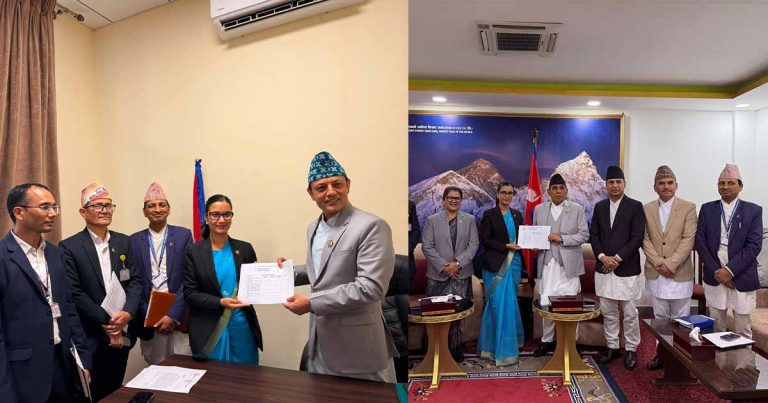
Sobita Gautam Sends 166-Bill Plan to Nepal Parliament