US House Passes Permanent Daylight Saving Time Bill
The measure would end twice-yearly clock changes, but concerns over dark winter mornings could complicate its path through the Senate.


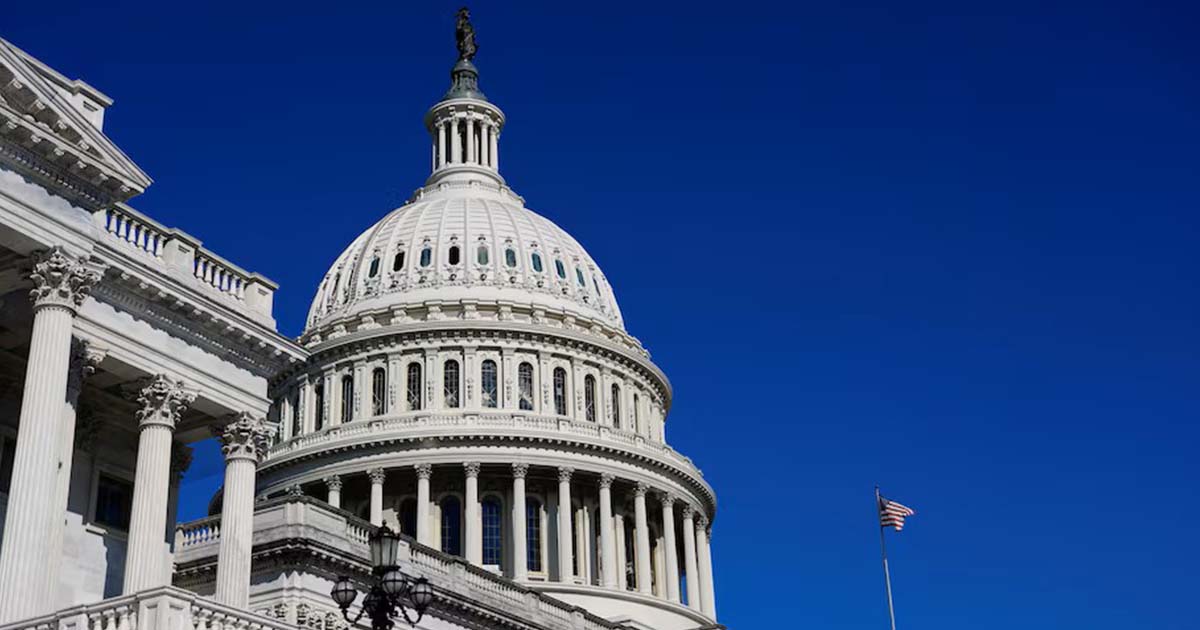
The United States has moved closer to ending the twice-yearly clock change that has shaped daily life for decades, with the House of Representatives approving legislation to keep daylight saving time in place throughout the year in most states.
The Sunshine Protection Act passed the House on Tuesday by 308 votes to 117, drawing support from lawmakers in both major parties. It will now go to the Senate. Only after Senate approval would it reach President Donald Trump for his signature.
Trump has backed the proposal, describing the need to reset clocks twice a year as an unnecessary expense and inconvenience. He has said he will work to turn the measure into law.
The House vote settled one part of the argument: a large number of lawmakers want the clock changes to stop. It did not settle the more difficult question of which time the country should live under permanently.
Supporters want the longer evening light associated with daylight saving time. Others agree that changing clocks should end but argue that standard time is safer, particularly for children travelling to school during dark winter mornings.
What the Sunshine Protection Act would change
Most parts of the United States currently move between standard time and daylight saving time during the year. Clocks are moved forward by one hour in spring and turned back again in autumn.
Under the proposed law, the daylight saving schedule used from March to November would become permanent. Households, schools, transport operators and businesses would no longer have to adjust their clocks twice each year.
The legislation would not require every state to adopt the same system. States that decide before the law takes effect would be allowed to remain on standard time rather than move to permanent daylight saving time.
That provision reflects the uneven way time rules already operate across the country. Some states and US territories do not observe daylight saving time at all, while others have been waiting for federal permission to adopt it permanently.
Why clocks are moved
Daylight saving time is intended to shift more usable daylight into the evening during the warmer and brighter months.
Those supporting the system argue that later sunsets can reduce some energy use, extend commercial activity and give people more time for outdoor recreation after work or school. Businesses linked to entertainment, shopping and sports have also favoured longer evening daylight.
The disruption comes during the change itself.
When clocks move forward or back, sleep schedules do not always adjust immediately. Children, workers and families can face several unsettled days, with routines altered and physical discomfort reported after the shift.
Lawmakers supporting the bill say removing that disruption would make it easier to manage school hours, family routines, transport services and business schedules. They also argue that brighter evenings could support public safety and economic activity.
Democratic Representative Frank Pallone said the case for continuing to change clocks had become increasingly weak. With scientific research already examining the effects of the time change, he argued that lawmakers should reconsider why the old practice was still being maintained.
The winter morning problem
The strongest opposition is not necessarily to ending the clock change. It is to making daylight saving time permanent.
Keeping the clocks on daylight saving time throughout winter would delay sunrise. In some northern parts of the country, daylight may not arrive until after 9 am.
That could leave children travelling to school in darkness. Workers who begin early shifts and farmers whose schedules depend heavily on sunlight could also face difficulties.
Agricultural representatives have warned that work tied to natural light would be pushed later into the day, affecting production schedules and routine operations.
Republican Senator Tom Cotton has previously opposed similar legislation, pointing to the risk of students having to travel to school before sunrise.
Some lawmakers therefore favour ending the twice-yearly adjustment while keeping standard time throughout the year.
Democratic Representative Mary Gay Scanlon has argued that any lasting change should give particular weight to children’s health. The concern is that the convenience of brighter evenings should not come at the cost of darker and potentially more dangerous mornings.
This divide has followed the proposal for years. Lawmakers may agree that changing clocks is unpopular, but agreement becomes harder once they must choose between lighter evenings and brighter mornings.
Public support for change, but no clear choice
Surveys have repeatedly shown that many Americans are dissatisfied with resetting their clocks in spring and autumn.
Public opinion becomes less decisive when people are asked which system should replace it. Some prefer daylight saving time throughout the year. Others want permanent standard time.
Republican Representative Nick Langworthy, who represents the Buffalo area of New York, said he had not fully settled his own position on the bill. But he said the message from citizens was clear: people do not want to keep moving their clocks.
The disagreement does not follow a simple party line.
Farmers, teachers, parents, entertainment businesses, golf operators and other groups have taken different positions based on working hours, family routines and economic interests. A system that gives one group a useful extra hour of evening light may leave another group starting its day before sunrise.
That is why the issue has survived despite broad frustration with the clock changes. Ending the practice is the easy promise. Choosing the permanent replacement remains politically difficult.
Parts of the US that already keep one time
Daylight saving time is observed in most US states, but several areas remain on standard time throughout the year.
Hawaii and most of Arizona do not change their clocks. The Navajo Nation, which includes territory within Arizona, does observe daylight saving time.
Puerto Rico, the US Virgin Islands, Guam, American Samoa and the Northern Mariana Islands also remain on standard time all year.
Nineteen states have passed laws containing provisions to adopt permanent daylight saving time once federal approval is granted. If the new federal legislation becomes law, those state measures could move towards implementation.
A previous experiment still shapes the debate
Daylight saving time became widely used in the United States during the world wars as an energy-conservation measure.
The Uniform Time Act of 1966 established a national system while allowing states to opt out.
The country tried permanent daylight saving time in 1974 during an energy crisis. The decision quickly became unpopular as people faced dark winter mornings, and Congress reversed it after a short period.
Opponents of the current bill have returned to that experience as a warning. They argue that public enthusiasm for later evening light can weaken once winter arrives and families begin their mornings in darkness.
Congress has also struggled with the issue in recent years.
The Senate approved a permanent daylight saving time proposal by unanimous consent in 2022, but the House did not bring it to a vote. A similar effort was introduced in the Senate in 2025, but lawmakers failed to reach agreement.
This time, the House has approved the measure with a clear majority. Its future in the Senate is still uncertain.
The old clock-changing system now has fewer enthusiastic defenders. But the argument is no longer simply about whether the clocks should move. It is about whether winter mornings or summer-style evenings should carry greater weight in the daily life of the country.

Written by Roshani Shrestha Pathak
Roshani Shrestha Pathak is the English Bureau Chief at Khoj Samachar, overseeing English-language editorial operations and newsroom coordination.

Indian Crew Member Killed in Hormuz Tanker Attack

South Korean Sailor Found Dead Near Northern Sea Border

US-Iran Clash Raises Gulf Alarm After Drone Attacks

Iran-America War Update: Hormuz Strait Closed

Heavy Rain Triggers Landslides in Uttarakhand
Dalai Lama Birthday Controversy in Nepal: Tibet-China Risk Explained

Oil Prices Rise as US-Iran Tensions Flare