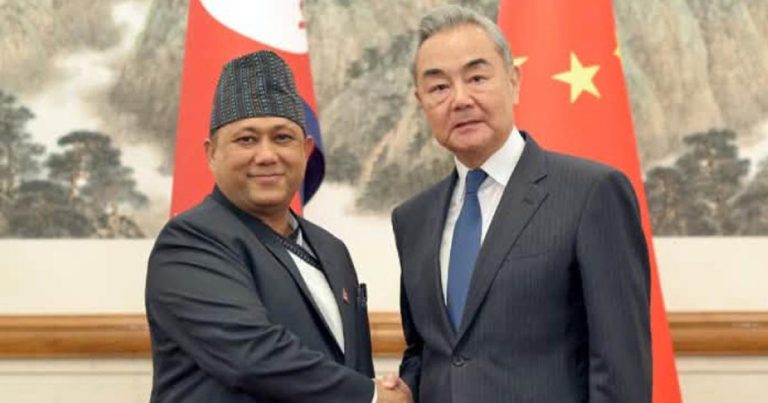
Dalai Lama Birthday Controversy in Nepal: Tibet-China Risk Explained
The event has revived questions over Tibet, China’s One China policy and Nepal’s challenge of balancing security with diplomatic commitments.


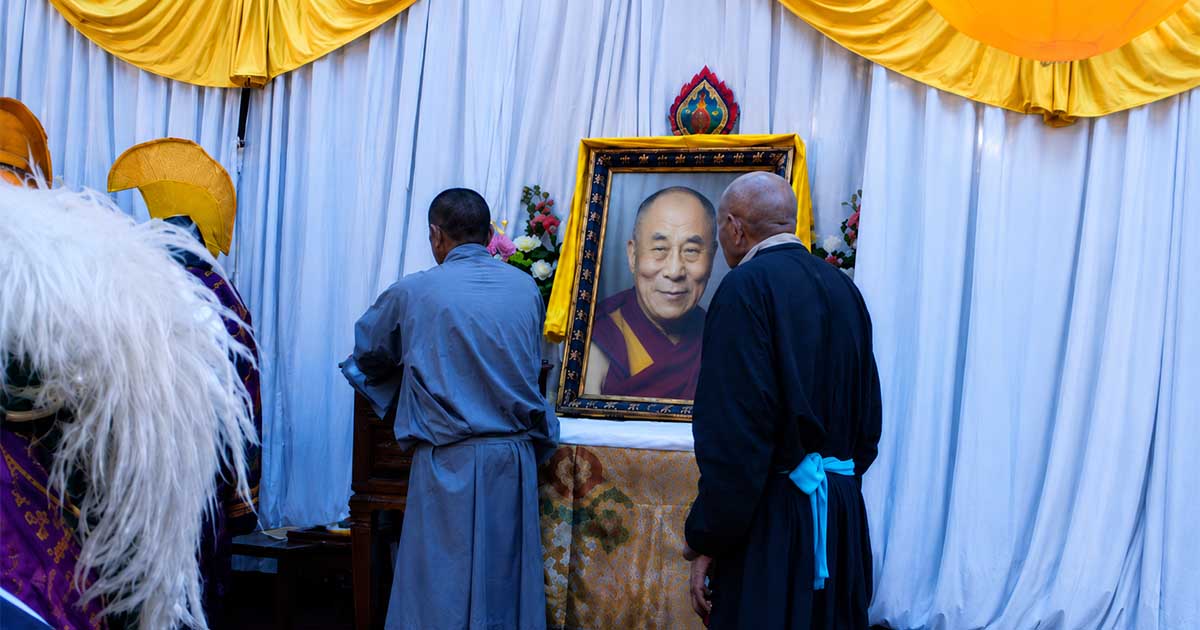
Kathmandu marking the Dalai Lama’s birthday sounds like a routine cultural event. It is not being treated as one. Diplomatic circles and political observers in Nepal have started reading the celebration through a far sharper lens — one shaped by geography, history, and the weight of what Tibet has meant to Nepal’s foreign policy for over half a century. Sandwiched between two rising powers, Nepal has learned that even small gestures tied to Tibet rarely stay small once Beijing takes notice.
To understand why a birthday event carries this much diplomatic risk, the story has to go back to Tibet itself — to a time before the region became part of China, before the Dalai Lama fled into exile, and before Mustang became a staging ground for one of Asia’s lesser-known guerrilla wars.
When Tibet Stood Apart
Roughly 76 years ago, China did not look the way it does today. Tibet existed as a separate territory between Nepal and China — geographically enormous, nearly 17 times the size of Nepal, sitting at the highest elevation on Earth. People called it the roof of the world.
Tibetans governed themselves under their own religious and political leadership, with the Dalai Lama as their highest authority. The territory had its own flag, its own currency, and its own cultural and religious order built around Buddhism.
That changed after Mao Zedong’s Communist government took power in China in 1949. Tibet’s vast land, natural resources, herbal wealth, and control over the headwaters of major Asian rivers made it strategically valuable to Beijing almost immediately.
By October 1950, Chinese forces had moved toward the Tibetan border. That advance marked the start of formal military conflict between China and Tibet.
Chamdo Falls, and a 17-Point Agreement Follows
The military gap between the two sides was stark. China had modern weapons, artillery, and trained soldiers in large numbers. Tibet had a small force, outdated arms, and little experience in modern warfare.
Tibetan troops resisted but could not hold the line for long. Chinese forces captured Chamdo, the eastern gateway into Tibet, and pushed on toward Lhasa.
Under mounting pressure, Tibetan representatives signed the Seventeen Point Agreement in Beijing in 1951 — a document drafted by China. That signature is generally treated as the moment Tibet formally came under Chinese control.
The agreement promised respect for Tibetan religion, culture, and the position of the Dalai Lama. Over the following years, Tibetans and rights groups have repeatedly alleged that Beijing tightened its grip over monasteries and religious institutions well beyond what the agreement had promised.
1959: Uprising and Escape
Chinese control over Tibet kept expanding, and in March 1959, a major uprising broke out. Tibetan chinese forces crushed the revolt with force.
Amid fears that Chinese troops planned to capture or kill him, the 14th Dalai Lama disguised himself and fled Tibet by night, crossing the Himalayas on foot. He passed through Nepal before reaching India, and thousands of Tibetans followed the same route into exile.
He has lived since then in Dharamshala, in India’s Himachal Pradesh, from where the Tibetan government-in-exile continues its political and religious activities.
Mustang and the Khampa Resistance
The Dalai Lama’s exile did not end the Tibet question. Tibetans opposed to Chinese rule kept the movement alive from multiple countries, and between 1960 and 1974, armed Tibetan fighters known as the Khampa carried out an insurgency against Chinese forces.
A section of these fighters used Nepal’s Mustang region as their base, launching guerrilla raids into Tibet from Nepali soil. That single fact turned a foreign resistance movement into a direct question about Nepal’s own sovereignty and national security.
Using one country’s territory to wage armed action against a neighboring state is never diplomatically simple. For Nepal, caught between Chinese pressure and its own limited capacity to act, it became a genuine crisis of statecraft.
The CIA, India, and a Quiet War
How a lightly armed insurgent group sustained a fight against China for over a decade is its own story. Multiple accounts point to covert support from the American CIA and from India, both of which had strategic reasons to keep Beijing under pressure. Arms, funding, and training are said to have flowed to the Khampa fighters through this backing.
That support is what allowed the insurgency to continue as long as it did.
By 1974, however, the threat to Nepal’s own territorial control had grown too large to ignore. King Birendra’s government deployed the Nepal Army into Mustang, forcing the Khampa fighters to surrender and shutting down armed activity on Nepali soil for good.
- 1950: Chinese military enters Tibetan territory
- 1951: Seventeen Point Agreement signed in Beijing, bringing Tibet under Chinese control
- 1959: Tibetan uprising crushed; Dalai Lama flees to India via Nepal
- 1960–1974: Khampa fighters wage insurgency from Mustang with alleged CIA and Indian backing
- 1974: Nepal Army moves into Mustang, ending armed Khampa activity in Nepal
The episode left a lasting lesson for Nepal’s foreign policy establishment — that its territory could not be allowed to become a launchpad for any outside power’s war with China.
The “Tibet Card” and Beijing’s Red Line
Tibet remains one of the most sensitive subjects in China’s foreign policy calculus, grouped alongside Taiwan and Hong Kong as questions of territorial integrity that Beijing treats as non-negotiable. Analysts describe Tibet as something occasionally used as leverage by Washington and New Delhi to apply pressure on China — what some call the “Tibet card.”
Any country that appears to treat Tibet, Taiwan, or Hong Kong as separate political entities tends to draw a sharp reaction from Beijing. This is the foundation of China’s One China Policy, which requires partner nations not only to recognize Tibet as Chinese territory but also to prevent anti-China activity from their own soil.
Nepal has backed the One China Policy for decades. It remains one of the central pillars of the Nepal-China relationship.
Why the Birthday Event Matters Now
A cultural gathering marking the Dalai Lama’s birthday reads very differently once foreign diplomats, Free Tibet messaging, or overt political symbolism enter the picture. For Beijing, that combination can look less like celebration and more like provocation.
Nepal’s position between China and India — with growing American interest in the region in recent years — means that any Tibet-linked activity carries the risk of pulling Kathmandu into a larger power contest it did not choose. Beijing could interpret such events as an attempt by Washington or New Delhi to use Nepali territory to pressure China, and respond with tighter border controls, diplomatic pressure, or economic friction.
Gen-Z Protests and the TOB Allegation
The concern has sharpened following allegations tied to Nepal’s Gen-Z protest movement on Bhadra 23 and 24. A biker group known as TOB — Tibetan Original Blood Group — has been accused of stoking unrest during those demonstrations.
Whether or not the allegation holds up to scrutiny, it has reportedly pushed Chinese authorities to watch Tibetan-linked activity inside Nepal more closely than before. For Beijing, Nepal is not just a neighboring state — it sits inside what China treats as a sensitive southern security perimeter. A birthday celebration held in the capital, attended by foreign diplomats, fits directly into that watchfulness.
What Nepal Risks
If any Tibetan group were to repeat the Mustang-era pattern — using Nepali territory with foreign backing to act against China — the consequences for Nepal could be severe. The country could find itself pulled into the kind of great-power confrontation it has spent decades trying to avoid.
Ukraine offers a warning of what that can look like for a smaller state caught between larger powers. Nepal shares a long land border directly with China, a fact that raises the stakes if any outside power tries to use Nepali territory as leverage against Beijing.
The Balancing Act Ahead
The Dalai Lama’s birthday is not simply a religious or cultural occasion in this context — it is a test of how carefully Nepal’s government manages competing pressures.
Nepal has to weigh its commitments to human rights, religious freedom, and its long history of hosting Tibetan refugees against its relationship with China, its One China Policy commitments, and its own national security interests. Any hesitation, ambiguity, or delay in how the government handles Tibet-related activity carries the potential to escalate into a larger diplomatic problem.
The clearest message Nepal can send is that its territory will not be used against any neighboring state — and that Tibet-related activity within its borders will be handled with the same caution that ended the Mustang insurgency five decades ago. For a country positioned exactly where Nepal sits on the map, even small, symbolic events can carry outsized diplomatic consequences.

Written by Roshan Shrestha
Roshan Shrestha is a Nepali investigative journalist and founder of Khoj Samachar, covering corruption, transparency, and public-interest issues.
Oil Prices Rise as US-Iran Tensions Flare
Is It Illegal for Nepalis to Get an Aadhaar or PAN Card in India?

Germany: Six died in Stade Shooting

Neymar Gives $250K for Venezuela Earthquake Victims
Kolkata Warehouse Collapse Update: 5 Dead, 2 Arrested

Colombia Beat Uzbekistan 3-1 in World Cup Opener
6.7-Magnitude Earthquake Shakes Indonesia’s Sulawesi