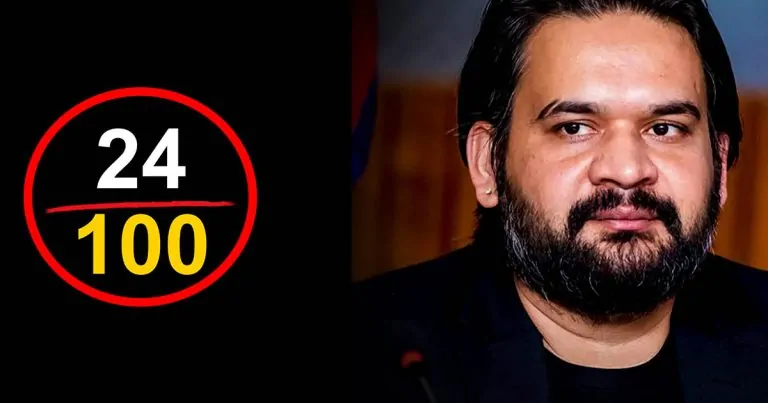
Is the Balen Government Heading Toward Authoritarianism?
Recent actions involving a police DSP, a YouTuber and a health worker have reignited debate over free speech, political criticism and the government's response to dissent in Nepal.


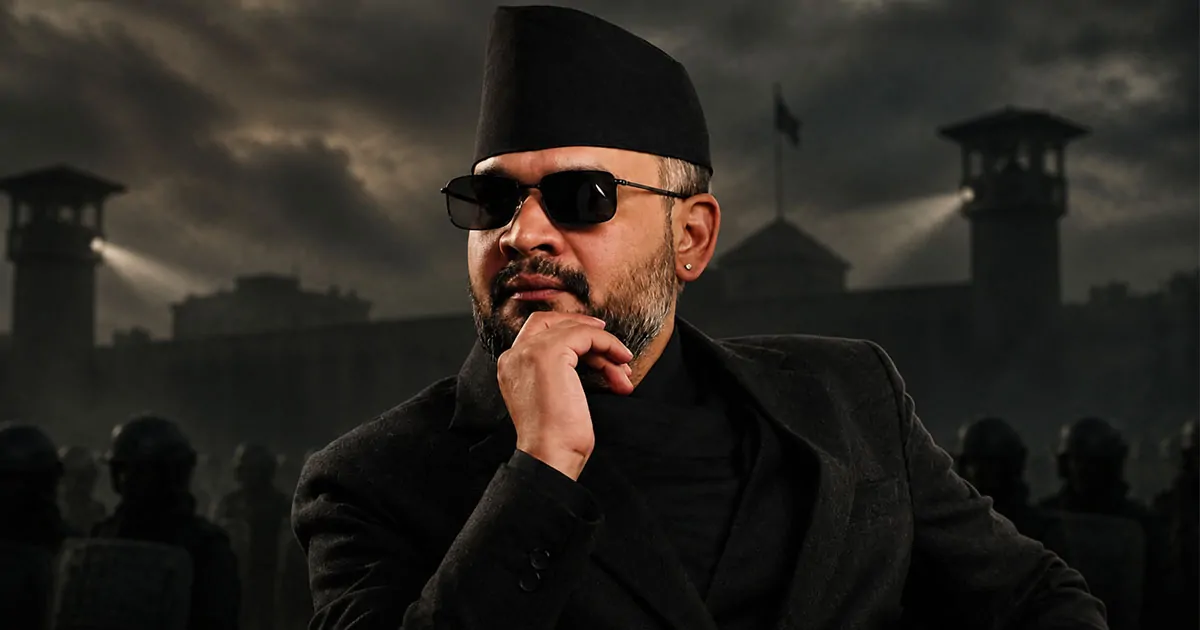
DSP Prasanna Raj Chaudhary, in-charge of the Sukhad Area Police Office, has been called to the district headquarters for questioning. His offense? Remarks he made at an anti-drug awareness program in Ghodaghodi Municipality-5, Darakh, that went viral on social media.
Here’s what he actually said at the event:
“We’re not Balen’s police, we’re Nepal Police. We’re the police that delivers justice to those wronged and oppressed. This same Nepal Police also arrested KP Oli. We didn’t get here by winning an election or putting on a tika — we got here by clearing the Public Service Commission exam.”
Once the clip spread online, the police called him in for questioning over it.
The YouTuber and the Doctor Weren’t Spared Either
DSP Chaudhary’s case isn’t an isolated one. Lately, a string of actions against people who’ve criticized the government — or those in power — has been drawing heavy public attention.
Not long ago, a YouTuber named Roshan Pokharel was arrested for uploading a roast video hurling abuse at Prime Minister Balen Shah and his wife Sabina Kafle. He was initially released into his family’s custody. But things didn’t end there — the Government Attorney’s Office later filed a case against him, and after a preliminary hearing, the court ordered him held in judicial custody pending trial. The episode has reignited debate over where the line sits between free expression on social media and legal accountability for defamation.
Around the same time, a doctor faced police action for a Facebook post calling on the Health Minister to resign over her performance.
Health worker Nawesh Adhikari had posted a photo of the minister with a red “X” drawn across it on Facebook, captioning it “mafia minister.” He didn’t stop there — his status read, roughly:
“Nisha Mehta, you haven’t managed to implement even the government’s own policy of 10 percent free hospital beds for the poor in a single Madhesh hospital till now. What exactly are you doing? If you’ve run out of shame, resign as Health Minister.”
Police used that very post as grounds to arrest him — a move that’s opened up a fresh debate on just how far the freedom to criticize the government actually extends.
Arrested for Speaking Up — Is the Government Sliding Toward Authoritarianism?
With a YouTuber, a doctor, and now even a DSP being summoned or arrested simply for speaking against those in power, a pointed question is being asked with growing urgency: is this government heading down an authoritarian road?
To be clear — society should always conduct itself with civility. Whether you’re criticizing or defending, it should be done decently. Nobody disputes that. Anyone who crosses that line with abuse or foul language deserves to face the law.
But it’s worth remembering: this is the same Balen who, as mayor, openly threatened to “burn down Singha Durbar” when traffic police stopped a government vehicle carrying his wife on a holiday. This is the same RSP that, when its chairperson was held in custody over a cooperative fraud case, marched through Chitwan burning an effigy of then-Prime Minister Oli and blowing conch shells, claiming it was political revenge.
Now that they’re the ones in power, criticizing them gets you arrested, detained, and treated like you’ve committed some grave crime — sent straight to judicial custody.
What They Said Then, and What They Do Now
The truth is, the old parties built a culture of corruption in this country — more interested in building their own circles than building the nation. That left people disillusioned and angry with the old guard. RSP and Balen rode that wave of frustration straight into power, largely by hurling abuse at the old leaders.
So while the old parties normalized corruption, the new ones normalized abusing anyone they disliked. And the very seed of that culture — sown by Balen and RSP themselves — has now sprouted and grown into something bigger.
But the same people who, back when they were planting that seed, were shouting from social media to the streets to parliament about “this is democracy, uphold freedom of speech” — today, forget about ordinary citizens, doctors, or police officers. They’ve even started issuing circulars telling their own elected MPs — sovereign representatives chosen by the people — to first clear whatever they plan to say in parliament with the party whip, and only speak once it’s been approved.
Watching all this unfold, the accusation being leveled is hard to ignore: those who once called Oli a dictator and collected public sympathy for it are now walking Oli’s own path.
In the End
To say it again — both criticism and support should be expressed in civil language. Abuse and foul language have no place, and if someone crosses that line, the law should deal with it accordingly.
But when those in power themselves provoke the public into behaving a certain way, and then send in the police to lock people up for doing exactly that — that, truly, is what authoritarianism looks like.
Let’s set aside what happened before.
Take Sunil Lamsal, the current Minister for Physical Infrastructure — he’s publicly ordered, more than once, that contractors who fail to do their job should have their legs broken. Yet a health worker in his own cabinet’s ministry who wrote a Facebook post telling the Health Minister to resign for not doing her job gets arrested by the police.
Isn’t that strange?

Written by Roshan Shrestha
Roshan Shrestha is a Nepali investigative journalist and founder of Khoj Samachar, covering corruption, transparency, and public-interest issues.
Kulman to Energy Minister: Give NEA a Full-Time Chief

Santosh Rajbanshi: When Will Farmers Get Fertilizer?
Lima Adhikari Urges EU Air Safety List Review
Bhutanese Refugee Scam: 16 Convicted, 7 Acquitted, 8 Fled
Kulman Ghising: Government Has Energy, Needs Experience
Jaybir Deuba Named in Money Laundering Notice
Why Did an RSP MP Recall Kulman Ghising in Parliament?