Why Nepal Needs an AI-Based Digital Traffic Management System
Khoj Samachar examines how AI-based traffic enforcement could improve transparency, reduce manual policing, and modernize Nepal's traffic management system.


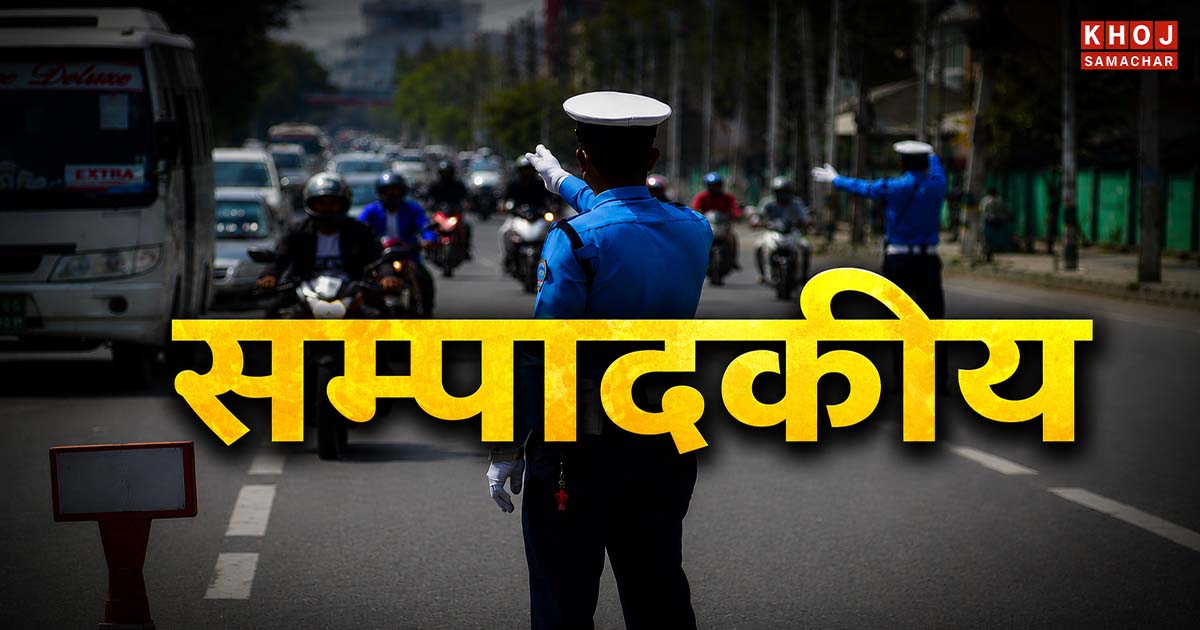
The Nepal Government’s proposed new traffic bill, which would allow traffic police to impose fines ranging from Rs. 500 to Rs. 100,000 for traffic rule violations, has triggered widespread public debate across the country.
While some people argue that stricter penalties are necessary to improve road discipline and reduce accidents, many citizens fear that such heavy fines could place an enormous financial burden on ordinary people. The proposal has quickly become one of the most discussed issues on social media and in public forums.
Khoj Samachar Believes stricter traffic laws are indeed necessary. Traffic regulations are not meant to generate government revenue; their primary purpose is to protect the lives and property of citizens. However, the policies used to enforce these laws must also be practical, transparent, and supported by modern technology.
Why Are Many Citizens Concerned About the Proposed Fines?
Nepal’s major cities—especially the Kathmandu Valley—experience severe traffic congestion every day. Many roads remain narrow, lane markings are unclear, traffic lights often malfunction, and several roads stay under construction for years.
Under these circumstances, drivers may unintentionally violate traffic rules. Crossing a stop line, briefly entering another lane, or making other minor mistakes can sometimes happen due to poor traffic management rather than deliberate negligence.
If such situations are punished with excessively high fines, many ordinary citizens could face serious financial hardship. For some people, a single traffic fine could equal several weeks or even months of income. This concern has become one of the strongest arguments against the proposed legislation.
Another issue frequently raised is fairness in enforcement. Complaints occasionally emerge that traffic rules are not applied equally, with some drivers being penalized while others are overlooked. As fines increase, concerns about potential misuse of authority naturally become more significant.
Traffic Rules Are Essential—But Is Increasing Fines the Right Solution?
There is no doubt that traffic regulations play a critical role in preventing road accidents. Every year, thousands of people in Nepal are injured, and many lose their lives in road crashes. Wearing helmets, fastening seat belts, obeying speed limits, and following other traffic rules are essential for protecting lives—not simply for avoiding penalties.
For this reason, weakening traffic laws is not the answer.
However, merely increasing fines is also unlikely to provide a long-term solution. If the government’s real objective is to improve road discipline, reduce accidents, increase compliance, and strengthen public trust, then the focus should shift toward building a modern digital traffic management system rather than relying solely on heavier financial penalties.
Khoj Samachar’s Recommendation: A Digital Traffic System, Not Higher Fines
The government still has an opportunity to improve the proposed traffic bill by adopting a long-term and technology-driven approach. Rather than relying primarily on higher fines, Nepal should invest in building a transparent, AI-powered digital traffic management system that ensures fair and consistent enforcement for every road user.
This is the solution that Khoj Samachar proposes.
A Digital Traffic System Can Transform Law Enforcement
If Nepal successfully transitions to a fully digital traffic management system, most traffic violations can be detected automatically without requiring direct intervention from traffic police.
An AI-powered system would be capable of identifying whether:
- A driver is wearing a seat belt.
- A motorcyclist is wearing a helmet.
- A vehicle has exceeded the speed limit.
- A driver has violated lane discipline.
- A vehicle has crossed a red traffic light.
- Other traffic rules have been violated.
Instead of relying solely on human observation, intelligent cameras and AI software would continuously monitor roads and automatically detect traffic violations.
AI Can Automatically Detect Violations and Calculate Fines
Once a violation is identified, the AI system can instantly determine:
- Which traffic rule was violated.
- The type of violation.
- The applicable legal penalty.
- The amount of the fine.
The system can automatically separate violating vehicles from thousands of vehicles traveling on the road each day, making enforcement faster, more accurate, and free from unnecessary human intervention.
Electronic Challans Can Be Generated Automatically
After confirming a violation, the system can retrieve the registered vehicle owner’s information from the government’s vehicle database and automatically generate an Electronic Challan (e-Challan).
The e-Challan can include:
- Photo or video evidence of the violation.
- The exact location of the incident.
- Date and time of the violation.
- The specific traffic rule that was broken.
- The fine amount.
- The payment deadline.
- Instructions for making digital payment.
This information can be sent directly to the registered mobile number of the vehicle owner through SMS or other digital communication channels.
Convenient Online Payment for Citizens
Instead of visiting government offices or traffic police stations, citizens could pay their fines from home using digital payment platforms such as eSewa, Khalti, PhonePe, mobile banking, or other approved online payment systems.
If the fine remains unpaid within the prescribed deadline, the case can automatically proceed to the legal process, while the vehicle owner receives prior notification regarding the next steps.
Equal Enforcement for Everyone
One of the greatest strengths of an AI-based digital traffic management system is that it applies the law equally to everyone.
Whether the vehicle belongs to a minister, a member of parliament, a senior government official, a businessperson, or an ordinary citizen, the system treats every violation the same. It does not recognize status, influence, or personal connections—it simply determines whether a traffic rule has been violated.
A Fair Appeal Process Should Also Be Included
No technology is perfect, and AI systems may occasionally make mistakes. Therefore, every digital traffic management system should include an online appeal mechanism that allows citizens to challenge an incorrectly issued e-Challan.
Traffic authorities can then review the photos, videos, and supporting evidence before making a final decision, ensuring that justice remains transparent, accurate, and accountable.
Nepal Needs Smart Traffic Management, Not Just Higher Fines
Nepal’s long-term priority should not simply be collecting larger fines from citizens. Instead, the country should focus on building a transparent, AI-driven digital traffic management system that improves road safety, strengthens public trust, ensures equal enforcement of the law, and modernizes traffic administration for the future.
How an AI-Based Traffic Management System Works
Many people may assume that an AI-powered traffic management system is something only developed countries can afford or implement. However, with today’s technology, such a system is entirely achievable in Nepal if the government is willing to invest in long-term digital infrastructure.
Building such a system requires three key components:
- Advanced AI-enabled smart cameras
- A powerful Artificial Intelligence (AI) platform
- An integrated government vehicle database
Step 1: Smart Cameras Monitor Roads Around the Clock
The first step is to install intelligent AI-powered cameras at major highways, busy intersections, and accident-prone locations throughout the country. These cameras can operate 24 hours a day, regardless of weather conditions or time of day, continuously monitoring traffic without requiring constant supervision from traffic police.
The cameras can automatically capture information such as:
- The movement of vehicles.
- Vehicles exceeding speed limits.
- Lane violations.
- Red-light violations.
- Drivers or riders failing to wear seat belts or helmets.
Rather than depending on manual observation, the cameras continuously collect traffic data from thousands of vehicles using the road each day.
Step 2: Artificial Intelligence Detects Traffic Violations Automatically
Once the cameras capture video footage, the data is transmitted directly to an Artificial Intelligence system for analysis. Instead of relying on human operators, the AI automatically examines the footage and identifies whether any traffic laws have been violated.
The AI system can:
- Read vehicle number plates.
- Identify the type of vehicle.
- Detect the exact traffic violation.
- Classify the offense according to traffic laws.
- Calculate the legally applicable fine automatically.
By processing thousands of vehicles within seconds, AI significantly reduces human workload while improving the speed, consistency, and accuracy of enforcement.
Step 3: The System Automatically Generates an Electronic Challan
After confirming a traffic violation, the system connects with the government’s vehicle registration database to retrieve the registered owner’s details and contact information. It then automatically generates an Electronic Challan (e-Challan).
The e-Challan can include:
- Photo or video evidence of the violation.
- The exact location of the incident.
- Date and time.
- The specific traffic law that was violated.
- The amount of the fine.
- The payment deadline.
- Complete instructions for online payment.
The entire notice can then be delivered directly to the registered vehicle owner’s mobile phone, allowing the entire enforcement process to remain fully digital.
A Proven System Already Used in Many Countries
This is not a futuristic concept or an experimental technology. AI-based traffic management systems have already been successfully implemented in many countries around the world.
For example, many cities and states in neighboring India now rely heavily on AI-powered surveillance cameras and automated enforcement systems. In numerous locations, manual traffic challans issued by roadside officers have been significantly reduced as digital enforcement has become the primary method of monitoring traffic violations.
Khoj Samachar Believe, Nepal could begin by implementing this system in the Kathmandu Valley and other major urban centers before gradually expanding it across the country as infrastructure develops.
How Nepal Can Benefit from an AI-Based Digital Traffic Management System
If Nepal adopts the AI-based digital traffic management system proposed by Khoj Samachar, the benefits will extend far beyond the government. Citizens, traffic authorities, and the country as a whole would gain from a safer, more transparent, and more efficient system.
Today, traffic police officers stationed on the roads can monitor only a limited number of vehicles within a limited area. No matter how dedicated they are, their ability to enforce traffic laws depends on their physical presence and available manpower.
Because of these limitations, some drivers obey traffic rules only when they see traffic police nearby. Others attempt to avoid checkpoints by taking alternative routes, while some may even try to escape enforcement through personal influence or connections.
An AI-powered digital traffic management system would significantly reduce these problems by monitoring roads continuously and enforcing traffic laws consistently without human bias.
Equal Enforcement of the Law for Everyone
One of the greatest strengths of a digital AI system is that it treats every citizen equally.
Whether the vehicle belongs to a government minister, a member of parliament, a senior civil servant, a businessperson, or an ordinary citizen, the system does not recognize social status or political influence. It only determines whether a traffic law has been violated.
This helps ensure that traffic law enforcement becomes more transparent, impartial, and trustworthy.
Government Revenue Can Increase Without Raising Fine Amounts
Some people may believe that increasing traffic fines is the only way for the government to generate more revenue. However, Khoj Samachar believes there is a more effective approach.
A single traffic officer can identify only a limited number of violations each day. In contrast, AI-powered cameras can monitor hundreds of thousands—or even millions—of vehicles daily across multiple locations.
As a result, many more violations can be detected automatically with supporting evidence. Even if the fine amounts remain similar to current levels, the overall number of enforceable violations would increase substantially, leading to significantly higher government revenue without imposing excessively harsh penalties on citizens.
Citizens Become More Responsible Drivers
Receiving an e-Challan that includes photographic or video evidence allows drivers to clearly understand where, when, and how they violated traffic regulations. This reduces unnecessary disputes and encourages greater accountability.
Over time, drivers become more aware of traffic rules and are less likely to repeat the same mistakes. Greater compliance with traffic laws can ultimately contribute to reducing road accidents throughout the country.
Khoj Samachar’s Recommendation to the Government
Khoj Samachar once again urges the Government of Nepal to prioritize building a modern, AI-powered digital traffic management system instead of focusing primarily on increasing traffic fines.
The system could first be introduced in the Kathmandu Valley, followed by other major cities such as Pokhara, Lalitpur, Bhaktapur, Biratnagar, Butwal, Chitwan, Dharan, and Janakpur, before being gradually expanded across the country.
adopting this technology at the right time would modernize Nepal’s traffic management system, improve fairness and transparency, strengthen law enforcement, and create a safer road environment for everyone.
Funding the System, Learning from India, and Nepal’s Path Forward
One of the most common questions about implementing an AI-based digital traffic management system is: Where will the budget come from?
Nepal does not necessarily need foreign loans or additional taxes to finance such a project. A significant portion of the required investment could be generated from the traffic fines that are already being collected every day.
For example, on 26 June 2026, traffic police in the Kathmandu Valley alone collected approximately Rs. 2.3 million in traffic fines within just 24 hours. Based on similar figures, traffic-related revenue could amount to millions of rupees every month and billions annually.
If the government allocates even a portion of this revenue toward purchasing smart cameras, developing AI software, upgrading digital infrastructure, and integrating government databases, Nepal can gradually build a modern traffic management system without imposing additional financial burdens on taxpayers.
A Long-Term Investment, Not Just an Expense
An AI-powered traffic management system should not be viewed simply as another government expense. Instead, it is a long-term investment in Nepal’s future.
Once the necessary infrastructure—including intelligent cameras, servers, software platforms, and AI systems—is established, it can continue operating efficiently for many years. Such a system can reduce manual workload, expand monitoring capacity, improve law enforcement, and make traffic administration far more effective.
In addition, it can contribute to reducing road accidents, strengthening public confidence in traffic enforcement, and improving the overall efficiency of revenue collection.
India Offers a Practical Example
Nepal can also learn valuable lessons from neighboring India, where AI-powered traffic enforcement systems have already been implemented successfully in many cities and states.
When a traffic violation occurs, smart cameras automatically detect the offense, while AI software identifies the vehicle and generates an Electronic Challan (e-Challan) complete with photographic evidence. The notice is then sent directly to the registered vehicle owner’s mobile phone.
Vehicle owners can conveniently pay their fines online without visiting traffic offices. If payment is not made within the prescribed deadline, the matter proceeds through the legal process. In many cases, unresolved traffic violations must also be cleared before a vehicle can be sold, transferred, or re-registered, and delayed payments may result in additional penalties.
Nepal can study these successful practices and develop a digital traffic enforcement model that aligns with its own legal framework and administrative requirements.
Khoj Samachar’s Final Recommendation
Khoj Samachar once again urges the Government of Nepal, relevant ministries, and policymakers to adopt a long-term vision for traffic management. Simply increasing traffic fines will not solve the country’s traffic challenges.
Real and lasting improvement can only be achieved when traffic law enforcement becomes transparent, technology-driven, impartial, and fully digital. If Nepal begins investing in an AI-based traffic management system today, the country could fundamentally transform its traffic administration within the coming years.
Such a system would strengthen public trust, reduce unnecessary pressure on traffic police, improve road safety, streamline revenue collection, and most importantly, ensure that the law is applied equally to every citizen without discrimination.
Nepal Needs a Smart Traffic System—Not Just Higher Fines
The future of traffic management in Nepal should not be defined by increasingly heavier financial penalties. Instead, it should be built on intelligent technology, transparency, accountability, and equal enforcement of the law.
Khoj Samachar’s final message to the Government of Nepal is simple:
“Rather than increasing traffic fines and placing a heavier financial burden on citizens, invest in a modern AI-based digital traffic management system. Improve the system, and the country will move forward with it.”

Written by Roshan Shrestha
Roshan Shrestha is a Nepali investigative journalist and founder of Khoj Samachar, covering corruption, transparency, and public-interest issues.

Mahabir Pun Appointed Minister of Science and Innovation in Nepal
Don’t Worship Leaders

What Nepal’s NHRC Gen Z Protest Report Reveals

Khoj Samachar Expands Multilingual Publishing With Hindi Edition

Climate Change Is Draining Oxygen From Rivers Worldwide

Summer Heat Is Rising, Follow These Simple Precautions

Government Separates Science Ministry Amid Mahabir Pun Demand