A statement made by Minister for Physical Infrastructure and Transport Sunil Lamsal during an inspection of the Nagdhunga–Mugling road section has become the focus of public attention after a video of the exchange circulated widely.
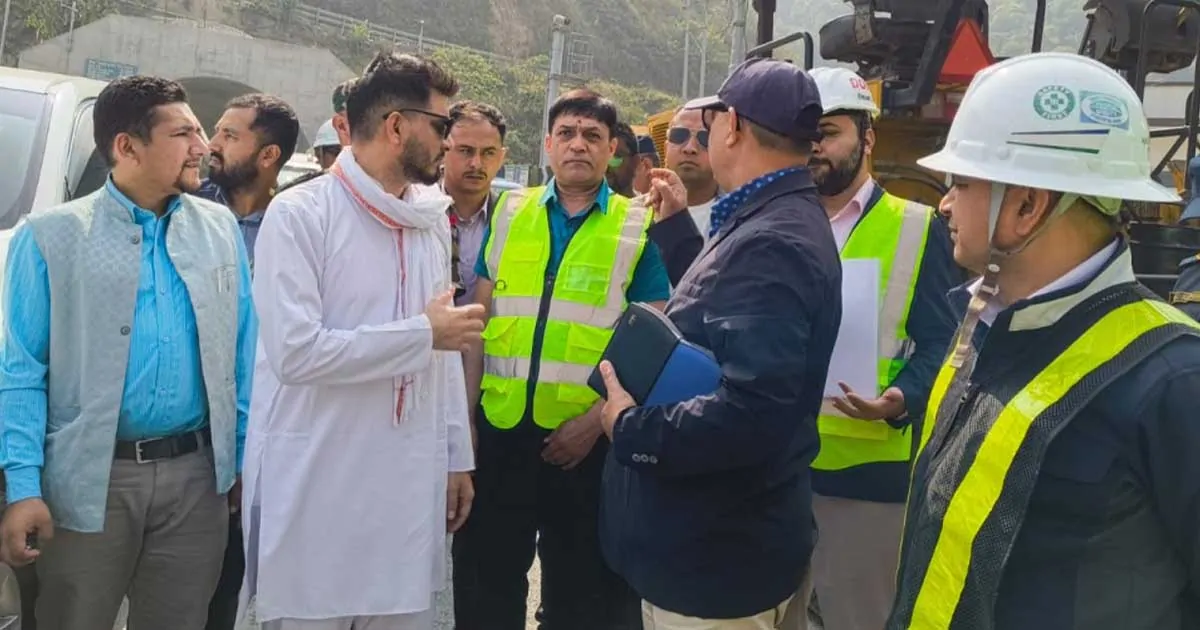
The minister, expressing frustration over delays in road expansion works, instructed officials to locate a contractor linked to the stalled project and ensure the work moved ahead. During the conversation, he used the phrase “break his legs” while referring to action against a contractor accused of failing to carry out assigned responsibilities.
The remark came during an on-site inspection where government officials were reviewing obstacles affecting progress on one of Nepal’s busiest highway corridors. According to discussions held at the site, electricity poles that remain in the middle of the roadway have continued to obstruct construction work.
Minister Lamsal was accompanied by senior officials including the Chief District Officer of Dhading, the district police chief and project authorities. Local residents have repeatedly complained about prolonged construction delays, traffic disruptions and the hardships faced by daily commuters using the route.
Contractors Question Minister’s Language
Construction entrepreneurs have objected to the minister’s choice of words, arguing that the state already possesses legal mechanisms to deal with contractors who fail to fulfill contractual obligations.
They maintain that if any contractor violates agreements or delays work without justification, authorities can impose penalties and take action under existing laws. However, they say public officials should avoid language that appears to endorse physical punishment or violence.
The criticism is centered less on the minister’s dissatisfaction with the pace of construction and more on the manner in which that dissatisfaction was publicly expressed.
Administration Defends the Intent
Responding to concerns raised after the video surfaced, Dhading Chief District Officer Laxmi Pandey Gautam said the minister’s primary concern was ensuring that the construction work is completed without further delay.
According to her, the message was aimed at conveying urgency and accountability to all parties involved in the project rather than encouraging any unlawful action.
The episode has also renewed discussion about the standards expected of public office holders when communicating in official settings. While many road users share frustration over years of slow progress on the Nagdhunga–Mugling corridor, others argue that public officials must remain within the language and principles of a rule-based system even when expressing anger over poor performance.
A Highway Project Under Constant Pressure
The Nagdhunga–Mugling road is among the country’s most heavily used transport routes, linking Kathmandu with major regions beyond the capital. Delays in expansion and improvement works have long been a source of complaints from travelers, transport operators and communities living along the highway.
That public frustration formed the backdrop to the minister’s inspection. Yet the controversy surrounding his remarks has shifted attention from the project itself to the broader question of how government authority should be exercised and communicated in public.
The debate continues within political and administrative circles as scrutiny grows over both the delayed infrastructure project and the language used by those responsible for overseeing it.